


A Guide to On-Site Leather Repairs at Home

A pale patch on the favourite seat of a leather sofa can make the whole room feel tired. The same is true of a deep scuff on an armrest, an ink mark from a pen left behind by a child, or colour worn away where the family sits every evening. This guide to on-site leather repairs explains what a specialist can realistically restore in your home, and when a targeted repair is a better choice than replacing furniture you still love.
For many homeowners, the real benefit is simple: the sofa stays where it is. There is no need to arrange collection, move bulky furniture through the house or live without it for weeks. A skilled technician can assess the damage, prepare the affected area and carry out restoration work at your premises with care and minimal disruption.
What on-site leather repairs can restore
Leather furniture often looks beyond saving long before it actually is. Surface damage, colour loss and everyday staining can be very visible, but they do not always mean the leather itself has failed. Professional restoration focuses on improving the appearance, protecting the finish and helping the furniture look right in the room again.
Common on-site repairs include scuffs, scratches and scrape marks caused by pets, shoes, zips or everyday use. These areas can often be cleaned, smoothed and recoloured to reduce their visibility. Worn armrests, seat cushions and headrests are also frequent issues. Over time, body oils and friction can strip colour and leave leather looking dull, patchy or faded.
Accidental damage is another reason people call for help. Ink, nail polish, glue, bleach marks and household spills all require a different approach. The right treatment depends on the substance, how long it has been there and whether it has affected the leather’s protective coating or colour. Acting quickly is helpful, but even older marks may be improved with professional cleaning and colour restoration.
Cracking and peeling need a more cautious assessment. Light surface cracking may be repaired and refinished successfully. However, heavily split leather, severe deterioration or some man-made leather finishes may have limits. A reputable specialist will explain what can be achieved rather than promising an unrealistic perfect result.
Why colour matching makes the difference
A Guide to On-Site Leather Repairs at Home. A leather repair is not simply a matter of applying a standard brown, black or cream finish. Leather colours vary considerably between manufacturers, batches and years of use. Even a sofa that was originally one shade may now be lighter on the cushions, darker around the edges and affected by sunlight from a nearby window.
That is why professional colour matching matters. The technician assesses the furniture’s current colour, not just the colour it may have been when new. The aim is to blend a repair into the surrounding leather and recreate the appropriate finish, whether that is matt, satin or lightly polished.
For a small scuff, only the damaged section may need attention. Where colour has worn across a wider seating area, a more extensive refurbishment may offer a more even and natural-looking outcome. This is one of the key trade-offs in leather restoration: a local repair is efficient and cost-effective, while broader colour restoration can produce a more consistent finish where wear is widespread.
What happens during an on-site visit
The process should feel straightforward from the first enquiry. Clear photographs in good natural light, along with your location and a brief description of the problem, give a leather specialist a useful starting point for a quotation. Include a wider photograph of the furniture as well as close-ups of the damage. This helps show the leather colour, condition and extent of the issue.
On arrival, the technician will inspect the leather in person. They will check whether it is genuine leather, coated leather, as each needs different products and techniques. They will also look for previous DIY treatments, as oils, polish, household cleaners and attempted touch-ups can affect preparation and colour adhesion.
The damaged area is then cleaned and prepared. Depending on the repair, this may involve removing surface residue, treating the stain, carefully filling a scratch or smoothing rough edges. Colour is built up in controlled layers and blended into the surrounding area. A protective finish is applied where appropriate to help the repair stand up to normal use.
Drying times vary, but on-site work is designed to be practical for a busy household. Your technician will advise when the repaired area can be used again and whether it needs any short-term protection from heavy use, pets or cleaning products.
When not to try a DIY leather repair
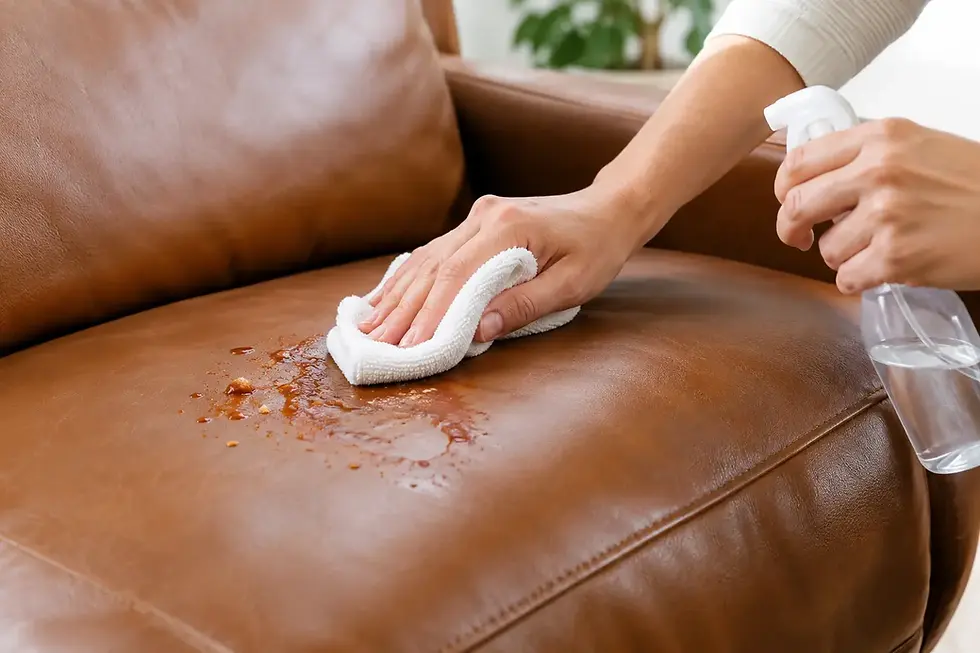
A small fresh spill can be gently blotted with a clean, dry cloth, but vigorous rubbing is rarely a good idea. It can push a stain further into the surface, spread it over a wider area or remove colour from the finish. Avoid soaking the leather with water or applying washing-up liquid, bleach, acetone, hand sanitiser or general-purpose cleaners.
DIY repair kits may seem tempting, particularly for a minor scratch. Their main weakness is colour matching. A repair that starts as a small scuff can become more noticeable if the shade is wrong, the sheen does not match or the product dries with a hard edge. Home treatments can also make a later professional repair more time-consuming.
If the damage involves ink, bleach, nail polish, glue or an unknown chemical, take a photograph before trying anything. Do not apply heat or solvents. A quick assessment gives you the best chance of avoiding permanent spread or additional colour loss.
Keeping restored leather looking its best
Once leather has been repaired or refurbished, simple habits help preserve the result. Dust and light surface dirt should be removed regularly with a soft, dry cloth. Keep sofas away from direct, prolonged sunlight where possible, as UV exposure can fade colour unevenly. Radiators and strong heat sources can also dry the material over time.
Try to deal with spills promptly by blotting rather than scrubbing. Be particularly careful with dark denim, printed cushions, newspaper ink and products containing alcohol. These can transfer colour or affect the protective coating, especially on pale leather.
Leather should be cleaned and conditioned using products suited to its finish, but more product is not always better. Over-conditioning can leave residue and attract dirt, while unsuitable oils can alter the colour or feel. If you are unsure what your furniture needs, ask before applying anything new.
A practical alternative to replacement
Replacing a large leather sofa is expensive, inconvenient and often unnecessary when the frame, comfort and overall condition are still good. On-site restoration is particularly worthwhile for quality furniture that fits your room, supports your household and has simply picked up the marks of everyday life.
Ashbourne Leather Care provides mobile leather furniture restoration across Dublin, Meath, Kildare and Louth, with repairs tailored to the condition of your sofa or chair. Sending clear photos first makes it easier to understand the damage and receive practical advice on the most suitable repair.
A visible mark does not have to become the reason you replace furniture you enjoy. Take a few photographs, avoid further DIY treatments and get an expert opinion while the repair is still focused, manageable and worth restoring.


Comments