


Best Leather Cleaning Tools for Sofas at Home

Best Leather Cleaning Tools for Sofas at Home. A leather sofa can look tired long before it is ready to be replaced. Everyday body oils, dust, pet marks and small spills gradually dull the finish, especially on armrests, headrests and favourite seats. The best leather cleaning tools help you remove day-to-day grime safely, but the wrong product can leave behind stiffness, colour loss or a shiny patch that is harder to put right.
For most homeowners, careful cleaning is about preserving the leather rather than trying to make it look brand new in one go. A gentle routine, the right cloth and a cleaner suited to upholstery will do far more good than strong household sprays or vigorous scrubbing.
The best leather cleaning tools for furniture
A small, well-chosen kit is all most leather furniture needs for regular care. The aim is to lift surface dirt without soaking the leather, stripping its protective finish or transferring dye from one area to another.
Soft microfibre cloths
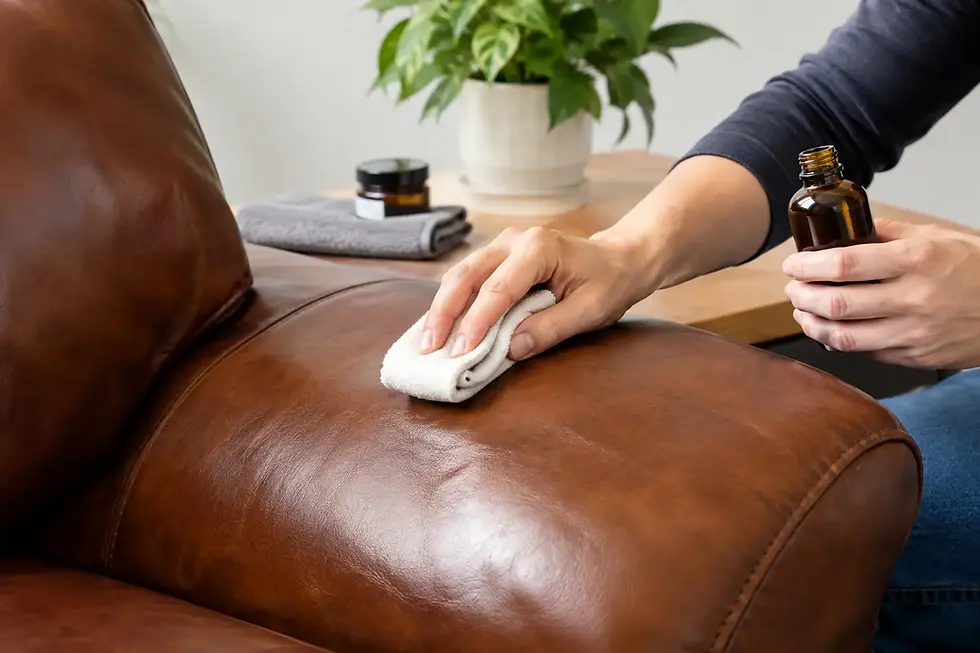
A clean, lint-free microfibre cloth is the most useful tool in any leather-care kit. Use one dry cloth for dusting and buffing, and keep separate cloths for cleaning and conditioning. This avoids spreading residue back over the sofa.
Choose pale or white cloths where possible. A coloured cloth can release dye when damp, particularly if it is new or has been washed with strongly coloured items. Fold the cloth into sections as you work so you always have a clean surface against the leather.
Avoid rough kitchen scourers, abrasive sponges and paper towels. They can scratch the finish or leave fibres in the grain.
A vacuum with a soft brush attachment
Dust and crumbs settle into seams, buttoned areas and under cushions, where they can become abrasive over time. A vacuum cleaner fitted with a soft upholstery brush is ideal for these areas.
Use low suction and keep the attachment moving. The goal is to remove loose debris, not to press hard into the leather. Take care around loose stitching, damaged piping and cracked surfaces, as catching an edge can make existing wear worse.
A pH-balanced leather cleaner
For general cleaning, choose a purpose-made leather cleaner designed for finished furniture leather. Most sofas have a protective topcoat, but that does not make them suitable for all-purpose household cleaners. Washing-up liquid, disinfectant sprays, bleach, bathroom products and solvent-based wipes can damage the finish, remove colour or leave the leather dry and sticky.
Apply the cleaner to your cloth rather than directly onto the sofa. Work in a small, discreet section with light circular movements, then wipe away any excess moisture with a second clean cloth. Never saturate seams, piping or cushion edges.
Before cleaning the full piece, test the product on a hidden area, such as the back of a cushion or beneath a removable seat pad. Allow it to dry fully and check for any change in colour, sheen or texture.
A leather conditioner or protection cream
Cleaning removes dirt and oils from the surface, so leather may benefit from a suitable conditioner or protection cream afterwards. This can help maintain a supple feel and make future marks easier to clean away.
However, conditioner is not a cure for cracking, peeling, flaking or faded colour. In fact, applying too much can create a greasy feel or attract more dust. Use a light application only after cleaning, follow the product instructions, and buff gently once dry.
Conditioning is usually appropriate every few months for a well-used sofa, though it depends on the leather type, the product used and the conditions in the room. Furniture beside a radiator, in strong sunlight or in a busy family room may need more regular attention.
Cotton buds and a soft detail brush
Cotton buds are useful for small areas around stitching, decorative piping and tight creases. A soft, clean detailing brush can also help loosen dry dust from textured grain before wiping it away.
These tools are for gentle, controlled work. They are not suitable for scrubbing ingrained marks. If a stain needs pressure to shift, pause before doing more damage to the finish.
What to avoid when cleaning a leather sofa
The temptation with a visible stain is to act quickly with whatever is under the sink. That is where many avoidable problems begin. Leather furniture is often dyed and finished in layers, and an aggressive cleaner can alter those layers in seconds.
Avoid baby wipes, antibacterial wipes, glass cleaner, furniture polish, saddle soap, hairspray, perfume, nail varnish remover and bleach. Products containing alcohol, ammonia or strong solvents may lift colour or break down the protective coating. Oil-based home remedies can also darken leather unevenly and leave a residue that is difficult to remove.
Steam cleaners are another common risk. High heat and moisture can affect the finish, force moisture into seams and contribute to drying or distortion afterwards. Leather should be cleaned with minimal moisture, not soaked.
Match the tool to the problem
The best approach depends on what has happened to the sofa. Light dust, everyday grime and a fresh water-based spill can often be managed with a vacuum, a microfibre cloth and an appropriate leather cleaner. Blot spills straight away rather than rubbing them further into the grain.
A scuff is different from a stain. It may be surface transfer from a shoe, belt or toy, or it may be genuine loss of colour. Cleaning can remove transferred material, but it cannot restore colour that has been worn away. Likewise, a faded headrest or armrest may look cleaner after treatment, but it will need colour restoration to regain an even finish.
Ink, bleach, glue, nail polish and unknown chemical marks should be treated with particular care. Do not experiment with solvents in an effort to remove them. These stains can react unpredictably with the leather finish, and an unsuccessful DIY attempt often enlarges the affected area.
When professional leather restoration is the better tool
Best Leather Cleaning Tools for Sofas at Home. There is a point where cleaning stops being the answer. If the leather is peeling, cracked, faded, sticky, badly scratched or marked by chemicals, professional restoration is usually the more cost-effective option than replacement.
A specialist can assess whether the issue is surface dirt, colour wear, finish damage or a deeper stain. The repair may involve careful cleaning, localised treatment, colour matching and refinishing rather than simply applying more cleaner. This is especially valuable for premium sofas, matching suites and furniture with sentimental value.
At Ashbourne Leather Care, damaged leather furniture can be assessed from photos and restored on site across Dublin, Meath, Kildare and Louth. It is a practical option when a favourite sofa has suffered a household accident but still has years of comfort left in it.
A simple routine that protects your sofa
Vacuum your sofa gently every week or two, particularly around seams and beneath loose cushions. Wipe it with a dry microfibre cloth when dust is visible, and use a suitable leather cleaner only when there is a build-up of grime or a fresh mark to address.
Keep leather furniture away from direct sunlight where possible, and avoid placing it tight against a radiator. Heat and UV exposure are common causes of fading, dryness and uneven ageing. If one seat gets much more use than the others, rotate cushions when the design allows it to spread wear more evenly.
Most importantly, judge the result as you go. If the colour transfers onto your cloth, the surface feels tacky, or a mark does not improve after a gentle attempt, stop cleaning. A careful decision at that stage can preserve the leather and leave the repair far simpler. A clear photo in good natural light is often the best next step towards bringing your furniture back to life.


Comments