


Best Ways to Repair Leather Scratches

A scratched leather sofa can make the whole room look tired, even when the rest of the furniture is in great shape. If you are looking for the best ways repair leather scratches, the first thing to know is that not every scratch needs the same fix. A light surface scuff can often be improved quite easily, while a deeper scratch with colour loss or torn fibres needs a more careful repair.
That difference matters. Many people make the damage worse by rubbing too hard, using the wrong household products, or trying a one-size-fits-all leather kit. Good results come from knowing what kind of leather you have, how deep the scratch goes, and whether the problem is just on the finish or into the material itself.
The best ways to repair leather scratches start with the right diagnosis
Before you touch the damaged area, take a close look in natural light. If the mark looks pale but feels smooth, you may be dealing with a surface scuff. If the leather feels rough, lifted or split, the scratch is more serious. If the colour has come away completely, the repair is not just about smoothing the surface - it is also about restoring the finish so the area blends properly with the rest of the sofa.
This is where people often underestimate the job. Leather upholstery is finished to achieve a particular colour, sheen and feel. Even if you reduce the appearance of a scratch, a poor colour match or a shiny patch can stand out just as much as the original damage.
It also helps to know whether your furniture is finished leather, aniline leather, bi-cast, bonded leather or faux leather. Most household leather sofas have a protective finish, which makes some repairs more straightforward. More natural, absorbent leathers can be less forgiving and may darken or stain if the wrong product is used.
What works for light leather scratches
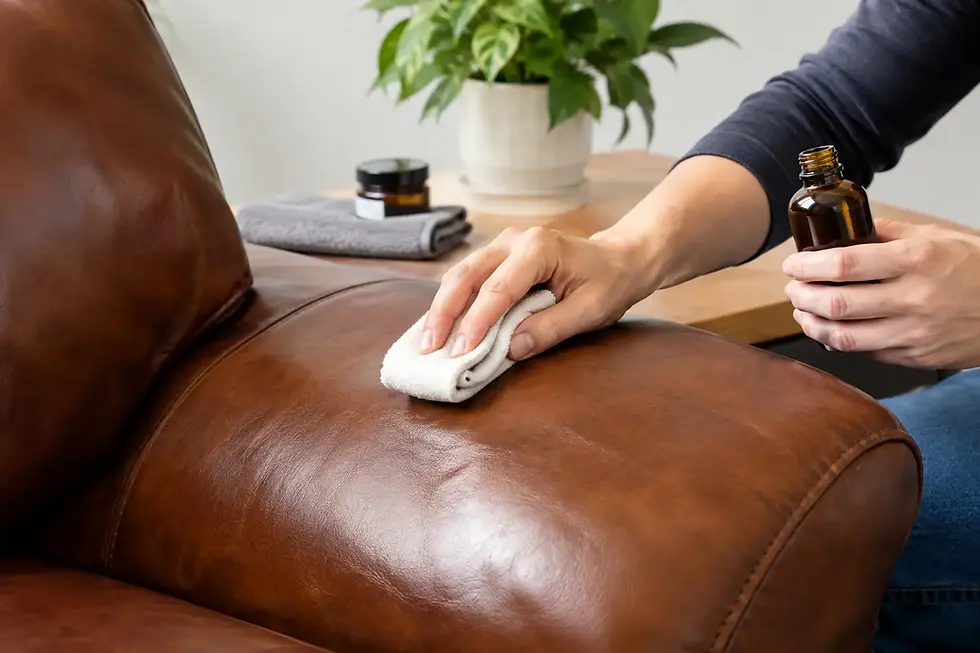
For minor scratches, less is often more. Start by cleaning the area gently with a leather-safe cleaner and a soft cloth. Dirt trapped around the scratch can make it look deeper than it is, and harsh rubbing can strip more of the finish.
Once the area is clean and dry, a small amount of leather conditioner or a specialist leather cream may help improve the look of a very light scratch. This works best where the top coating has been disturbed but the leather itself is still intact. The goal is not to soak the leather, but to relax the surface slightly and reduce the contrast between the scratch and the surrounding area.
A fingertip can sometimes help here. Gently warming and smoothing a light scratch with clean fingers may reduce its visibility, especially on finished leather. It sounds simple because it is. The mistake is overworking the area or reaching for oils, baby wipes or furniture polish. Those products can leave residue, affect adhesion if a proper repair is needed later, and create a patch that looks darker or greasy.
If the mark improves when cleaned and lightly conditioned, that is a good sign. If it stays pale, rough or visibly broken, you are likely beyond a quick at-home fix.
Deeper scratches need more than a wipe and polish
Once a scratch cuts into the surface, proper repair becomes more technical. The damaged fibres may need to be flattened, the area may need a leather filler, and the colour almost certainly needs to be restored afterwards. This is where the best ways repair leather scratches depend on patience and accuracy rather than a miracle product.
A typical deeper repair involves cleaning the area thoroughly, trimming any loose fibres very carefully, and applying a flexible filler in thin layers if the surface has been gouged. After that, the repair needs to be smoothed so it sits level with the surrounding leather. Only then should colour be reapplied.
Colour work is the part that decides whether the repair looks professional or obvious. Matching the original shade is one challenge, but matching the finish is just as important. A sofa arm with a matt finish will not look right if the repaired patch dries glossy. In the same way, a smooth, soft section can look wrong if the repaired area feels stiff.
That is why deeper scratches on visible areas such as seat cushions, front panels and armrests are often best handled by a specialist. A poor DIY repair can lock in a rough texture and make later correction more difficult.
Common mistakes that make leather scratches worse
The biggest mistake is using general household cleaners. Products designed for kitchens, bathrooms or wood furniture are not suitable for leather upholstery. They can strip protective coatings, dry the surface, or cause discolouration that is harder to put right than the original scratch.
Another common problem is using too much product. Leather repair is not improved by soaking, layering thick creams, or scrubbing at one spot repeatedly. Heavy-handed treatment tends to spread the issue rather than solve it.
DIY kits can be hit and miss. Some are fine for very minor issues, but many promise more than they can deliver. Colour charts are often limited, fillers can dry too hard, and repair compounds may not suit the type of leather on your furniture. If your sofa is a central piece in the room, a cheap repair that leaves a visible patch is rarely good value.
People also delay too long. A fresh scratch is usually easier to improve than one that has collected grime, dried out or started to crack around the edges. Acting early gives you more options.
When a professional leather repair is the better choice
If the scratch is deep, widespread, or in a highly visible area, professional repair usually makes more sense than trial and error. The same applies if there is colour loss, peeling finish, multiple pet scratches, or damage combined with fading and wear. In those cases, the issue is not just one line on the surface - it is part of a larger restoration problem.
A specialist can assess whether the damage needs a localised repair or a broader refurbishment of the panel. That matters because spot repairs do not always blend well if the surrounding leather is worn or sun-faded. Sometimes the best result comes from restoring the whole section so the finish is even again.
For homeowners, convenience matters too. Leather furniture is awkward to move and expensive to replace. A mobile service that repairs the damage on site is often the most practical route, especially when the goal is to bring the furniture back to its original appearance without disrupting the house.
Ashbourne Leather Care works with exactly these kinds of issues, repairing scratched and worn leather furniture in customers' homes and matching the colour and finish as closely as possible. For many sofas, that is a far better outcome than covering the damage with a throw and hoping no one notices.
How to prevent future scratches on leather furniture
Prevention is never perfect, especially in busy homes, but it does make a difference. Regular leather cleaning removes grit that can act like fine sandpaper on the surface. Conditioning, when done correctly and not excessively, helps keep the material supple and less prone to looking dry and marked.
Pet claws are an obvious cause, but not the only one. Metal fasteners on jeans, children's toys, sharp fingernails, keys in pockets and rough seams can all leave scratches over time. The usual trouble spots are sofa arms, seat fronts and cushion edges because they take the most daily contact.
Positioning helps as well. Leather placed in strong sunlight or close to heat sources can dry out faster, which makes wear and scratches more noticeable. If a sofa is already faded or brittle, even a light scrape can stand out far more than it would on leather in good condition.
A good rule is simple: clean gently, treat small issues early, and avoid improvised remedies. Leather responds well to proper care, but it does not forgive guesswork.
If you are deciding between DIY and specialist repair
There is nothing wrong with trying a cautious at-home approach on a very light surface mark. Clean it properly, use products made for leather, and stop if the result is not improving. The aim is to preserve the finish, not chase perfection with harsher methods.
But if the scratch catches your nail, shows obvious colour loss, or sits right where everyone can see it, specialist repair is usually the smarter choice. It saves time, avoids patchy results, and gives you a far better chance of restoring the sofa rather than merely disguising the damage.
Leather furniture often has years of life left in it, even when scratches make it look past its best. The right repair can lift the whole piece and help the room feel cared for again. If a scratch is bothering you every time you sit down, that is usually a sign it is worth putting right properly.



Comments