


How to Remove Ink From Leather Without Damage

Updated: Jul 17
How to Remove Ink From Leather Without Damage. A pen mark on a leather sofa can look far worse than it is, especially on pale or smooth leather. Knowing how to remove ink from leather starts with one rule: act carefully, not aggressively. Ink can often be reduced or removed, but the wrong cleaner can strip colour, dull the finish or leave a larger patch than the original mark.
Leather furniture is not all made or finished in the same way. A cleaner that appears to work on one chair may damage another, which is why a gentle approach and a discreet test area matter. If the ink is fresh, you have the best chance of a clean result. If it has dried in, spread across the surface or sits on worn leather, professional restoration may be the safer and more cost-effective choice.
Before You Remove Ink From Leather
How to Remove Ink From Leather Without Damage. First, identify the leather as best you can. Most modern sofas have a protective topcoat, which means the ink may be sitting partly on the finish rather than fully absorbed into the leather. Aniline and semi-aniline leathers are more absorbent and can be far less forgiving. Suede, nubuck and unfinished leather need specialist treatment and should not be cleaned with household products.
Check the care label if you still have it, or look at the surface closely. Protected leather usually has an even sheen and feels smooth. More natural, absorbent leather often shows variation in grain and colour. If water darkens the leather immediately, stop before trying a cleaning method. That is a sign the material may absorb liquid and stain more easily.
Before applying anything, take a clear photo of the mark. This is useful if you need advice later and lets you see whether the stain is improving or spreading. Then test your chosen method on a hidden area, such as beneath a removable cushion or at the back of the sofa.
What to Do Straight Away
Fresh ink needs patience. Do not rub it with a cloth, as friction drives the dye sideways and deeper into the leather grain. Instead, lightly blot the area with a clean, dry white cloth or plain kitchen paper. Work from the outer edge of the mark towards the centre so that you do not create a larger halo.
Avoid coloured cloths, printed kitchen roll and wet wipes. Their dyes, fragrance, alcohol or cleaning ingredients can transfer to the leather or affect its finish. Equally, do not use a hairdryer to speed up drying. Heat can harden leather, alter its sheen and make a later repair more noticeable.
If the ink has come from a biro, gel pen or felt-tip, avoid pressing on the mark while you assess it. A ballpoint line can look small on the surface but spread beneath the protective coating if it is repeatedly rubbed.
A Safe First Method for Light Ink Marks
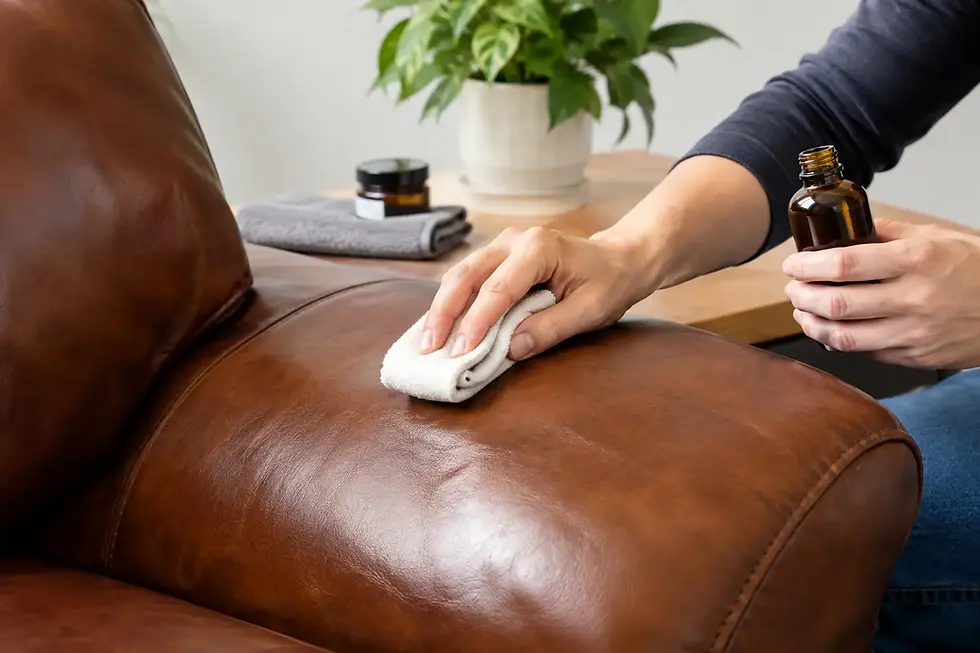
For a light, recent ink mark on protected leather, use a leather cleaner designed specifically for upholstered furniture. Apply a small amount to a soft white cloth rather than directly to the sofa. Gently dab the ink, lifting and turning to a clean section of cloth as colour transfers.
Keep the contact brief. Several light passes are safer than soaking the area or scrubbing hard. Once the mark has lifted as far as it will, wipe away any cleaner residue using a separate cloth that is only very slightly damp, then allow the leather to dry naturally away from radiators and direct sunlight.
A proper leather cleaner is preferable because it is made to work with the surface finish rather than dissolve it. However, even a suitable cleaner may not remove ink that has penetrated through a damaged, worn or porous coating. At that point, extra cleaning is unlikely to help and may make the repair more difficult.
Why household remedies can cause lasting damage
Online advice often recommends rubbing alcohol, nail varnish remover, hairspray, hand sanitiser, vinegar, toothpaste or washing-up liquid. These are risky on leather furniture. Alcohol and acetone can remove colour and soften or break down the protective finish. Hairspray and hand sanitiser can leave residue, while toothpaste can be abrasive enough to alter the sheen.
The result is often a pale, sticky or dull patch around the ink. On dark leather, colour loss may appear grey or cloudy. On cream and beige sofas, the surface can become patchy or yellowed. The ink may be gone, but the leather can still require recolouring and refinishing to look right again.
When Ink Needs Professional Leather Repair
Professional help is sensible when the ink is old, heavy, widespread or on a high-visibility area such as a seat cushion, armrest or backrest. It is also the right option if you have already tried a product and the leather now looks faded, rough, shiny or uneven.
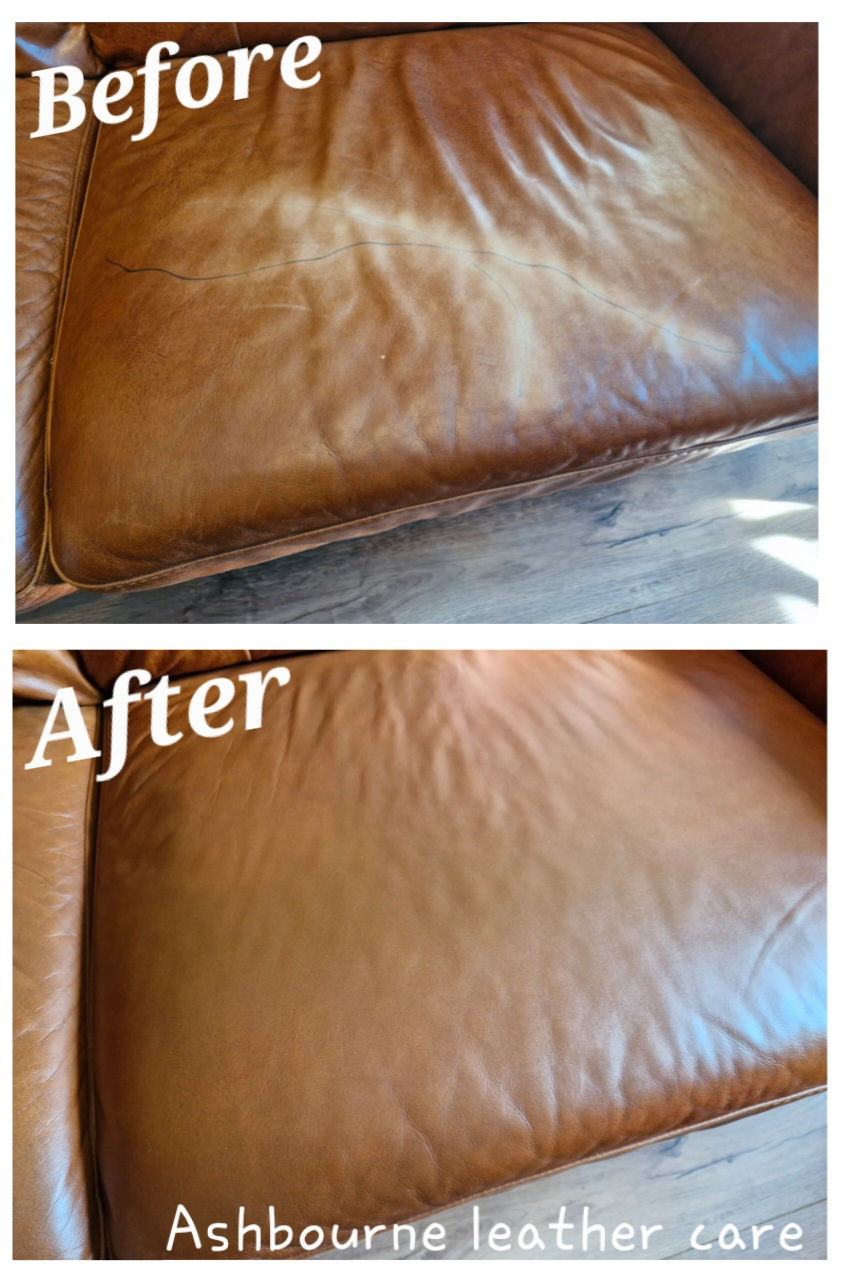
A specialist does more than clean the visible ink. Depending on the leather and the damage, the process may involve controlled ink removal, preparation of the affected area, colour matching, colour restoration and a new protective finish. This is particularly valuable where the original ink has lifted but left a shadow, or where cleaning has removed some of the sofa's colour.
The aim is not simply to make the mark less obvious from a distance. It is to restore the colour, feel and finish so the repaired section sits naturally with the rest of the furniture. That level of work is difficult to achieve with a household cleaner, particularly on older leather that has already faded through use and sunlight.
How to Avoid Making the Stain Worse
If you are unsure whether your sofa has protected leather, treat the ink as a repair issue rather than a cleaning job. Do not saturate the area with water or cleaner, and do not scrub with a sponge, brush or magic eraser. These methods can damage the grain pattern and create a visibly different texture.
Be wary of repeated attempts with different products. Each product can react differently with leather finishes, and the damage often becomes clear only after the surface has dried. A small ink line is usually easier to restore than a large bleached-looking patch caused by unsuitable cleaning.
It also helps to keep leather conditioner separate from stain removal. Conditioner can improve suppleness after suitable cleaning, but it will not lift ink. Applying it too early can leave a residue that makes targeted treatment less effective.
The Best Next Step for Your Leather Sofa
If a gentle leather cleaner has not improved the mark, stop there. Continuing to experiment can turn a straightforward ink removal job into a colour restoration. Take photographs in natural light, including a wider photo of the sofa and a close-up of the damaged area. This gives a leather repair specialist the information needed to judge the likely treatment and provide an accurate quotation.
For homeowners in Dublin, Meath, Kildare and Louth, Ashbourne Leather Care provides on-site leather furniture restoration for ink marks, colour loss, scuffs and other accidental damage. There is no need to remove a heavy sofa from your home, and a targeted repair can be a practical alternative to replacing furniture that is otherwise in good condition.
A pen mark does not have to become a permanent feature of your living room. Use a gentle method for a fresh, light stain, protect the finish above all else, and call in a specialist when the leather needs more than surface cleaning. With the right care, your sofa can look like itself again.


Comments