


7 Leather Repair Mistakes Homeowners Make

A leather sofa can look tired long before it is beyond saving. A faded armrest, a dark headrest patch, a child’s ink mark or a scrape from the dog can make the whole room feel less cared for. Yet many leather repair mistakes homeowners make happen in the first few minutes after damage appears, when a well-meant attempt to clean or hide it causes a bigger problem.
Leather furniture is not a single, uniform material. Its finish, colour, age and previous care all affect what can be safely done. The right approach can restore colour, soften the appearance of wear and repair accidental damage without the expense of replacing a good-quality sofa. The wrong one can leave staining, peeling, shine differences or a repair that stands out more than the original mark.
1. Using household cleaners before identifying the leather
7 Leather Repair Mistakes Homeowners Make. Reaching for washing-up liquid, disinfectant spray, baby wipes or an all-purpose cleaner is one of the most common mistakes. These products may seem mild, but many contain alcohol, detergents, fragrance or solvents that can strip the protective finish from upholstery leather.
Once that finish is affected, the leather may feel sticky, dry or unusually rough. Colour can lift on the cloth, especially on older furniture or areas already weakened by wear. A cleaner can also push a stain further into the surface rather than removing it.
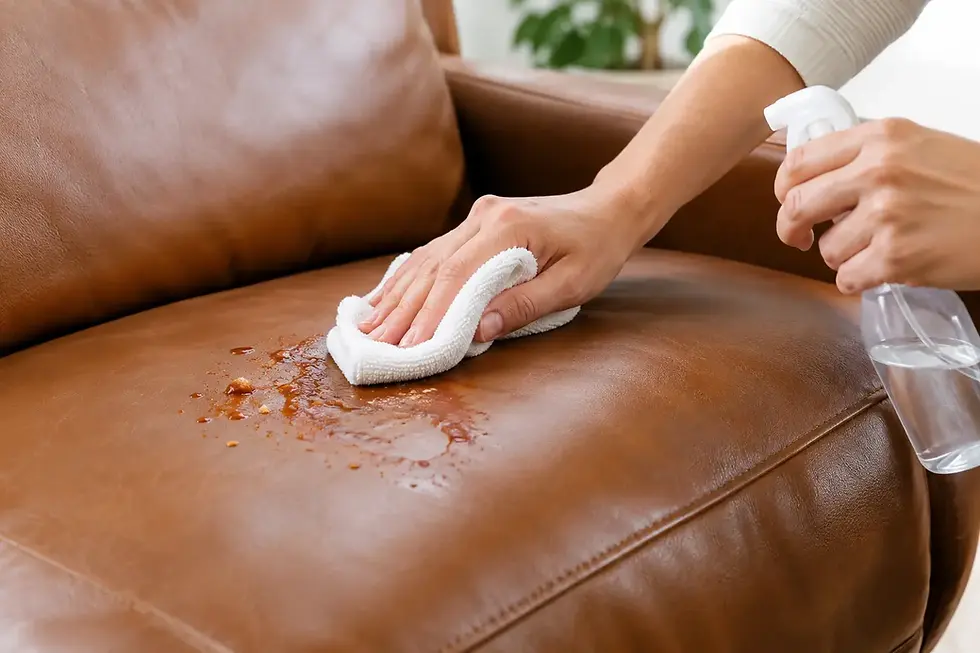
For a fresh spill, blot gently with a clean, dry white cloth. Do not rub, scrub or soak the area. If you are unsure what type of leather you have, avoid applying anything until you have taken clear photographs in natural light. A professional can often assess the likely finish and the safest treatment from photos before visiting.
2. Rubbing stains harder when they do not lift
Ink, nail polish, glue, make-up and dye transfer from clothing can look alarming, particularly on cream, beige or pale grey leather. The natural reaction is to work at the mark until it disappears. Unfortunately, hard rubbing creates friction and can damage the topcoat, leaving a dull patch or spreading the stain across a wider area.
This is especially risky with ink. Some home remedies can dissolve the colourant but also remove the sofa’s own colour and finish. The result may be a pale halo that requires colour restoration, rather than a small spot repair.
Blotting is safer than rubbing, and speed helps. Keep pets and children away from the affected area, avoid adding water or heat, and do not cover it with a cushion if the substance is still wet. A targeted repair is usually far more successful when the original damage has not been disturbed.
3. Applying supermarket dye or a generic repair kit
Leather repair kits can be tempting. They promise a quick fix for scuffs, cracks and fading, often at a fraction of the apparent cost of professional work. Some can be useful for very small, low-visibility marks on suitable leather, but they are rarely a straightforward answer for a sofa that is used every day.
The biggest challenge is colour matching. Leather colour is not simply brown, black or grey. It may have warm or cool undertones, a two-tone effect, a matte finish, a soft sheen or a protective topcoat that changes how the colour looks in the room. A ready-mixed dye may look acceptable when wet, then dry darker, flatter or glossier than the surrounding panel.
Preparation matters just as much. If oils, old polish or silicone-based products are left on the surface, a new coating may not bond properly. It can crack, peel or wear away quickly on high-contact areas such as seats, arms and headrests. Professional leather refurbishment is built around correct preparation, flexible repair materials and colour blending, not just applying colour over a problem.
4. Treating cracking as though it is only a cleaning issue
Fine lines in leather are not always serious, but they should not be ignored. Surface creasing is normal, especially on well-used seat cushions. Cracking, flaking and colour loss are different. They can indicate that the protective coating has worn down or that the leather is drying and becoming more vulnerable.
Applying conditioner over active cracking may make the leather feel better temporarily, but it will not rebuild missing colour or repair a broken surface. Heavy oils and unsuitable conditioners can also leave a greasy feel that attracts dirt and complicates later restoration.
The sensible option depends on the condition. Light wear may respond well to professional cleaning and conditioning. Areas with worn colour can often be recoloured and refinished. Where there is deeper damage, a flexible repair and colour restoration may be needed. Early attention usually keeps the repair smaller and helps the finish remain consistent across the sofa.
5. Ignoring fading until the contrast becomes obvious
Sunlight is kind to a sitting room, but it can be hard on leather. A sofa positioned beside a window or conservatory door may fade unevenly, particularly across the back, arms or one side facing the light. Heat from radiators and stoves can add to the problem by drying the leather over time.
Homeowners often wait until the faded area is dramatically lighter than the rest of the furniture. At that point, a simple local touch-up may not produce an even result. Restoring a broader section, or carefully blending colour across connected panels, may be the better approach.
Move furniture away from direct, sustained sunlight where possible, use blinds during the strongest hours and avoid placing leather directly against a radiator. If fading has started, it is worth dealing with it before it becomes the first thing people notice when they enter the room.
6. Trying to disguise damage with polish, oil or throws
A throw can be a practical short-term cover, but it does not solve damage underneath. More concerning are polishes, oils and spray products used to make leather look darker or shinier. These can create an uneven finish, transfer to clothing and leave residue that prevents repair coatings from adhering properly.
A shiny patch on a matte sofa is just as noticeable as a scuff. Similarly, darkening one worn armrest can make it look different from the other. Leather restoration should aim to bring the furniture back to a natural, even appearance, not simply hide a mark for a few days.
If you have already used a product, do not panic. Let the area dry, keep the packaging if you still have it, and mention what was applied when requesting advice. That information helps a specialist choose the right preparation method.
7. Waiting too long after accidental damage
Some damage needs immediate restraint rather than immediate cleaning, but that does not mean leaving it for months. Fresh ink, glue, bleach splashes and nail polish are usually easier to assess before they have been repeatedly rubbed, exposed to heat or covered with further products.
Bleach is a particular example. It is not a conventional stain that can simply be washed away. It can remove colour from the leather finish, so the solution is often a careful colour restoration rather than stain removal. The same is true of many scuffs and scrapes, where rebuilding colour and finish is more effective than aggressive cleaning.
Photograph the damage from a few angles, including a wider shot of the furniture and a close-up in daylight. This gives a clearer picture of the colour, texture and size of the affected area. For homeowners in Dublin, Meath, Kildare and Louth, Ashbourne Leather Care can use those photos and your location details to provide a quotation before arranging a convenient on-site visit.
When professional leather repair is the better value
Replacing a leather sofa because of a faded cushion, worn armrest or one accidental mark can be an expensive decision, particularly when the frame, comfort and overall upholstery are still in good condition. Professional repair is not always the right answer - badly degraded leather or major structural damage may call for a different solution - but many visible problems are far more repairable than they first appear.
The key is to protect the surrounding finish while treating the actual issue. A specialist can clean, repair, recolour and refinish the affected leather in a way that accounts for its age, texture and level of use. Done properly, the goal is not a conspicuous patch. It is furniture that looks cared for again and feels at home in the room.
Before trying another cleaner or repair kit, take a moment to assess the damage and preserve the area as it is. A clear photo and the right advice can be the difference between a small restoration and a much larger repair.


Comments