


A Guide to Repairing Leather Cushions Safely
- ashbourneleathercare

- 2 days ago
- 6 min read
A Guide to Repairing Leather Cushions Safely. A leather cushion can make an otherwise beautiful sofa look tired long before the rest of the furniture has reached the end of its life. This guide to repairing leather cushions explains what can be handled carefully at home, what should be left alone, and when professional restoration is the better value choice.
The key is to treat the damage you can see, not to make it worse while trying to remove it. Leather is a natural material with a coloured protective finish on its surface. Strong cleaners, unsuitable polishes and quick-fix repair kits can alter that finish, leaving a patch that is shinier, duller or a different colour from the surrounding cushion.
Start by identifying the cushion damage
Before cleaning or repairing anything, look closely at the affected area in good natural light. A scuff that appears white may be surface colour loss rather than a scratch through the leather. A dark mark may be ink, dye transfer from clothing or accumulated grime. Peeling can indicate a damaged coating or, in some cases, bonded leather rather than full-grain or corrected-grain leather.
The likely repair depends on the type of damage, the leather finish and the age of the furniture. A small mark on a modern protected leather sofa may respond well to a targeted repair. Widespread cracking on a well-used cushion may need cleaning, preparation, flexible colour restoration and a new protective finish to blend it properly.
Common problems include:
scuffs, scratches and worn edges caused by everyday use
fading or colour loss on favourite seats and headrests
ink, nail polish, glue and dye-transfer marks
food, drink or grease stains
bleach spots and other chemical damage
cracking, peeling or rough, dry-looking areas
Do not assume that every crack needs feeding with conditioner. If the colour layer has worn away, conditioner cannot replace it. Equally, a stain is not always sitting on the surface, so repeated rubbing can spread it further into the leather or damage the finish around it.
What you can safely do at home
For light dust, surface grime and fresh spills, a gentle approach is best. First vacuum the seams with a soft brush attachment, taking care not to drag hard plastic edges across the leather. Wipe the cushion with a clean, soft microfibre cloth that is only slightly damp, then dry it with another cloth.
For a fresh spill, blot rather than rub. Work from the outside of the mark towards the centre, using a dry absorbent cloth. Do not soak the leather, use a hairdryer, or place the cushion near direct heat. Heat can stiffen leather and cause the finish to dry unevenly.
If you have a leather cleaner made specifically for furniture, test it on a hidden section first. Apply it to the cloth rather than directly onto the cushion, use very light pressure and stop if colour comes away on the cloth. A small amount of transferred colour may signal an older or vulnerable finish that needs specialist attention.
After cleaning, a suitable furniture leather protector or conditioner can help maintain protected leather, but it is not a cure for every problem. Use it sparingly and follow the product directions. Over-conditioning can leave a residue that attracts dirt, makes the leather feel greasy and complicates later colour repair.
Products to keep away from leather cushions
Household products often cause more damage than the original mark. Avoid bleach, washing-up liquid, multi-purpose sprays, baby wipes, disinfectant wipes, acetone, nail polish remover, alcohol-based cleaners and silicone-heavy polish. Even products described as gentle can strip colour, change the sheen or leave a visible ring.
Be cautious with internet remedies too. Vinegar, olive oil and saddle soap are often suggested for leather, but furniture leather has a different finish from saddlery and may react badly. Olive oil can darken the surface and leave it tacky. Saddle soap can remove or dull the protective coating. What looks better immediately may look patchy once the cushion dries.
When a repair needs more than cleaning
A Guide to Repairing Leather Cushions Safely. A professional leather repair is usually the sensible option when the colour is missing, the leather is scratched deeply, a stain has set, or the cushion has become noticeably different from the rest of the sofa. These issues need colour matching and controlled application, not simply a product wiped over the surface.
Scuffs and light scratches can often be prepared, recoloured and refinished so they blend with the original upholstery. On a faded seat cushion, the surrounding leather is assessed first. The aim is not to make one cushion look newly painted, but to restore a natural, even colour and finish that sits comfortably beside the other cushions.
Ink, glue and nail polish require particular care. The wrong solvent can spread the mark or remove the leather colour along with it. Bleach damage is different again: the chemical has often taken colour out of the finish, so removal alone will not solve the problem. The affected area may need stabilising, recolouring and sealing to restore its appearance.
Cracking deserves an honest assessment. Fine creasing is normal on real leather and does not always need treatment. Cracks that catch a fingernail, expose a lighter underlayer or feel rough may need repair before they develop into splits. Where leather is badly weakened or peeling extensively, a specialist can advise whether restoration will provide a worthwhile result or whether reupholstery is more appropriate.
How professional leather cushion restoration works
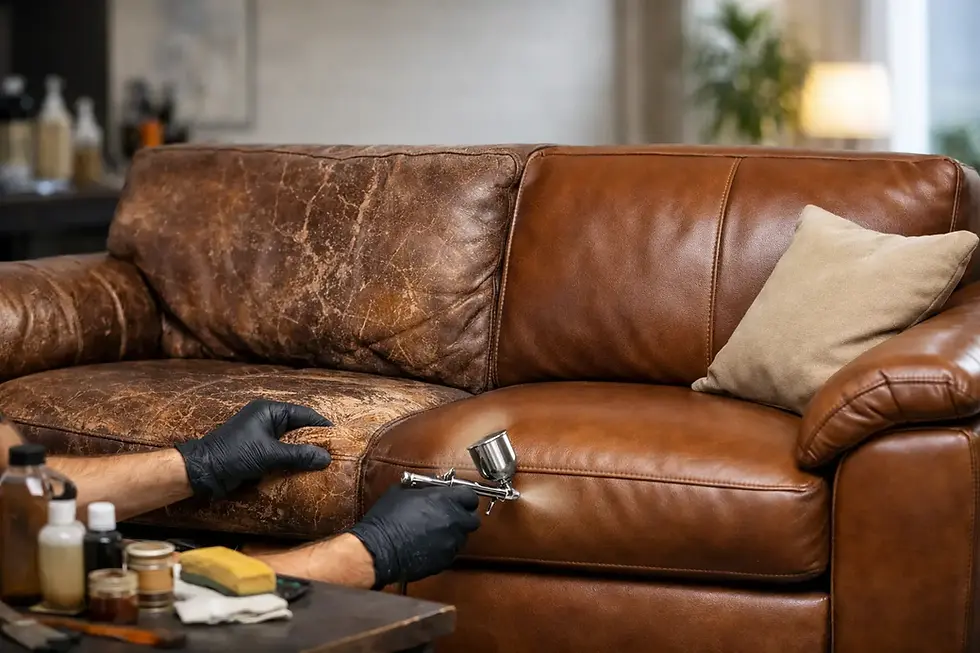
A good repair is a process, not a single coat of colour. The cushion is cleaned to remove residues and body oils, then the damaged area is carefully prepared. Where necessary, flexible repair materials are used to level small scuffs, scratches or minor cracks without creating a hard patch.
The colour is then matched to the furniture. This matters because leather comes in countless shades, and the apparent colour changes with lighting, age and sheen. A cushion with a matt finish needs a different final coating from one with a soft satin finish. Getting the sheen wrong can make an accurate colour match stand out.
Colour is applied in light, controlled layers, allowing it to build gradually and blend beyond the immediate damage. A protective topcoat is then used to help the repair stand up to everyday use. The result should feel natural, remain flexible and avoid the obvious painted look associated with poor repair work.
For furniture that is faded across several cushions or on a whole sofa, a broader colour restoration may offer better value than treating isolated areas. It depends on the condition of the leather, the scale of the wear and whether the original colour can be restored consistently. A clear photo assessment is the quickest way to establish the right approach.
Protect repaired cushions from repeat damage
Once the leather has been restored, small habits make a real difference. Keep leather furniture away from radiators, open fires and prolonged direct sunlight where possible. Heat and UV exposure can dry the leather and cause colour fading, particularly on cushions nearest a window.
Clean light surface dirt before it becomes ingrained, and use only products designed for leather furniture. Take care with dark denim, newspapers, pens and cosmetics, especially on pale upholstery. If a spill or accidental mark occurs, deal with it promptly by blotting and avoid trying several different cleaners in succession.
Pets can be another source of repeated scuffs. Keeping claws trimmed and using a throw on a favourite perch can protect the most vulnerable cushion without changing how the room feels. Rotating loose cushions, where the design allows, also spreads wear more evenly across the sofa.
Get a clear answer before attempting a bigger repair
Photographs are often enough to identify whether a leather cushion needs cleaning, colour restoration or a more involved repair. Take one image of the whole sofa for colour context, one close-up of the damage and one in natural daylight if possible. Include your location and note what caused the mark, particularly where ink, glue, bleach or nail polish is involved.
Ashbourne Leather Care provides mobile leather furniture restoration across Dublin, Meath, Kildare and Louth, bringing specialist repair to your home rather than requiring you to move a heavy sofa. A photo-based quotation gives you a practical view of what can be restored before any work begins.
A well-repaired cushion should not draw attention to itself. It should simply allow you to sit down, look around your room and enjoy the furniture you chose without the damage being the first thing you notice.


Comments