


Understanding Leather Sofa Surface Damage
- ashbourneleathercare

- 2 hours ago
- 6 min read
A pale patch on the seat, a shiny armrest or a dark mark from a spilled drink can make an otherwise good sofa look tired far sooner than it should. Understanding leather sofa surface damage starts with recognising that the visible mark is not always the whole problem. Leather upholstery has layers, finishes and colour coatings that can wear or react differently depending on the cause.
A professional assessment looks beyond whether a mark can be cleaned. The key question is whether the leather itself, its protective finish or its colour coating has been affected. Getting that distinction right helps avoid well-meaning cleaning attempts that can make damage more obvious.
What Counts as Leather Sofa Surface Damage?
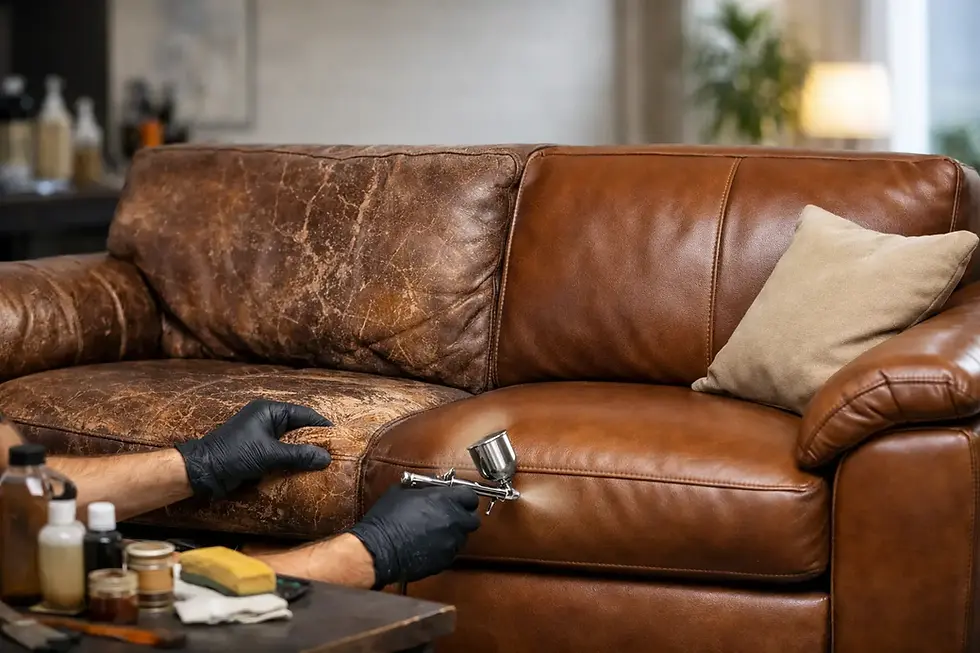
Understanding Leather Sofa Surface Damage. Most modern leather sofas have a protective top finish over a coloured layer. This finish gives the leather its familiar feel, offers some resistance to spills and helps create an even colour and sheen. Daily life gradually wears it down, particularly on the cushions, arms, headrests and front edges where people sit, lean and handle the sofa most often.
Surface damage may appear as a scuff, scratch, faded area, stain, colour loss, cracking or change in texture. Some of these issues sit on top of the finish. Others have gone through the finish and affected the colour beneath. In more serious cases, the leather fibre itself is damaged.
This is why two marks that look similar can need very different treatment. A dark transfer mark from clothing might be removable with the right cleaning process, while a lighter patch may be missing colour and need careful restoration. Treating both with a household cleaner is unlikely to produce the same result.
The Most Common Types of Surface Damage
Wear, fading and colour loss
Natural body oils, friction, sunlight and repeated cleaning can all change the appearance of leather. The seat cushions and arms often fade first, sometimes becoming lighter, duller or patchy. Dark leather may develop pale rubbed areas, while cream and beige sofas can become greyed, yellowed or uneven in tone.
Colour loss is especially common where a leather finish has worn thin. It may look like the leather has been scraped, but it can also develop gradually through years of use. Restoring it properly is not simply a matter of applying a dark dye to the patch. The surrounding colour, finish level and texture all need to be considered so the repair blends naturally with the rest of the sofa.
Scuffs, scratches and scrapes
Scuffs usually affect the top finish or transfer colour from another item, such as a shoe, belt, toy or bag. Light scuffs can sometimes be cleaned or refinished with little intervention. Scratches are more variable. A shallow scratch may only have disturbed the surface colour, while a deeper scrape can expose lighter material beneath or leave a rough edge.
Pet claws are a common cause of fine scratches, particularly on softer leather. They do not always mean the sofa is beyond repair, but repeated claw marks can remove colour across a larger area. A repair needs to address both the marks and the overall finish, otherwise the treated patch may look flatter or shinier than the surrounding leather.
Stains from household accidents
Ink, nail polish, glue, bleach, paint, food and drink can all create difficult marks. The result depends on what was spilled, how quickly it was noticed and whether somebody has already tried to remove it.
Ink may penetrate quickly and spread if rubbed. Nail polish and glue can harden on the surface or damage the finish beneath. Bleach is particularly misleading because it is not a conventional stain. It removes or changes colour, leaving a pale or orange-toned patch that requires colour restoration rather than stain removal.
Oil-based marks can darken leather, while some cleaning products leave a tide mark, faded spot or sticky feel. If the substance is still wet, blot it gently with a clean dry cloth. Do not scrub, soak the area or use nail polish remover, washing-up liquid, baby wipes or strong household sprays. These products may strip the protective coating and turn a small accident into a larger repair.
Cracking, peeling and changes in texture
Cracking can indicate dry, stressed leather, but it can also be a failure in the coloured finish. Peeling is often seen on coated or bonded leather products, where the upper surface begins to lift away. It is important not to assume every sofa is the same type of leather. The material and construction affect what can be restored and how durable the repair will be.
A surface that feels rough, overly shiny or unusually stiff can also point to finish damage or product build-up. Leather conditioners are not a cure for peeling, colour loss or chemical damage. In the wrong situation, adding more product can make the diagnosis harder and complicate subsequent repair work.
Why the Cause Matters as Much as the Mark
The cause of damage determines the right repair method. Sun fading is usually broad and gradual, while a bleach mark is sharply localised. Friction wear tends to appear on contact points. A scratch follows a line or pattern. Dye transfer from clothing often sits where jeans or dark garments repeatedly touch the cushion.
Looking at the pattern helps a specialist decide whether the leather needs cleaning, preparation, colour work, a protective topcoat or a more involved repair. It also helps set realistic expectations. A small scuff can often be made very difficult to spot. Deep damage to the leather grain may still be improved significantly, but the aim is to restore a neat, durable and well-blended finish rather than promise an unrealistic factory-new surface.
Photos taken in natural daylight are useful at the quotation stage. Include a close-up of the affected area, a wider photo showing where it sits on the sofa and an image of an undamaged section for colour comparison. Mention what caused the damage, when it happened and any products already used. Those details can save time and lead to a more accurate recommendation.
When Cleaning Is Enough and When Restoration Is Needed
Surface dirt, light grime and some transfer marks may respond well to professional leather cleaning. This is different from aggressive scrubbing. The goal is to lift contamination while preserving the leather's finish and colour.
Restoration becomes necessary when the coating or colour has been lost, altered or worn away. The affected area may need to be carefully prepared, repaired where necessary, colour matched and refinished to recreate the correct sheen. A good result should not leave an obvious hard-edged patch or a noticeably different texture.
For widespread fading, restoring only one small area can make the rest of the sofa look uneven. In those cases, refurbishment of a whole panel, cushion or larger seating area may give a far better finish. The right scope depends on the condition of the furniture and how consistently the colour has changed over time.
Avoid the Quick Fix That Makes Repair Harder
It is understandable to want to deal with a mark immediately, especially on a cream sofa or a much-loved suite. However, many DIY methods create extra damage by removing colour, spreading pigment or leaving a residue that interferes with restoration.
Avoid abrasive pads, magic erasers, solvent-based cleaners and unknown leather dyes. Do not use shoe polish to disguise faded areas. It may darken the spot temporarily, but it can transfer onto clothing and create a difficult surface to correct. Likewise, oils and heavy conditioners can mask a problem for a short time without repairing the worn finish underneath.
If you are unsure, take clear photos before applying anything. For fresh spills, blot rather than rub and keep the area dry. That simple restraint often preserves more options for a clean, lasting repair.
A Practical Route Back to a Better-Looking Sofa
Leather furniture is worth assessing before it is replaced. Many sofas with faded seats, scuffed arms, accidental stains or localised colour loss remain structurally sound and can be revived in the home. On-site work also means there is no need to arrange collection or be without your furniture while it is away.
Ashbourne Leather Care provides mobile leather restoration for homeowners across Dublin, Meath, Kildare and Louth. Sending photos of the damage and your location is the simplest way to begin. It allows the likely work to be assessed before a visit is arranged.
A mark on leather rarely improves by being ignored, but it does not automatically mean a new sofa is the answer. Deal with surface damage early, use gentle care in the meantime and seek a specialist opinion before trying a product that could alter the finish for good.


Comments