


Best Products for Leather Stain Removal

A stain on a leather sofa tends to happen at the worst possible moment - spilled coffee before guests arrive, a biro mark from the kids, or a greasy head mark that seemed harmless until it darkened the cushion. When people search for the best products for leather stain removal, they usually want one thing: a safe fix that works without making the damage worse.
That is the right instinct. Leather is durable, but it is not forgiving of guesswork. The wrong product can strip colour, dry the finish, spread the stain or leave a shiny patch that stands out more than the original mark. The best approach is to match the product to the stain, the type of leather and the level of damage.
What makes the best products for leather stain removal?
On leather furniture, a good stain remover is not simply the strongest cleaner on the shelf. It needs to lift the contamination while protecting the colour coat and finish. That matters on sofas and chairs because most household leather is finished leather with a protective topcoat, not raw leather that can tolerate heavy scrubbing.
In practice, the best products are usually pH-balanced leather cleaners, dedicated ink removers, degreasers designed for leather, and specialist solvents used carefully for very specific accidents such as glue or nail polish. A product can be excellent for one stain and completely wrong for another. That is where many DIY attempts go off course.
A mild leather cleaner is often the first product worth having. It helps with day-to-day grime, food residue, light marks and general dullness. It is not a miracle fix for every stain, but it is the safest starting point because it lets you assess whether the mark is sitting on the surface or has already affected the finish.
Start with the safest product first
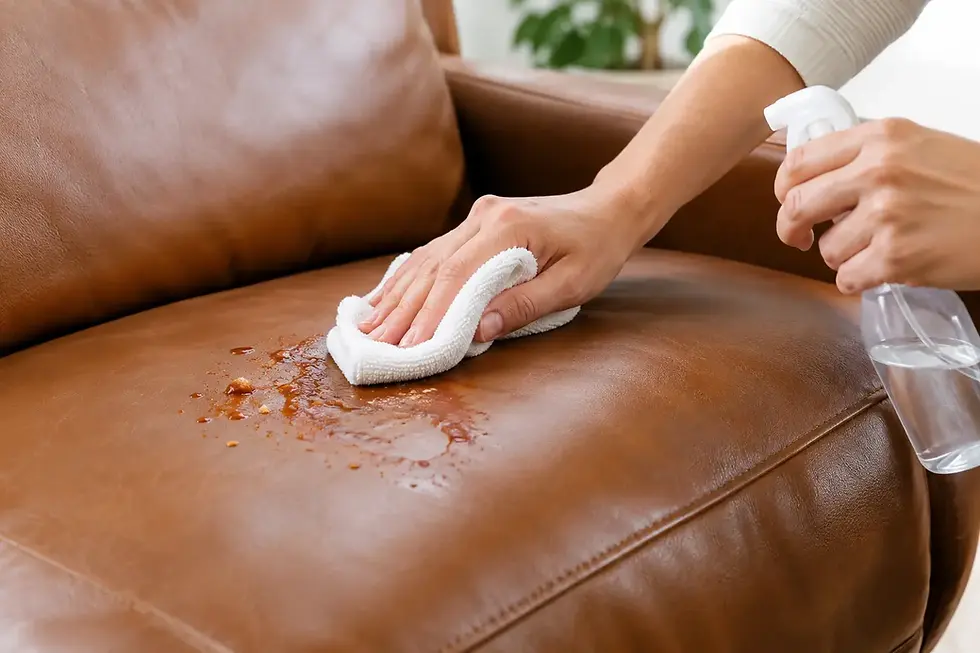
If the stain is fresh, blot it gently with a clean dry cloth. Do not rub. Rubbing pushes the stain deeper and can wear the surface colour. After that, a dedicated leather cleaner applied to a soft cloth is usually the best first step.
Foaming leather cleaners are often a better choice than very wet liquid products because they reduce the amount of moisture soaking into seams and padding. Too much water is a common problem with DIY cleaning. Leather furniture should be cleaned with control, not saturated.
If a gentle cleaner removes the mark, stop there. There is no prize for escalating to stronger products when you do not need them. Leather responds best to measured treatment.
Which products work for different stains?
Ink and pen marks
Ink is one of the most common calls we hear about, and it is also one of the easiest stains to make worse. The best product here is a specialist leather ink remover made for finished leather. These products are designed to target the dye without aggressively stripping the surrounding colour.
What should you avoid? Hairspray, baby wipes, hand sanitiser and strong alcohol. People reach for them because they seem to lift ink quickly, but they can also break down the finish and leave a larger pale patch. On a dark sofa, that often creates a more visible repair problem than the original pen mark.
If the ink has been there for a while, it may already have migrated into the coating. At that stage, cleaning alone may not be enough, and the area may need colour restoration afterwards.
Grease and body oils
Headrests, armrests and seat fronts often develop dark greasy patches over time. These are not always dramatic stains at first, but they build up slowly and become harder to shift. The best product for this kind of issue is a leather-safe degreaser or heavy-duty leather cleaner designed for oil build-up.
Even with the right product, there is a trade-off. Grease can soften and weaken the finish, so once the contamination is removed, the area may still show wear, cracking or colour loss. That is why some greasy stains are actually part cleaning job, part restoration job.
Food and drink spills
For tea, coffee, fizzy drinks or sauce spills, a mild leather cleaner is usually the right starting point. The sooner you deal with it, the better the result. Sugary spills can leave residue that attracts more dirt, so cleaning the whole affected panel often gives a more even finish than spot-cleaning one tiny circle.
If the spill has altered the colour of the leather, especially on pale furniture, the issue may no longer be a removable stain in the usual sense. It may be discolouration within the finish.
Dye transfer from clothing
Blue jeans are a frequent culprit, especially on cream, beige and off-white leather. The best products for leather stain removal in this case are specialist dye transfer removers or professional-grade leather cleaners used early. Timing matters. Fresh transfer has a better chance of lifting cleanly than dye that has sat for weeks.
This is another area where household cleaners often do more harm than good. Dye transfer can look like surface dirt, but treating it too aggressively can damage the topcoat and fix the problem in the wrong way.
These accidents need caution. There is no universal product that is safe for every finish. Some specialist solvent-based removers can help with glue or paint residue, but they must be chosen carefully and tested properly. Nail polish remover from the bathroom cabinet is not the answer. Acetone can strip finish and colour very quickly.
When the contamination is thick or hardened, removal may only be half the job. The leather surface underneath often needs repair and refinishing once the substance is gone.
Products that sound helpful but usually are not
A lot of damage comes from well-meant cleaning attempts. Multi-purpose sprays, washing-up liquid, bleach-based products, furniture polish and baby wipes all show up regularly in failed DIY efforts. They are designed for other surfaces, not colour-finished leather upholstery.
Even saddle soap, often recommended online, is not always suitable for modern leather sofas. It has its place, but not as a blanket solution for every piece of household leather. Upholstery leather needs products made for upholstery leather.
How to choose the right product for your sofa
Before using anything, check whether the leather is finished, aniline or nubuck. Most domestic sofas are finished leather, which is more resilient and easier to clean. Aniline and nubuck are more absorbent and much less tolerant of standard stain-removal products.
Next, look at the stain itself. Is it sitting on the surface, absorbed into the leather, or has it changed the colour coat? If it feels sticky or greasy, cleaning products may help. If the mark looks pale, cracked or stripped, that points to finish damage rather than a removable stain.
Always test in a hidden area first. Apply the product to a cloth rather than directly onto the leather unless the instructions say otherwise. Work gently, and do not scrub. If you see colour on the cloth, stop. That suggests the finish is being affected.
When the best product is not enough
This is the part many websites leave out. Some stains are not really stains any more. They are damage.
Bleach spots, old ink marks, heavy dye transfer, glue residue, scuffs and areas where the colour has worn away usually need more than cleaning. They may require surface preparation, colour matching, refinishing and sealing to restore the look properly. That is why a sofa can still look patchy even after the contamination has been removed.
For homeowners, this matters because the goal is not simply to clean the leather. It is to bring the furniture back to a condition you are happy to live with every day.
If you are unsure whether a mark will respond to a product or needs professional restoration, it is far better to ask before experimenting. A clear photo of the affected area often tells an experienced leather specialist a great deal. For households in Dublin, Meath, Kildare and Louth, Ashbourne Leather Care regularly assesses stains, finish damage and colour loss this way before recommending the right treatment.
The smart approach to leather stain removal
The best results usually come from a simple sequence: identify the stain, start with the mildest suitable product, and stop if the finish begins to react. That may sound cautious, but caution is what protects the value of your furniture.
A good leather cleaner is worth keeping at home for everyday marks. Beyond that, specialist products have their place, especially for ink, grease and dye transfer. But once a stain has become embedded or the surface has been altered, professional repair is often the most cost-effective choice compared with living with the damage or replacing the sofa altogether.
Leather furniture is made to last, and many stained pieces can be brought back far more successfully than owners expect. The key is not using more product. It is using the right one, at the right time, with a clear sense of when cleaning ends and restoration begins.


Comments