


How to Remove Nail Polish on Leather Couch

How to Remove Nail Polish on Leather Couch. A tipped bottle of varnish can turn a good sofa into the first thing you notice in the room. If you have nail polish on leather couch upholstery, speed matters - but so does restraint. The wrong cleaning attempt can do more harm than the spill itself, especially on pigmented or finished leather where the colour coat and protective finish sit on the surface.
That is why the best approach is not to scrub harder or reach for the strongest remover in the house. Leather is a finished material, not a worktop. Once the topcoat is softened, stripped or smeared, what began as a small spot can become a larger repair involving colour loss, shine changes or a rough patch that catches the light.
What to do first with nail polish on leather couch surfaces
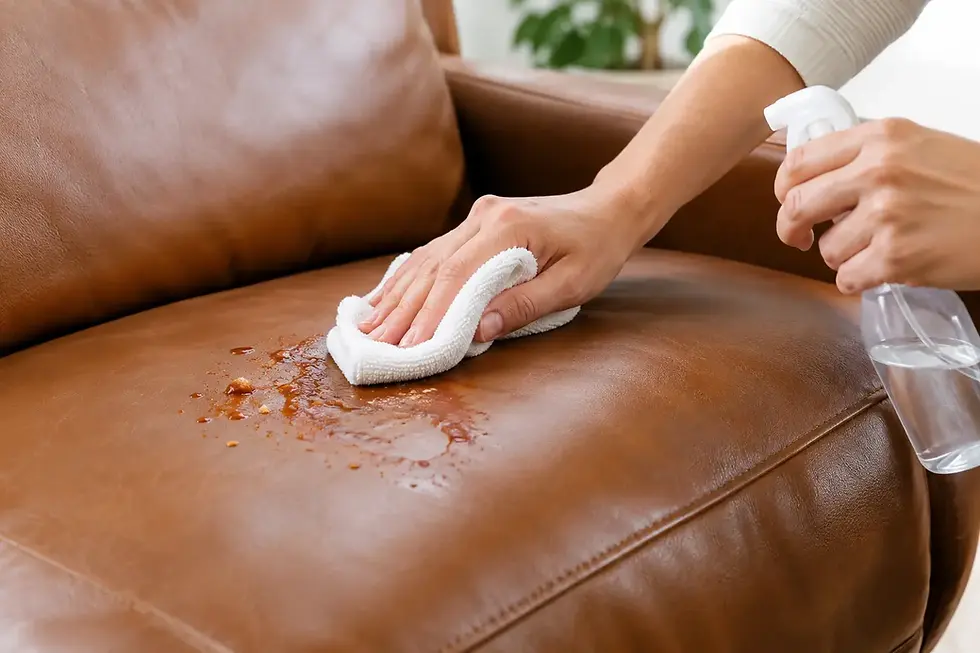
If the polish is still wet, blot carefully with a dry white cloth or plain kitchen paper. Lift from the surface rather than wiping across it. Wiping spreads the colour and pushes it into the grain pattern, which makes the damage harder to control.
If there is a thicker blob sitting on top, let it settle for a moment and gently lift the excess with the edge of a spoon or a blunt plastic card. The aim is to remove what is loose without pressing it deeper into the finish. Work slowly and keep the movement small.
Once the excess is off, stop and assess. Is the polish only sitting on top, or has it already stained, dulled or marked the leather finish? That distinction matters because cleaning a surface deposit is very different from repairing damaged pigment and topcoat.
What not to use
This is where many leather sofas get into trouble. Nail polish remover, acetone, strong solvents, bleach sprays and abrasive cloths are all risky on leather. Even if they appear to remove the polish, they can also remove colour, alter the sheen, dry the surface and leave a pale ring that is more obvious than the original spill.
Baby wipes and household stain sprays are not much safer. They are often suggested as a quick fix, but they can spread the stain, leave residue behind or react badly with the finish. On dark leather in particular, you may not notice the damage straight away. It often appears as a dull patch once the area dries.
If your sofa is aniline, semi-aniline or older leather with a worn finish, the risk is even higher. These surfaces can be more absorbent or less stable, so aggressive cleaning can create permanent marks very quickly.
Can you remove nail polish from leather yourself?
Sometimes, but it depends on the type of spill and how quickly you caught it. If the nail polish has dried as a small surface spot and has not bonded strongly to the finish, a careful professional clean may be enough. If it has smeared, stained or reacted with the leather coating, the issue is no longer just cleaning. It becomes a restoration job.
That is the part many homeowners do not realise. Leather furniture is usually coloured and finished with specialist coatings. When nail polish sits on that surface, or when someone tries to remove it with solvent, the original colour and finish can be disturbed. At that point, the repair may involve surface preparation, colour matching and refinishing the affected panel so the result blends properly.
This is why some online advice feels hit and miss. One sofa may survive a home remedy. Another may end up with a larger, more expensive problem. The difference is often the leather type, the existing condition of the finish and the ingredients in the nail product itself.
When professional repair is the safer option
If you can see any of the following, it is best to stop DIY attempts and get specialist help: colour transfer that will not lift, a shiny or dull patch where you cleaned, cracking in the finish, a rough feel, or a pale area where the original colour has come away.
The same applies if the spill is on a prominent seat cushion, armrest or front-facing panel. These are the areas that catch the eye first, and patchy home treatment tends to stand out. A proper repair focuses not just on removal, but on restoring the colour, texture and finish so the sofa looks right again in the room.
For households in Dublin, Meath, Kildare and Louth, this is exactly the kind of damage a mobile leather specialist can assess from photos first. In many cases, the furniture does not need to leave your home. The damaged area can be treated and restored on site, which is often far more practical than trying to replace a good leather suite because of one accident.
Why nail polish on leather couch damage can look worse later
One of the frustrating things about this type of accident is that the mark can change over time. A fresh spill may look like a simple spot, but after a few cleaning attempts the area can become larger, flatter in sheen or lighter in colour. What you are seeing then is not only leftover polish. It is surface disruption.
Leather upholstery relies on consistency. Even when the damage is small, your eye notices any break in colour or finish. That is why a sofa can seem "worse" after a well-meant attempt to clean it.
There is also the issue of residue. Some removers and sprays leave behind chemicals that continue to affect the leather after the area has dried. That can lead to stiffness, tackiness or premature wear. If the arm of the sofa is involved, constant contact from hands and sleeves only makes the area more obvious.
How a specialist typically restores the area
The right repair depends on the condition of the leather after the spill. In straightforward cases, the remaining contamination can be carefully reduced without disturbing the surrounding finish. In more involved cases, the area is prepared, stabilised and refinished using matched colour and a new protective topcoat.
This matters because leather repair is about appearance as much as stain removal. A clean patch that is lighter, shinier or smoother than the rest of the sofa is still a visible problem. Proper restoration aims to bring the damaged area back into line with the original panel.
At Ashbourne Leather Care, that kind of work is approached with a practical results-first mindset. Customers send photos, receive a quotation, and the repair is carried out on site where possible. For accidental damage such as nail polish, that usually makes far more sense than living with the mark or replacing furniture that is otherwise in good condition.
How to protect the sofa until it is repaired
If the mark is still fresh or the surface feels unstable, keep the area dry and avoid further rubbing. Do not apply conditioner, oil or polish in the hope of disguising it. Those products can interfere with later repair work and make colour restoration more difficult.
If the sofa is in a busy room, place a light clean cloth loosely over the area to stop casual contact until it is assessed. Avoid tape, fitted covers that rub the spot, or anything plastic that may trap heat and moisture.
It is also worth taking clear photos in natural light. A close-up and one wider shot help show both the detail of the damage and where it sits on the sofa. That makes it easier to judge whether the issue is likely to be surface contamination, finish damage or both.
Prevention is simpler than repair
Nail polish accidents tend to happen in the same way - a quick touch-up on the sofa, a bottle balanced on the arm, or a child reaching for something colourful. Leather furniture and cosmetics are simply a bad mix.
If nail products are used in the house, keep them well away from leather seating and use a firm table surface instead. It also helps to act quickly with any spill, whether it is varnish, ink, glue or makeup. The sooner the excess is lifted safely, the better the chance of limiting the damage.
A leather sofa is built to be lived with, but accidents need the right response. If you have nail polish on leather couch upholstery, the safest move is often the simplest one - remove only what lifts easily, avoid household solvents, and get expert advice before a small spill becomes a visible repair across the whole panel. A careful fix now can save the look, finish and life of the sofa.


Comments