


Bring Your Leather Furniture Back to Life at Home
- ashbourneleathercare

- Jul 31
- 5 min read
A faded sofa, a scratch on the armrest or an ink mark from a household accident can make an otherwise good room feel tired. The good news is that you can bring your leather furniture back to life at home with sensible day-to-day care, while knowing when a professional repair is the safer route to a proper, lasting finish.
Leather furniture is made to be lived with. It will naturally soften and develop character over time, but visible colour loss, staining, peeling or damage does not have to mean replacing it. Often, the right approach can restore the appearance of a favourite sofa or chair at a fraction of the cost of buying new.
Start by identifying the problem
Not every mark needs the same treatment. A surface scuff, for example, is very different from a deep scrape where colour has been removed. A grease mark needs a different response to ink, nail polish, glue or bleach. Treating all damage with the same household cleaner can turn a small problem into a much more noticeable one.
Take a close look in natural light before doing anything. Is the leather simply dull and dry? Has the colour faded where people sit most often? Is there a sticky residue on the surface, or has the finish actually cracked? These details matter because leather furniture usually has a protective coating and a coloured finish. Once that finish is disturbed, ordinary cleaning will not put it back.
It also helps to consider the age and type of leather. Smooth, coated leather is common on modern sofas and is generally more practical for family life. Softer aniline and semi-aniline leathers have a more natural appearance but can absorb spills more readily. If you are unsure which you have, avoid strong products until the leather has been assessed.
Bring leather furniture back to life at home with gentle care
For routine maintenance, less is usually more. Dust and grit can act like fine sandpaper on areas that receive regular use, especially seat cushions, armrests and headrests. A soft, dry microfibre cloth used regularly will remove surface dust without adding unnecessary moisture.
When the leather needs a clean, use a product intended specifically for leather upholstery and test it first on a hidden area. Apply it to the cloth rather than directly onto the furniture, then work gently without soaking the surface. Wipe away any residue with a clean cloth and allow the leather to dry naturally, away from direct heat.
Conditioning can help leather remain supple, but it is not a cure for every problem. A suitable conditioner may improve the feel of dry leather and reduce the risk of it becoming stiff. It will not repair peeling, restore missing colour or remove a stain that has penetrated the finish. Using too much can also leave a greasy surface that attracts dirt.
Keep leather furniture away from radiators, stoves and prolonged direct sunlight where possible. Heat can dry it out, while sunlight can gradually fade the colour, particularly on a sofa positioned near a window. Moving the furniture is not always practical, but closing blinds during the brightest part of the day or changing the position of cushions can reduce uneven fading.
What not to use on a leather sofa
A quick online tip or a product from under the kitchen sink can be tempting when a spill happens. Unfortunately, many common household products are too harsh for upholstery leather. Baby wipes, washing-up liquid, abrasive creams, alcohol-based cleaners, bleach and general-purpose sprays can strip colour, affect the protective coating or leave permanent rings.
Avoid scrubbing with rough sponges, toothbrushes or magic erasers. Even if the mark appears to lift at first, the rubbing can remove the finish around it and create a pale patch that is harder to disguise. The same goes for applying oils, shoe polish or furniture polish. These products may darken leather temporarily, but they do not provide a proper furniture repair and can complicate later restoration.
If something has spilled, blot rather than rub. Use a clean, absorbent cloth to lift as much as possible, working from the outer edge of the mark towards the centre. Do not flood the area with water or try to dry it with a hairdryer. Take a clear photograph while the damage is fresh, as this can help a leather specialist identify the most suitable treatment.
When cleaning is not enough
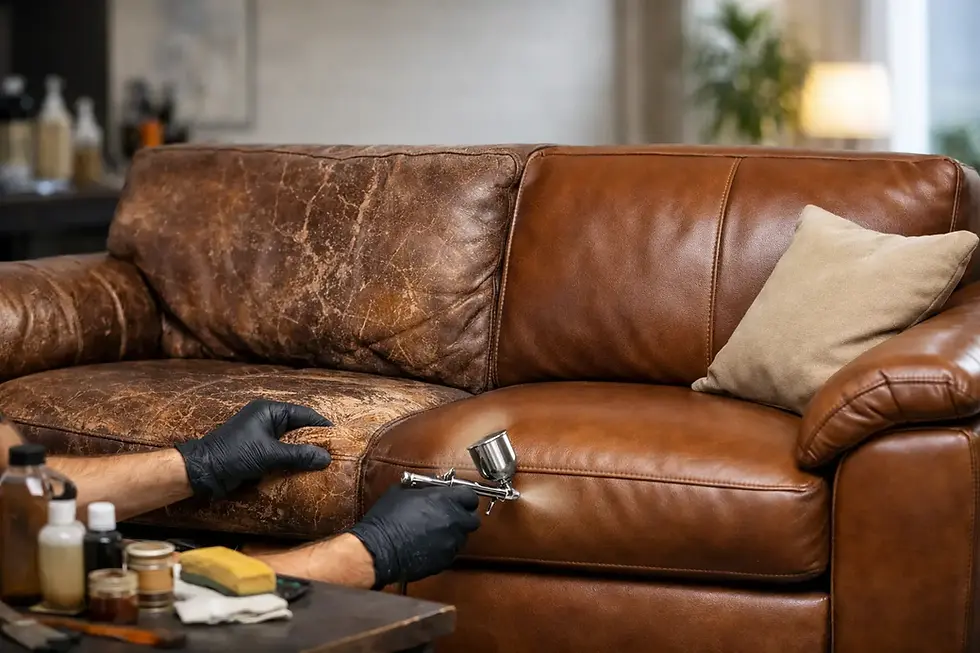
Some damage needs more than a careful clean. Colour loss on seat cushions and armrests is especially common, as body oils, friction and regular use gradually wear through the top finish. A professional colour restoration can match the existing shade, rebuild the worn area where needed and apply a finish designed for furniture use.
Scuffs and scrapes may be repairable where the leather itself remains sound. A targeted repair can smooth the affected area, restore lost colour and blend the sheen so the repair does not stand out, and the final result depends on the location, size and condition of the surrounding leather.
Accidental damage is another situation where speed and expertise make a difference. Ink, nail polish, glue and bleach stains each behave differently. Bleach, for example, often removes dye rather than leaving a removable stain, which means the solution is usually colour restoration rather than cleaning. Trying several products in succession can spread the damage and make colour matching more difficult.
Peeling is worth assessing carefully too. On some furniture, what appears to be leather may be bonded leather or a synthetic material with a deteriorating surface layer. This can affect the repair options available. An honest assessment is more useful than a temporary cover-up, particularly if the damage is widespread.
Professional restoration without taking furniture away
A sofa is not something most households can easily load into a car, and arranging collection can add inconvenience to an already frustrating problem. On-site leather restoration allows the work to be completed in your home, with the furniture remaining where it belongs.
At Ashbourne Leather Care, the process begins with photographs of the damage and your location. This makes it possible to understand the issue, discuss the likely repair and provide a quotation before arranging a visit. For homeowners across Dublin, Meath, Kildare and Louth, it is a straightforward way to deal with worn or damaged leather furniture without the disruption of replacement.
The value of specialist work is not simply in having the right products. It lies in preparing the damaged area correctly, selecting and blending the colour, rebuilding the finish where necessary and matching the level of sheen across the surrounding leather. A repair that is technically sound but too glossy, too matt or the wrong shade will still draw the eye.
Give your furniture the right next step
Your leather sofa does not need to look brand new to look cared for. A few marks may be part of family life, but faded colour, obvious scuffs and accidental stains do not have to become permanent features of the room. Keep routine care gentle, stop before a DIY attempt risks further damage and seek advice when the finish, colour or leather itself has been affected.
A clear photograph, taken in good daylight and showing both the damaged area and the wider piece of furniture, is often the simplest first step towards bringing back the colour, comfort and appearance you chose it for.


Comments