


How Much Does It Cost to Restore a Leather Couch?
- ashbourneleathercare

- Jun 28
- 5 min read
A leather couch rarely wears out all at once. More often, it starts with faded seat cushions, a scuff on the arm, a stain that will not lift, or cracking where the leather takes the most pressure. If you are wondering how much does it cost to restore a leather couch, the honest answer is that price depends on the type of damage, the size of the suite, and how much of the leather needs specialist work.
For most homeowners, restoration is far more cost-effective than replacement, especially when the frame is still solid and the leather is good quality. A professional repair can improve the look, feel, and finish of the furniture without the expense and disruption of buying new.
How much does it cost to restore a leather couch in Ireland?
There is no single flat rate for leather restoration because one sofa may need a light clean and colour refresh, while another may need targeted repairs for peeling, scratches, bleach spots, ink marks, or worn panels. In practical terms, smaller cosmetic jobs often cost much less than a full refurbishment, while severe damage or work across multiple seats and arms will naturally cost more.
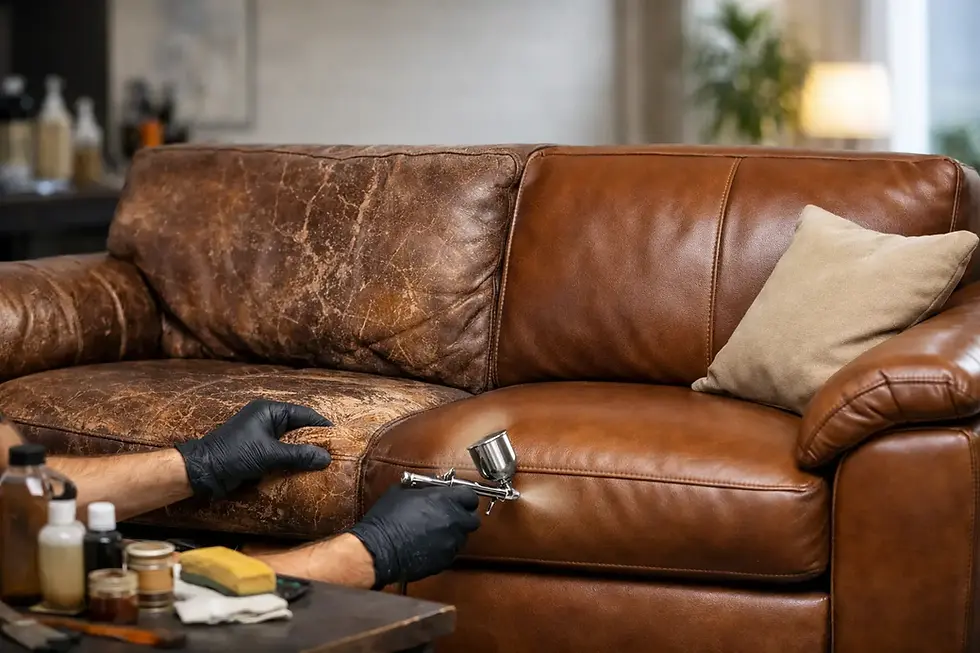
A basic professional service might involve cleaning, preparation, and colour restoration in the most visibly worn areas. A more advanced job could include filling cracks, repairing scratches, correcting accidental damage, and restoring the original finish so the repaired area blends properly with the rest of the couch.
That is why reputable specialists usually quote from photos rather than giving a one-price-fits-all figure. It is the only reliable way to judge the leather type, the extent of the wear, and whether the issue is surface-level or structural.
What affects the cost of leather couch restoration?
The biggest factor is the type of damage. General wear from daily use is usually more straightforward to treat than accidental damage. Fading, light cracking, scuffs, and loss of colour can often be restored very effectively. Bleach stains, nail polish, glue, deep scratches, or heavy ink transfer may need more time, more materials, and more precise colour matching.
The size of the furniture also matters. A two-seater with wear on one cushion is a very different job from a corner sofa with damage across multiple sections. More surface area means more preparation, more restoration work, and more finishing.
Leather condition is another important factor. If the leather is dry, heavily cracked, or has been treated incorrectly in the past with shop-bought products, extra correction may be needed before the final colour and finish can be applied. Some DIY attempts make a repair more difficult, not less.
Colour matching can affect price too. Standard shades are generally simpler than restoring a sofa with a faded bespoke tone or a finish that has changed unevenly over time. Good restoration should not leave an obvious patch. The aim is to bring the leather back to a natural, consistent appearance.
Finally, there is the question of whether the work can be targeted or needs to be more complete. Sometimes only one arm or one seat panel needs attention. In other cases, the whole couch needs refurbishment so the finish is even across the entire piece.
Common restoration jobs and how pricing usually works
Light wear and fading are usually at the lower end of the scale because the leather surface is still intact. These jobs often involve professional cleaning, surface preparation, colour restoration, and sealing the finish.
Scuffs, scratches, and small worn patches can vary. If the damage is localised and the leather beneath is still in decent condition, a targeted repair may be enough. If there are several damaged areas, the price tends to rise because each one needs individual attention.
Cracking and heavy wear are more labour-intensive. The leather may need filling, smoothing, recolouring, and refinishing to improve both appearance and durability. This takes time, especially on high-contact areas like seat fronts, arm tops, and headrests.
Accidental damage often sits in a category of its own. Ink, nail polish, glue, and bleach marks can sometimes be repaired beautifully, but they require specialist treatment. The wrong cleaning attempt at home can spread the stain or damage the finish further, which is why these cases are best assessed early.
When restoration is worth the cost
Restoration is usually worth it when the couch is structurally sound, comfortable, and suits your home, but the leather surface looks tired or damaged. Many leather sofas are replaced before they need to be. If the frame, support, and overall shape are still good, restoring the leather is often the smarter spend.
It is especially worthwhile when you own a quality leather suite that would be expensive to replace like-for-like. New furniture of similar quality can cost significantly more than professional refurbishment, and replacement does not always guarantee better craftsmanship.
There is also the convenience factor. A mobile on-site service means the work can often be carried out in your home, without the hassle of removing large furniture or waiting weeks for a replacement sofa to be delivered.
When a couch may not be worth restoring
There are cases where restoration may not be the best option. If the couch has major structural problems, broken internal supports, collapsed cushions, or severe material failure across large sections, the value equation changes.
The same applies if the furniture is made from low-grade material that is not responding well to repair, or if previous DIY treatments have caused widespread surface damage. A specialist can still advise, but the right answer is not always yes.
That said, many sofas people assume are beyond saving can actually be restored very successfully. The only sensible way to know is to have the condition assessed properly.
Why quotes vary so much
If you have compared prices online, you may already have noticed a wide range. That is because leather restoration is not a standard cleaning job. It is skilled repair work, and two sofas that look similar in a photo can need very different treatment in person.
A low quote may cover only a basic cosmetic touch-up. A more accurate professional quote should reflect preparation, repair, colour work, finishing, and the time needed to achieve a result that lasts. The cheapest option is not always the most economical if the finish fails quickly or the repair remains obvious.
Good restoration should look natural and hold up to everyday use. That comes from proper materials, proper process, and experience with different damage types.
How to get an accurate quote for leather couch restoration
The quickest way to get a realistic price is to send clear photos of the couch from a few angles, along with close-ups of the damage. It helps to include your location, the size of the sofa, and a brief note explaining what happened if the damage was caused by something specific such as bleach, ink, or glue.
This allows a specialist to judge the scale of the work and whether the repair can be localised or needs a broader restoration. It also avoids the frustration of vague pricing that does not reflect the actual condition of the leather.
For homeowners in Dublin, Meath, Kildare, and Louth, Ashbourne Leather Care provides photo-based quotations and on-site restoration, which makes the process straightforward from the start.
What you are really paying for
When you pay to restore a leather couch, you are not just paying for someone to clean it. You are paying for careful assessment, leather-safe preparation, colour matching, repair skill, and a finish designed to bring the furniture back to life.
That matters because leather is a premium material. Treat it properly, and it can continue to look excellent for years. Treat it badly, and the damage often becomes more obvious and more expensive to correct.
If your couch is faded, stained, scuffed, or worn, the best next step is usually not to guess the cost from a generic price list. It is to have it looked at properly, get a clear quote, and find out what can be achieved. You may be closer to a beautifully restored sofa than you think.



Comments