


How to Stop Leather Dye Transfer on Furniture
- ashbourneleathercare

- Aug 9
- 5 min read
How to Stop Leather Dye Transfer on Furniture. A leather sofa should add comfort and character to a room, not leave colour on cushions, throws or clothing. If you need to stop leather dye transfer, act early. Colour rubbing off is usually a sign that the protective finish, original colour coating or both have begun to fail. It may look like a small nuisance at first, but continued use can quickly turn it into visible colour loss across arms, seats and headrests.
The good news is that many cases can be controlled, and professionally restored, without replacing the furniture. The right solution depends on whether dye is coming off the leather itself or whether colour from jeans, cushions or clothing has transferred on to the sofa.
Why leather dye transfer happens
Most modern leather furniture has a coloured surface coating and a clear protective topcoat. This finish gives the leather its even colour and helps it resist everyday marks. Over time, body oils, heat, cleaning products, sunlight and regular friction can wear that protection away.
Once the surface becomes dry, sticky, worn or porous, colour can rub off on to anything in close contact with it. Pale cushions, cream throws and light-coloured clothes usually show the problem first. You may also notice that the affected leather feels different from the rest of the sofa - less smooth, duller, or slightly tacky.
Dye transfer is especially common on well-used areas such as seat fronts, armrests and recliner headrests. It can also occur after an unsuitable cleaner, polish, conditioner or home repair product has altered the finish. Leather needs products designed for its particular coating. A product that leaves a residue can make the surface attract dirt and cause colour to lift more easily.
There is a second type of transfer to watch for: indigo dye from dark denim, printed fabrics and coloured cushions can move on to light leather. This is not the leather losing its colour, but it still needs careful treatment before the stain settles into the finish.
How to stop leather dye transfer immediately
Start by reducing friction on the affected area. Avoid sitting on the sofa in damp dark denim or placing light cushions directly against a leather surface that is shedding colour. If dye is coming off on clothing, do not keep testing it by rubbing with a white cloth. Repeated rubbing removes more of the weakened coating.
Use a clean, dry microfibre cloth to gently lift loose surface dust. Do not scrub, use washing-up liquid, apply baby wipes or reach for solvent-based household cleaners. These can strip more finish, spread the colour or create a shiny patch that is harder to repair properly.
If the leather feels greasy from skin oils, a light clean with a suitable leather cleaner can help, provided the colour is still stable. Always test an inconspicuous area first and apply the cleaner to the cloth rather than directly to the furniture. If colour appears on the cloth, stop. At that point, further cleaning is unlikely to solve the underlying problem.
For pale leather marked by blue jeans or a coloured throw, do not use bleach, nail polish remover or abrasive sponges. These may remove the transferred dye, but they can also damage the leather's own colour. A specialist assessment is the safer option, particularly where the mark is on a prominent seat cushion or armrest.
The difference between cleaning and restoration
How to Stop Leather Dye Transfer on Furniture. Cleaning is useful when dirt, body oils or a recent surface mark is making the leather look tired. It will not restore a failing colour coating. If your sofa's own dye is transferring on to fabric, the issue is usually a breakdown in the finish rather than a cleaning problem.
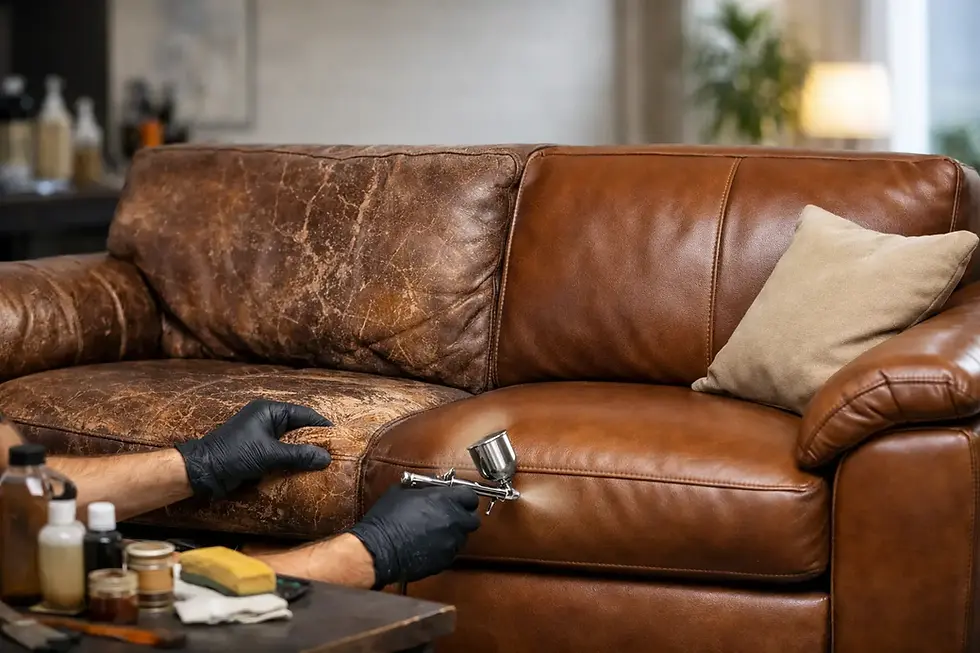
Professional leather colour restoration involves preparing the affected area, stabilising the surface, colour-matching the leather and applying a new colour coating where needed. A protective finish is then applied to help the repaired area stand up to everyday use. The aim is not simply to cover the damage, but to recreate a durable, natural-looking finish that blends with the rest of the furniture.
The amount of work needed depends on the damage. A small worn armrest may need targeted colour repair, while widespread colour loss across several seats may call for a broader refurbishment. This is why photos in good natural light are useful when requesting a quotation. They help a specialist identify whether the problem is transfer, fading, wear, staining or a combination of issues.
Can leather conditioner stop dye transfer?
Conditioner can be beneficial for certain types of leather, but it is not a cure for colour rubbing off. On protected leather upholstery, heavy conditioning products may sit on the surface and leave it slippery or sticky. That can attract grime and interfere with the protective finish.
If the leather has started shedding its own colour, adding conditioner may temporarily make it look richer, but it will not rebuild the missing topcoat. In some cases, it can make transfer more noticeable. The practical answer is to stop applying products until the surface has been assessed.
Older aniline or semi-aniline leather behaves differently from common coated leather and can require a more tailored approach. It may absorb liquids more readily and show natural variations in colour. This is one reason a one-product solution is rarely reliable across every leather sofa.
Preventing leather dye transfer after repair
Once the leather has been cleaned or restored, simple habits make a real difference. Keep the sofa away from direct, prolonged sunlight where possible, as UV exposure can fade colour and dry the finish. Wipe away spills promptly with a soft cloth and avoid allowing wet clothing, towels or pets with muddy paws to sit on the leather.
Choose throws and cushions with colourfast fabrics, especially on pale sofas. New dark denim can release dye, particularly when damp, so take extra care during the first few wears. If a throw or cushion has been washed, make sure it is completely dry before placing it back on the furniture.
A gentle maintenance clean every few months is usually enough for a well-protected sofa. Focus on removing everyday oils from headrests and armrests before they build up. Avoid over-cleaning, however. Leather is not fabric upholstery, and frequent scrubbing can wear the finish prematurely.
It is also worth checking the products already used on the sofa. Silicone polishes, general furniture sprays and strong degreasers are poor choices for leather furniture. If you are unsure what has been applied in the past, tell the restoration specialist. It can affect how the surface needs to be prepared.
When to call a leather restoration specialist
Arrange a professional assessment if colour is visibly coming away on hands, clothing or a cloth, if the leather has become sticky, or if a pale sofa has picked up stubborn denim marks. You should also seek help where the finish is cracking, peeling or wearing through on seat edges. These are signs that cleaning alone may make matters worse.
A specialist can assess the leather in your home, target the damaged areas and restore the colour and finish without the disruption of taking a sofa away. At Ashbourne Leather Care, customers can send photos of the damage and their location to receive a clear quotation before arranging an on-site visit across Dublin, Meath, Kildare and Louth.
Your leather furniture does not need to be perfect to be worth saving. Stopping the transfer early and restoring the worn finish can protect the pieces you use every day, while bringing back the colour, comfort and smart appearance that made you choose them in the first place.


Comments