


Ink Damage Leather Sofa Case Study Results
- ashbourneleathercare

- Jul 20
- 6 min read
Ink Damage Leather Sofa Case Study Results. A pen mark on a leather sofa can look small at first, then become
the only thing you see whenever you enter the room. This ink damage leather sofa case study follows the kind of household accident we regularly see: blue biro transferred onto a light-coloured leather cushion, with the owner understandably worried that cleaning it would make matters worse.
The sofa was otherwise in good condition. It was a well-made, cream-coloured leather suite with mild everyday wear on the seating areas, but no major cracks or tears. Replacing it because of one visible ink mark would have been an expensive and unnecessary decision. The aim was to reduce the stain safely, restore the colour where needed and leave the repaired area looking natural beside the surrounding leather.
The ink damage leather sofa case study
The mark had appeared on the centre seat cushion after a pen was left uncapped. There was a darker line around 8cm long, along with lighter blue transfer where the pen had moved across the surface. The owner had wisely avoided household cleaners, wipes and solvent products before arranging an assessment.
That mattered. Ink can sit on the surface finish of leather, but it can also travel into the coating and colour layer. The longer it remains, or the more it is rubbed, the greater the chance of spreading, colour loss or a shiny patch caused by unsuitable cleaning products.
At first glance, a pen stain can seem like a simple cleaning job. In reality, the condition of the leather, the type of finish, the age of the stain and previous attempts at removal all affect the repair plan. A strong cleaner may lift some ink, but it may also remove the protective finish or disturb the colour beneath it.
Why the first response makes such a difference
Ink Damage Leather Sofa Case Study Results. When ink gets onto leather, the natural instinct is to reach for a damp cloth, disinfectant wipe or a product from under the sink. Unfortunately, these can create a second problem. Rubbing pushes the ink further across the grain, while alcohol-heavy or abrasive products can strip colour and leave the leather dry, pale or patchy.
For a fresh mark, gently blotting any excess ink with a clean, dry white cloth is sensible. Do not scrub. Avoid heat, hairspray, nail polish remover, bleach and multi-purpose cleaners. These remedies are often suggested online, but furniture leather has a protective finish that needs to be treated with care.
Taking a clear photograph in natural light is the best next step. A specialist can assess the colour, finish, size and position of the damage before advising on the most suitable repair. At Ashbourne Leather Care, customers can send photos and their location details to receive a quotation before arranging an on-site visit.
Assessing the leather before treatment
Before any repair work began, the affected panel was examined closely. The leather was a corrected-grain upholstery leather with a pigmented finish - a common and practical choice for family sofas. This type of leather can often be successfully restored because the colour and protective coating sit over the leather surface.
The technician checked whether the ink had penetrated deeply, whether there was colour loss around the stain and whether the cushion had developed a change in sheen from previous wiping. The leather remained sound and supple, which meant targeted restoration was the right option.
This assessment is essential because not every leather is the same. Aniline and semi-aniline leathers, for example, have a more natural and absorbent appearance. Ink can sink in more deeply, making complete removal less predictable. On heavily worn leather, removing the stain may reveal faded colour that also needs to be restored. The best result comes from treating the whole problem, not simply chasing the blue mark.
The careful repair process
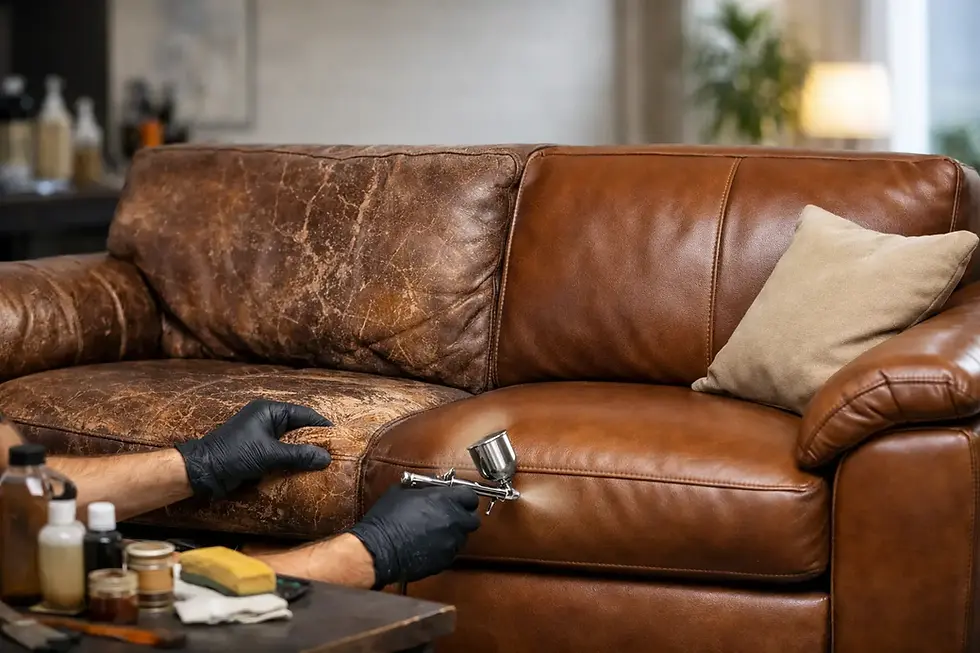
The first stage was controlled cleaning. The surrounding cushion was cleaned to remove normal body oils and surface dirt, helping the repair blend with the true colour of the leather rather than the dirt sitting on top of it. The inked area was then treated gradually with professional leather-safe products chosen for the finish.
The work was carried out in small stages. Rather than flooding the leather or aggressively rubbing at the ink, the technician lifted the transfer carefully while monitoring the colour and sheen. This approach takes longer than a quick wipe, but it helps protect the coating and reduces the risk of spreading the mark.
Most of the visible blue ink was reduced during this stage. However, a faint shadow remained within the colour layer. This is where experience matters. Continuing to use stronger cleaning products could have damaged the cream finish, leaving a larger and more obvious pale patch than the original stain.
Instead, the remaining discolouration was prepared for colour restoration. A colour match was created for the sofa's cream tone, taking account of the slight warmth and age-related variation in the existing leather. Colour was applied only where needed, in light layers, to cover the residual shadow and rebuild an even appearance.
The final stage was refinishing. The repaired section was given a protective finish matched to the sofa's existing low-sheen appearance. This step helps the colour sit naturally within the panel and provides protection against normal use. A finish that is too glossy can make a repair stand out; one that is too flat can make the area look dull. Matching the texture and sheen is as important as matching the colour.
The result: a sofa that looked like itself again
Once the work was complete, the harsh blue line was no longer visible from normal seating distance. The cushion had regained a balanced cream colour, with no obvious pale ring, shiny patch or hard edge around the treated area. The repair was designed to blend into the sofa, not draw attention to itself.
The result was not about making the sofa look brand new in a showroom sense. It was about restoring a well-loved piece of furniture so it looked right in the room again. The owner could keep a sofa they liked, avoid the disruption of replacement and enjoy the room without the ink mark becoming the focal point.
That distinction is worth making. On some sofas, especially where ink has been left for a long period or has entered absorbent leather, a specialist may be able to improve the damage significantly rather than promise total removal. A professional assessment should always set realistic expectations. In many cases, though, colour restoration and refinishing can produce a far better result than customers expect.
What this case shows about ink on leather
Ink damage is rarely just about the ink. It can expose existing fading, worn coating or differences in colour across a frequently used seat cushion. A repair that only removes the stain may leave those issues more noticeable. By combining careful cleaning with localised colour work and finish repair, the surface can be returned to a more even and durable condition.
It also shows why timing helps. Fresh ink is generally easier to deal with than an old mark that has been rubbed repeatedly or treated with unsuitable products. That said, older stains are still worth assessing. Do not assume a damaged sofa is beyond saving because the mark has been there for weeks or months.
For homeowners in Dublin, Meath, Kildare and Louth, on-site repair means there is no need to move a bulky sofa, arrange transport or live without essential seating while it is away. The work can be focused on the affected area in your own home, with the rest of the furniture available as usual.
A practical next step for a marked sofa
If your leather sofa has been marked by biro, marker or another ink product, take a few clear photographs before attempting further cleaning. Include a close-up of the damage and a wider photo showing the colour and condition of the full cushion or panel. This gives a leather restoration specialist the information needed to assess the likely repair and provide a clear quotation.
A visible ink mark does not have to decide the future of a good sofa. With the right treatment, careful colour matching and a properly matched finish, your leather can return to being part of the room you enjoy rather than the problem you keep noticing.


Comments