


Ink Stain on Leather Sofa? What to Do

A pen mark across a leather cushion can happen in seconds, and the wrong cleaning attempt can make it far more obvious. If you have an ink stain on leather sofa upholstery, the first thing to know is simple: act gently, not aggressively. Leather is a finished material, and harsh rubbing, strong solvents, or random household products can strip colour, alter the sheen, and leave a patch that stands out more than the original mark.
Ink is one of the more awkward stains because it behaves differently depending on the leather finish, the type of ink, and how long it has been there. A fresh biro line on protected leather is very different from an old marker stain that has already soaked in. That is why there is no one-size-fits-all fix, even though plenty of online tips make it sound easy.
Why an ink stain on leather sofa surfaces is tricky
Most leather sofas in family homes have a protective topcoat. That finish gives the leather its colour consistency, durability, and a degree of resistance to spills. When ink lands on the surface, it may sit in that top layer for a short time, or it may begin to migrate into the finish itself. Once that happens, removing the ink without affecting the surrounding colour becomes a specialist job.
The problem is not just the stain. It is the risk of damaging the finish while trying to remove it. Baby wipes, hairspray, strong alcohol, acetone, and general-purpose stain removers are common suggestions, but they can soften or strip the protective coating. The result is often a dull patch, a lightened area, or a rough texture that catches the eye immediately.
Some homeowners also make the mistake of over-wetting the area. Leather does not respond well to repeated soaking. Too much liquid can spread the ink, push it further into the surface, or affect the feel of the leather once it dries.
What to do first
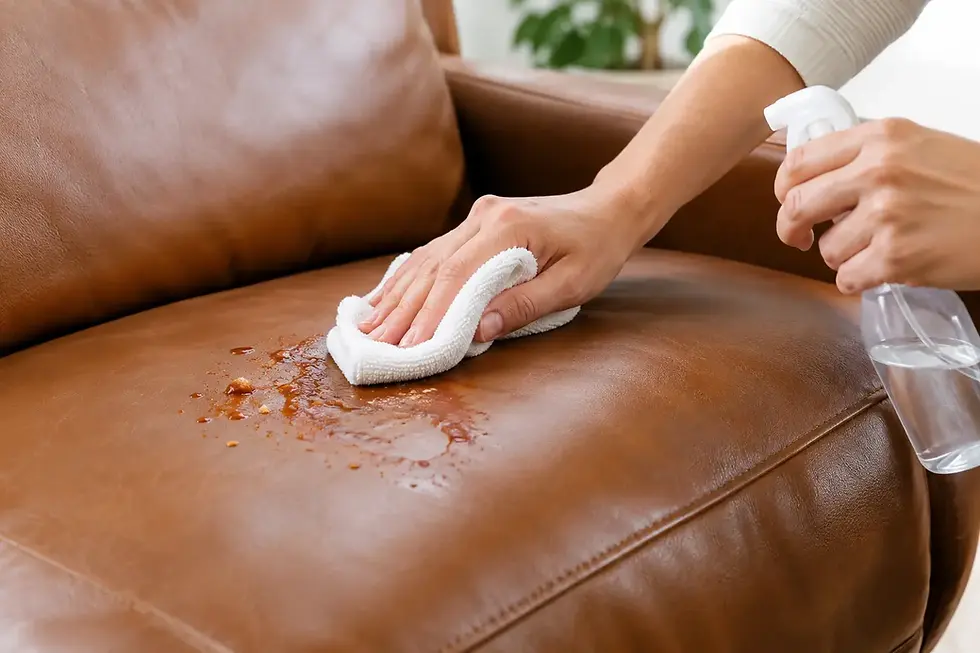
If the mark is fresh, blot very lightly with a clean, dry, white cloth. The goal is to lift any loose ink sitting on the surface, not to scrub it into the leather. White cloth matters because coloured cloths can transfer dye, and kitchen roll can sometimes leave fibres behind.
After that, stop and assess. Is it a small pen line on a sealed leather armrest, or a darker stain that has already settled in? Has someone already tried to clean it? If there has been rubbing, wetting, or use of household cleaners, the job becomes less about stain removal and more about correcting surface damage as well.
A slightly damp cloth with plain water may be safe for a very gentle dab on some finished leathers, but this is where caution matters. If the leather starts to lose colour onto the cloth, or the area looks darker and tacky, do not continue. That is a sign the finish may be vulnerable.
What not to use on ink marks
This is where many leather sofas are accidentally made worse. Products designed for hard surfaces, fabrics, or general household cleaning are rarely suitable for leather upholstery. Even if they remove the ink, they may also remove colour or alter the topcoat.
Avoid hairspray, nail varnish remover, bleach-based products, magic erasers, vinegar mixes, antibacterial wipes, and strong rubbing alcohol. These are often suggested as quick fixes, but quick fixes are not what you want on a visible sofa cushion or arm. The damage they cause can be far more expensive to correct than the original ink mark.
It is also best not to keep trying one remedy after another. Leather surfaces do not benefit from experimentation. Each attempt can change the finish, making professional restoration more involved.
When a DIY approach might work
There are cases where a very minor, very fresh pen mark on a protected leather sofa can be reduced with the correct leather-safe cleaning product and a light touch. But that depends on having the right product for the specific finish and using it properly. It also depends on the stain not having penetrated beyond the surface coating.
For most homeowners, the difficult part is knowing what leather they actually have. Pigmented leather, semi-aniline leather, corrected grain, bonded leather, and older worn finishes can all react differently. If you are unsure, it is safer to avoid guesswork.
The reality is that DIY cleaning is most successful when the stain is caught immediately and the leather is in good condition to begin with. If the sofa is already faded, worn, dry, or showing colour loss, the chances of creating a visible patch are much higher.
When to call a specialist for an ink stain on leather sofa damage
If the mark has been there for more than a few hours, if it is dark and obvious, or if you have already tried to remove it, specialist help is usually the better option. Professional leather restoration is not just about taking away the ink. It is about preserving - or restoring - the original look of the leather around it.
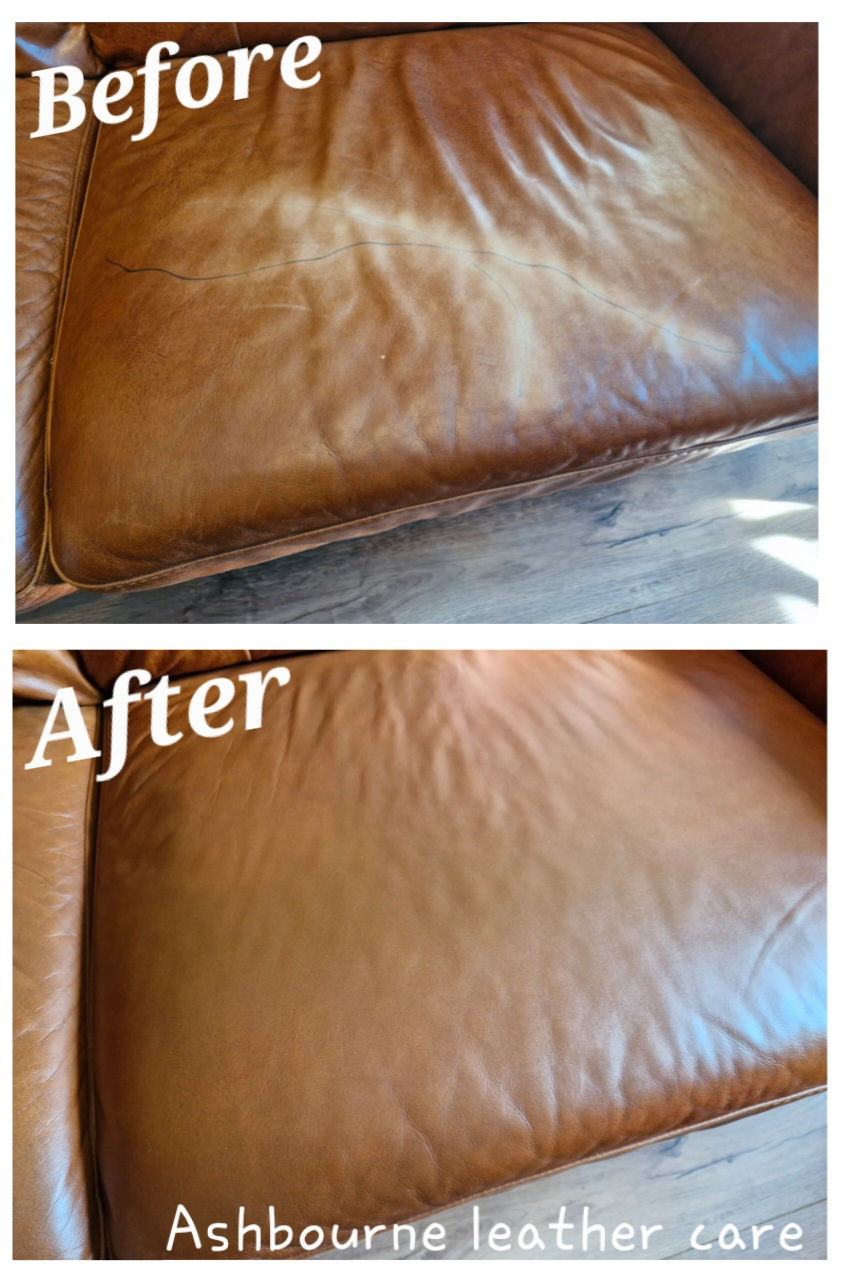
In many cases, treatment involves carefully reducing the stain, preparing the affected section, and then carrying out localised colour work so the repair blends with the surrounding upholstery. That is especially important on high-visibility areas such as seat cushions, front borders, and arms.
This is also why furniture replacement is often unnecessary. A single ink mark does not usually mean the sofa is ruined. With the right repair approach, the leather can often be brought back to a clean, even appearance without removing the furniture from your home.
What a professional repair normally involves
A proper assessment comes first. The technician needs to identify the type of leather, the condition of the finish, the depth of the ink, and whether previous cleaning attempts have affected the area. From there, the repair method is chosen based on the stain itself and the surrounding wear.
Sometimes the ink can be reduced significantly with controlled specialist products. Sometimes the better route is to remove as much staining as safely possible, then restore the colour and finish in that section. On older sofas, a small spot repair may also need blending into nearby faded areas so the result does not look like a separate patch.
This is where craftsmanship matters. Leather repair is not just cleaning. It is colour matching, finish control, and knowing how to leave the surface looking natural rather than overworked.
Why speed matters, but panic does not
Fresh ink is generally easier to deal with than old ink, so it is worth acting promptly. But prompt does not mean frantic. A rushed attempt with the wrong product often causes the biggest problem. It is better to pause, avoid further damage, and get the right advice than to turn one pen mark into a permanent discolouration.
If you are sending photos for a quotation, try to take them in natural light and include one close-up and one wider shot showing the full sofa section. That helps the stain and the overall leather condition to be assessed properly.
Preventing the next ink mark
Ink accidents are common in busy homes. Pens tucked into pockets, children doing homework on the sofa, and notebooks left open on cushions all create opportunities for transfer. Prevention is not complicated, but it does require a bit of routine.
Keep pens and markers off leather surfaces, especially on warm days when finishes can be slightly more receptive to transfer. If your sofa gets heavy daily use, regular leather care also helps. A clean, well-maintained finish is generally easier to deal with than a dry, neglected one.
It is also worth dealing with small scuffs, fading, and wear before a stain appears. Worn leather is more vulnerable, and once the finish has started to break down, every spill or mark becomes harder to manage cleanly.
The practical option for homeowners
Most people do not want to spend days researching leather chemistry, and they should not have to. If your sofa is otherwise in good condition, a targeted repair is usually the practical answer. It saves the cost and hassle of replacement, and it avoids the disappointment of a DIY attempt that leaves the leather looking patchy.
For homeowners in Dublin, Meath, Kildare, and Louth, Ashbourne Leather Care provides on-site leather repair and restoration for damage like ink marks, colour loss, scuffs, and other accidents. The process is straightforward: send photos, get a quotation, and have the work carried out in your home.
A good leather sofa is worth saving, and an ink mark does not have to be the reason it loses its place in your room. The best next step is often the simplest one - stop rubbing, protect the finish, and let the right repair bring the leather back to its best.


Comments