


Mobile Repair Review: Is On-Site Leather Care Worth It?
- ashbourneleathercare

- 11 minutes ago
- 5 min read
Mobile Repair Review: Is On-Site Leather Care Worth It? A leather sofa can look tired long before it is ready to be replaced. One arm may be faded from sunlight, a cushion may carry a pen mark, or the seat colour may have worn away where the family sits every evening. This mobile repair review looks at what professional on-site leather restoration can realistically achieve, what to expect from the process, and when it offers better value than buying new furniture.
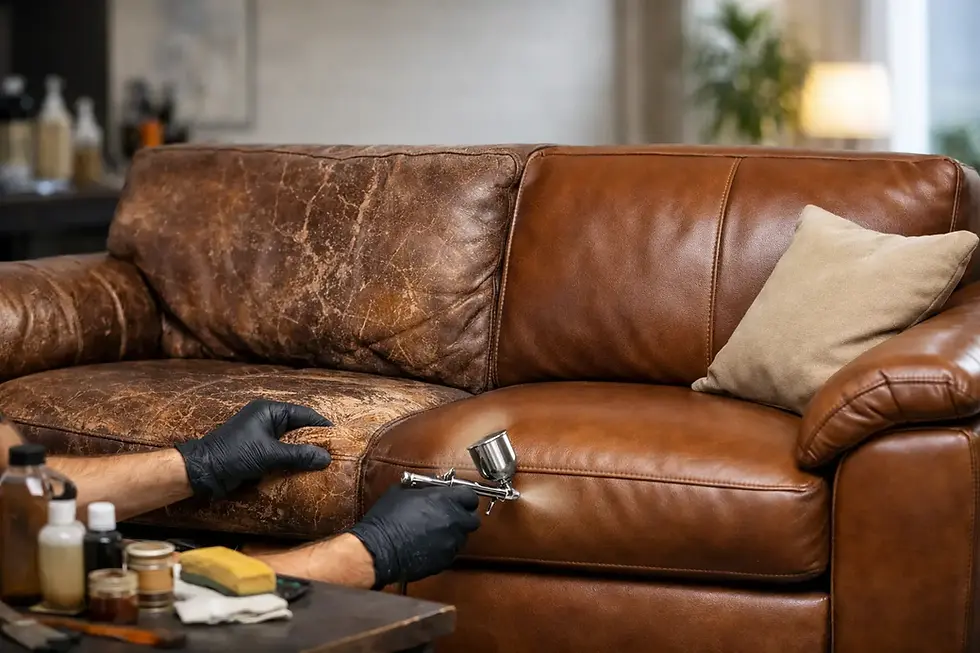
For homeowners in Dublin, Meath, Kildare and Louth, the strongest reason to choose a mobile service is simple: the repair happens in your home. There is no need to organise collection, risk further damage in transit or live without your sofa while it is away. A skilled technician assesses the leather where it sits, carries out the agreed work, and helps bring the piece back to a cleaner, more even and more presentable finish.
What a Mobile Leather Repair Service Can Fix
Mobile leather repair is not a general cleaning visit. It is targeted restoration work for upholstery that has lost its colour, finish or good appearance through normal use and household accidents. The exact result depends on the leather type, the age of the furniture and the extent of the damage, but many visible problems can be improved dramatically.
Colour loss is among the most common issues. Leather on seat cushions, headrests and armrests takes the most contact from skin, clothing and everyday movement. Over time, the protective surface can wear down, leaving faded areas that make an otherwise sound sofa look neglected. Professional colour restoration can rebuild a more consistent tone and finish, blending worn sections with the surrounding leather.
Scuffs and light scratches are also well suited to repair. Pet claws, buckles, zips and rough use can mark the surface, particularly on softer leather. Surface damage may be refinished and recoloured so it is far less noticeable.
Stains require a different approach. Ink, nail polish, glue, bleach and harsh cleaning products can all alter the surface or strip colour from leather. Acting quickly helps, but DIY attempts often make matters worse by spreading the stain or damaging the finish around it. A specialist identifies whether the problem is on the surface, within the coating or a genuine loss of colour, then chooses the appropriate cleaning, repair and refinishing method.
Mobile Repair Review: The Convenience Test
Mobile Repair Review: Is On-Site Leather Care Worth It? The best mobile repair services make the process straightforward from the first contact. Rather than asking you to guess what treatment is needed, they request clear photographs of the damaged area, a wider photo of the furniture and your location. This gives the technician enough information to understand the likely work and provide a quotation before arranging a visit.
Photos should be taken in natural light where possible. Include close-ups of the problem, but also show the full cushion or panel so the extent of fading and the original colour can be judged properly. If the furniture has more than one issue, photograph each one. A small ink mark may be simple to treat, while widespread wear across several seats is a refurbishment job with a different amount of preparation and colour matching.
The on-site appointment is particularly useful for large corner sofas, recliners and furniture that is awkward to move. The technician can inspect the leather closely, protect the work area and complete the treatment without the upheaval of removal. Depending on the repair, there may be preparation, cleaning, colour work and finishing stages. The sofa will need suitable drying time, and you should follow any aftercare advice before putting it straight back into heavy use.
There is a practical trade-off. A mobile specialist works within your home, so good access, reasonable lighting and enough space around the furniture matter.
Repair Versus Replacement: A Fair Comparison
Replacing a leather sofa is rarely just the price of the new sofa. There is delivery, disposal of the old furniture, time spent shopping, and the risk that a replacement will not match the comfort or quality of the piece you already own. This is especially relevant where the frame, cushions and shape of the existing furniture are still sound.
Repair makes strongest financial sense when the damage is cosmetic rather than structural. Faded seats, scuffed arms, worn headrests and isolated stains can make a premium sofa look past its best while leaving its core construction perfectly usable. Restoring the finish can extend its life and improve the appearance of the whole room for a fraction of the disruption of replacement.
It does depend on the condition of the furniture. If the leather is badly cracked across large areas, the filling has collapsed, the frame is unstable or seams are failing throughout, a repair may not be the right answer on its own. A professional assessment should be clear about that. The aim is not to make promises that the leather cannot support, but to recommend the work that will give a worthwhile result.
There is also a sustainability benefit, though the decision is usually a practical one first. Keeping good furniture in use avoids unnecessary waste and respects the materials already in your home. Restoring a well-made leather sofa is often the sensible middle ground between accepting visible damage and starting again from scratch.
What Good Leather Restoration Looks Like
A successful repair should look natural in the room, not freshly painted or overly glossy. Colour matching matters because leather changes over time. A technician should match the current overall shade of the furniture rather than assume the original factory colour is still visible. The goal is a balanced result that reduces the contrast between damaged and undamaged areas.
Finish is equally important. Leather can be matt, satin or more noticeably polished, and the repaired area needs to sit comfortably with the rest of the upholstery. A colour match without the right finish can still draw the eye. Proper preparation, controlled application and suitable sealing are what help repaired leather feel and look consistent.
Expect improvement rather than magic. A faded sofa can regain depth and uniformity, and an accidental mark can become difficult to spot. On heavily worn or previously damaged leather, very close inspection may still reveal that work has been carried out. That is normal. The real test is whether the furniture looks cared for again when viewed as it is used every day.
Questions to Ask Before Booking
Before accepting a quotation, make sure it identifies the issue being treated. Ask whether the work is cleaning, colour restoration, localised damage repair or a combination of these. This helps avoid disappointment where a customer expects a stain removal service but the damage has actually removed colour from the leather and needs refinishing.
It is also sensible to ask about the expected appearance after repair, the likely appointment length and any care instructions. If your sofa is two-tone, an unusual shade or has damage across several cushions, flag this in the photographs. The more accurately the work is understood before the visit, the smoother the appointment is likely to be.
Look for a service focused specifically on leather furniture, rather than a general cleaner offering a wide range of unrelated treatments. Leather responds badly to shortcuts. The wrong solvent, excessive moisture or unsuitable household cleaner can leave permanent marks, so specialist knowledge is worth more than a quick fix.
Ashbourne Leather Care provides mobile leather furniture restoration across Dublin, Meath, Kildare and Louth, with photo-based quotations designed to make the first step easy. Whether the issue is fading, scuffs, ink, bleach, glue or nail polish, clear photographs and your location are the best place to start.
A damaged leather sofa does not have to remain the feature everyone notices when they walk into the room. If the furniture is comfortable, well made and otherwise in good condition, a considered on-site repair can give it the care it deserves and help it look at home again.


Comments