


Recolouring Versus Sofa Covers: Which Is Better?
- ashbourneleathercare

- Aug 9
- 6 min read
Recolouring Versus Sofa Covers: Which Is Better? A faded leather sofa can make an otherwise well-kept room feel tired. The temptation is often to throw a cover over it and move on. But when weighing up recolouring versus sofa covers, the best choice depends on whether you want to hide the problem for now or restore the furniture you chose in the first place.
For many homeowners, a good leather sofa is still comfortable, structurally sound and perfectly suited to the room. It may simply have lost colour on the seats and arms, picked up scuffs from daily use or suffered an accidental mark. In those cases, covering it can be a short-term answer, while professional colour restoration can bring back the original look and finish.
Recolouring versus sofa covers: the real difference
A sofa cover sits over the upholstery. It can disguise worn areas, protect the leather from pets or children, and change the look of a room quickly. Covers are particularly useful where a sofa needs temporary protection during a busy stage of family life, or where you genuinely want a different fabric appearance without making a permanent change.
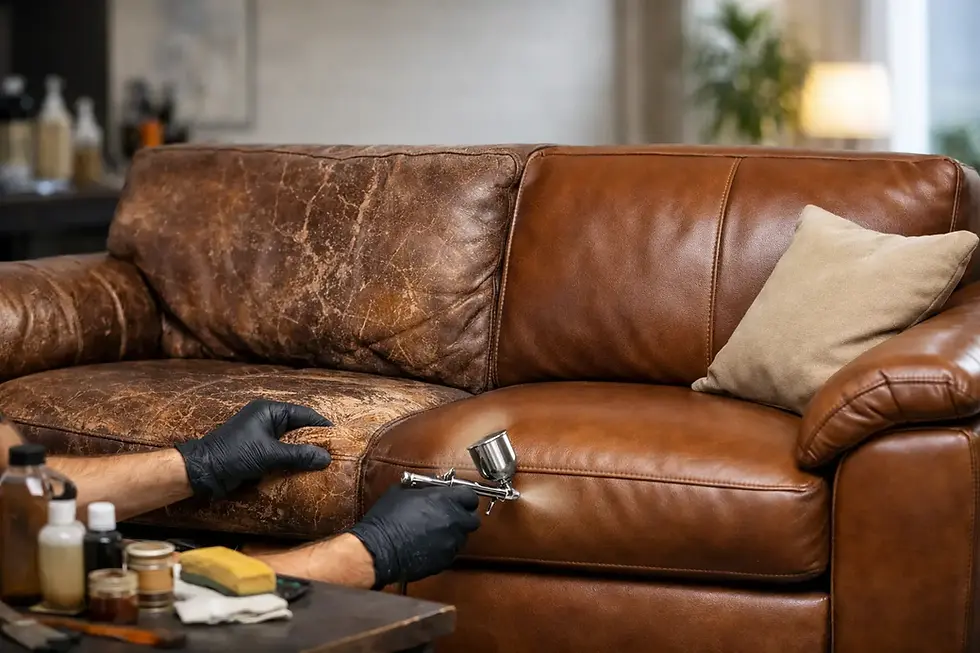
Recolouring works with the leather itself. A specialist cleans and prepares the affected area, repairs suitable surface damage where needed, colour-matches the leather and applies a professional restoration coating and finish. The aim is not to make the sofa look covered up. It is to return it to a more even, cared-for version of itself.
That distinction matters. A cover may conceal faded cushions, but it does not correct the fading underneath. It can hide a bleach mark or a patch of colour loss, but the damage remains. Recolouring addresses the visible problem at surface level, helping the sofa look more consistent when the cover is not there.
When leather recolouring is the stronger option
Recolouring Versus Sofa Covers: Which Is Better? Recolouring is usually the better route when you still like the style, comfort and colour of your leather furniture. A quality sofa often has years of useful life left, even when its appearance suggests otherwise. Replacing it because of faded headrests or scuffed seat cushions can be an unnecessary expense.
Professional colour restoration can be particularly effective for wear caused by everyday use. Common examples include colour loss on armrests, pale or shiny seat areas, scuffs from shoes or bags, scratches from pets, and darker build-up where skin oils have affected the finish. It can also help after isolated household accidents, such as ink, nail polish, glue or bleach stains, depending on the leather type and the extent of the damage.
The result is more natural than a fitted cover because the sofa remains recognisably leather. You keep the shape of the arms, the texture of the upholstery and the original design details. There is no loose material to straighten after someone sits down, no excess fabric around the base and no need to remove a cover before showing the furniture at its best.
There is also a practical benefit for homes with open-plan living areas or formal sitting rooms. Leather has a particular look that fabric covers cannot always replicate. If you bought a leather corner sofa, recliner or suite for its clean finish and easy-care appeal, restoring its colour can preserve the character you paid for.
Recolouring is not the same as painting a sofa
A proper restoration process is designed for leather furniture, not a quick coat of colour applied over dirt or damage. Preparation is crucial. Surface contamination, old cleaning residues and loose finish need to be dealt with before colour work begins. Where appropriate, small repairs are completed first so the restored area has the best chance of blending in.
Colour matching also makes a difference. Black, brown and cream are not single, simple shades once they have aged in a real home. Light exposure, cleaning habits and daily use can all alter the tone. A specialist assesses the existing leather and works towards an even finish that suits the surrounding panels.
Not every piece of leather should be treated in exactly the same way. Some finishes, very worn bonded leather, extensive cracking or major structural damage may need a closer assessment before work is recommended. An honest quotation should reflect what can realistically be achieved, rather than promising a result that the material cannot support.
When sofa covers make sense
Sofa covers are not a bad choice. They are simply better suited to certain situations. If you have recently adopted a puppy, are managing messy toddler years, or need to protect furniture in a rental property, a washable cover can offer useful day-to-day protection. It can also be helpful if you plan to redecorate soon and do not yet know what colour scheme you want to keep.
They can work well on sofas with broad, simple shapes, particularly if you find a cover made for the exact model. A correctly fitted cover is less likely to slip or bunch, although it still needs regular adjustment and washing. For an occasional-use sofa in a spare room, a cover may be all that is needed.
The trade-off is appearance and comfort. Universal covers often fit loosely around recliners, curved arms, corner units and fixed cushions. They can move as people sit down, expose worn leather beneath and make a premium sofa look less tailored. Some fabrics can also feel warm or rough compared with leather, especially in rooms that are used every day.
A cover may hide an ink mark, but it will not stop leather beneath from continuing to dry, fade or deteriorate if the underlying condition is not addressed. If you remove it later, the original issue is still waiting for you.
Compare the long-term value, not just the first cost
The lower upfront price of a sofa cover can be appealing. However, value is not only about the first purchase. Consider how long the cover will last, whether it fits properly, how often it needs washing, and whether you will need to replace it after repeated stretching, shrinking or staining.
Recolouring is a restoration service rather than an off-the-shelf product, so the price depends on the size of the affected area, the damage involved and the type of furniture. Yet it can be a sensible alternative to replacing an otherwise sound leather sofa. It also avoids the disruption of arranging delivery, disposing of old furniture and waiting for a replacement to arrive.
For homeowners who care about presentation, restored leather often adds more value to the room than a cover. This is especially true where only certain areas are visibly worn. There is little sense in hiding a whole three-seater sofa because one seat cushion has faded, if the rest of the furniture remains in good condition.
Four questions to help you decide
Before choosing between a cover and restoration, ask yourself four straightforward questions:
Is the sofa comfortable, stable and in good overall condition?
Do you want to keep the original leather look and colour?
Is the damage localised to stains, scuffs, fading or surface wear?
Do you need temporary protection, or a more lasting improvement?
If the sofa is still a good piece of furniture and you want it to look like leather again, recolouring is likely to be worth exploring. If your priority is temporary protection or a complete change to a fabric look, a cover may suit you better.
What an on-site restoration service involves
For busy households, having the work completed at home is a major advantage. There is no need to transport a bulky sofa, arrange collection or leave a room without seating for days. At Ashbourne Leather Care, the process begins with photos of the furniture and details of your location, allowing the condition and likely work required to be assessed before a quotation is provided.
On the day, the focus is on careful preparation, targeted repair where appropriate, colour restoration and a finish designed to improve the sofa's overall appearance. This approach is useful for leather furniture across Dublin, Meath, Kildare and Louth, where homeowners want a practical solution without the hassle of replacement.
It is worth taking clear photographs in daylight when requesting an assessment. Include a full image of the sofa as well as close-ups of the worn or damaged areas. This makes it easier to identify whether the issue is colour loss, staining, scuffing, cracking or a combination of problems.
Choose the finish you actually want to live with
A sofa cover can be useful protection, but it should not be the automatic answer to tired leather. If you still value the comfort, shape and quality of your furniture, professional recolouring can give it a fresh, even appearance while keeping the leather you bought it for.
The right choice comes down to your goal. Cover it if you need a temporary layer between the sofa and everyday life. Restore it if you want to see your leather furniture looking cared for, comfortable and at home in the room again.


Comments