


Types of Leather Sofa Stains and What to Do
- ashbourneleathercare

- Aug 11
- 5 min read
A leather sofa can look marked for many different reasons, and the right remedy depends on what has actually happened to the surface. The most common types of leather sofa stains include ink, grease, food spills, cosmetics, cleaning-product damage and colour loss. While some fresh marks can be managed carefully, an enthusiastic DIY attempt can spread the damage, strip the finish or leave an obvious pale patch behind.
Leather is not one uniform material. Most modern sofas have a protective topcoat and a coloured finish, while aniline and semi-aniline leathers are more absorbent and less forgiving. Before applying anything, it is worth identifying whether you are looking at a surface deposit, an absorbed stain, a chemical reaction or missing colour.
How to identify types of leather sofa stains
The appearance of a mark gives useful clues. A dark, sharp line is often ink. A darker area that feels slightly slick may be oil or grease. A pale, rough patch can indicate that cleaner, bleach or hand sanitiser has damaged the colour and protective coating rather than simply stained it.
Think about what touched the sofa and how long ago it happened. A spill dealt with immediately has a much better chance of being lifted safely than one that has dried, been rubbed in or treated repeatedly with unsuitable household products. It also matters whether the leather is smooth, textured, matte or glossy, as a repair must match the original colour and finish.
Ink and dye-transfer marks
Ballpoint pen is one of the most familiar leather sofa problems, particularly on armrests, cushions and seat edges. Ink can sit on the surface at first, but it may gradually work into the finish. Dark marks transferred from denim, belts, newspapers or dark clothing can look similar, especially on cream, white and light-grey leather.
Do not scrub an ink mark with alcohol, nail varnish remover, antibacterial wipes or general-purpose sprays. These products can remove the sofa's colour along with the mark. Blot any fresh residue gently with a clean, dry white cloth, without spreading it, then arrange an assessment if the mark remains visible. Targeted professional cleaning can often improve ink dramatically, but results depend on the ink type, leather finish and age of the stain.
Grease, oil and food stains
Takeaway spills, butter, cooking oil, moisturiser and hair products can leave darker patches on leather. Grease is especially deceptive because it may appear to disappear while wet, then return as it settles into the coating or grain. Food stains can also contain oils, dyes, sugar and acids, meaning one product rarely suits every spill.
Lift excess material carefully with a spoon or the edge of a card, then dab - never rub - with an absorbent white cloth. Avoid washing-up liquid, baby wipes and household degreasers. Too much moisture may leave a tide mark, while detergents can dull or weaken the topcoat. A specialist can assess whether controlled cleaning is appropriate or whether the affected area needs refinishing.
Drinks and sticky spills
Tea, coffee, red wine, fizzy drinks and fruit juice can leave both colour and residue behind. On protected leather, a quick response may prevent a lasting mark. Blot the spill from the outer edge towards the centre, using a dry cloth and changing to a clean area as it absorbs liquid.
Do not soak the leather or use heat to dry it quickly. A hairdryer, radiator or strong sunlight can dry the surface unevenly and make the leather feel harder. If a dark ring, discolouration or sticky patch remains once the area is dry, it is safer to stop rather than keep experimenting.
Make-up, nail polish and glue
Foundation, lipstick and mascara often contain waxes, oils and pigments that cling to leather finishes. Nail polish, adhesive and superglue are more serious because their solvents or bonding agents can alter the surface itself. Attempting to peel, pick or dissolve them can tear the finish and expose a much larger area of damage.
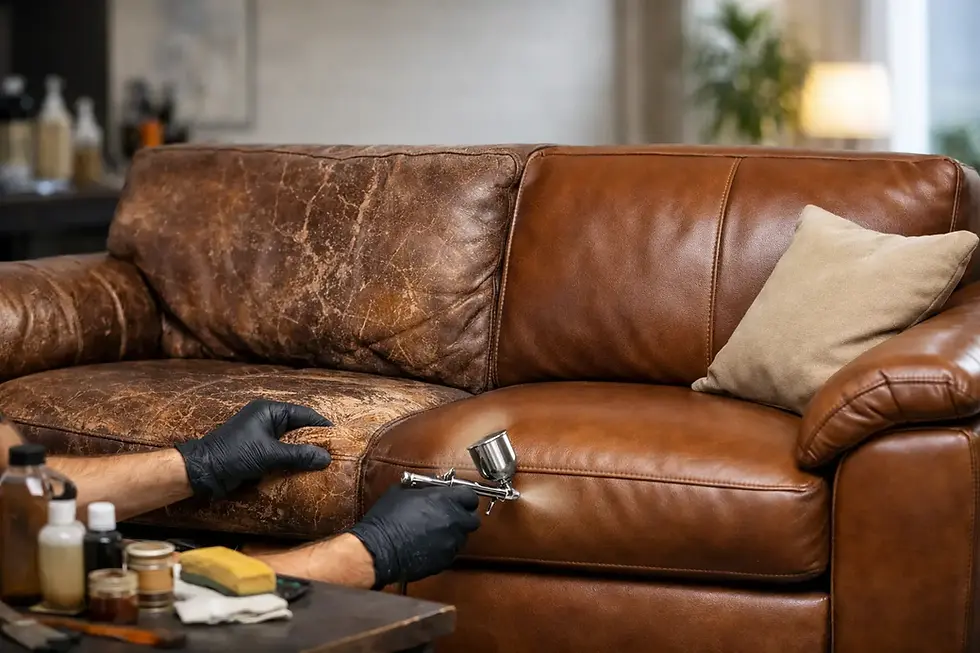
These marks are best left for professional treatment, particularly on light-coloured sofas. The repair may involve carefully removing residue, smoothing the affected finish, rebuilding colour and applying a matching protective coating. The aim is not merely to hide the incident, but to restore a finish that sits naturally alongside the surrounding leather.
Chemical stains and colour loss on leather sofas
Not every pale patch is a conventional stain. Bleach, harsh cleaners, hand sanitiser, perfume, acetone and some pet treatments can remove or alter the colour coating on leather. The result may be white, orange, pinkish or faded, depending on the original dye and the product involved.
This is colour damage, so more cleaning will not put the colour back. It usually needs colour restoration, followed by a finish that matches the sheen of the sofa. The same applies to wear on headrests, seats and armrests. Body oils, friction and years of use can gradually remove colour, leaving areas that look dirty even after cleaning.
A proper restoration considers the exact shade, not simply whether the sofa is called brown, grey or black. Leather often contains subtle undertones and changes in sheen across the grain. A colour that is close but too glossy, too flat or too cool can make a repair more noticeable than the original damage.
Marks that look like stains but are actually damage
Scuffs, scratches, cracking and flaking are often mistaken for stains because they change the colour of the leather. A scrape may expose a lighter layer underneath. A worn armrest can develop a darker, dirty-looking appearance where the protective coating has broken down. Cracking can catch dirt in the creases, making the damage look worse.
These issues need repair and refinishing rather than stain removal alone. Cleaning can improve surface grime, but it cannot replace lost colour or rebuild a damaged finish. The best result comes from treating the cause first, then restoring the area to match the surrounding leather as closely as possible.
What to do before a leather stain gets worse
The first few minutes matter. Remove any solid material carefully, blot liquid with a white absorbent cloth and keep the area dry. Avoid coloured cloths, kitchen sprays, abrasive pads, magic erasers, steam cleaners and internet remedies involving vinegar, baking soda or solvent. A product that seems harmless on one leather type can cause permanent change on another.
Take clear photographs in natural light before applying anything. Include a close-up of the mark and a wider photo showing the sofa colour and overall condition. This helps a leather specialist identify whether cleaning, repair or colour restoration is the sensible route, often before visiting your home.
When professional leather restoration is the better option
Professional help is particularly worthwhile for ink, bleach, nail polish, glue, dye transfer, deep grease marks and any stain on pale or expensive leather. It is also the safer choice where an earlier cleaning attempt has left a faded patch, sticky residue or uneven sheen.
Ashbourne Leather Care provides on-site leather sofa restoration for homeowners across Dublin, Meath, Kildare and Louth. By sending photos and your location details, you can receive a clear quotation before arranging a visit. There is no need to move a heavy sofa or risk making a small accident into a larger repair.
A marked sofa does not automatically need replacing. Stop the rubbing, keep harsh products away from the affected area and get it assessed while the damage is contained. With the right treatment, many stains and colour problems can be brought back to a finish that feels at home in the room again.


Comments