


7 Best Leather Sofa Cleaners for Safer Care

7 Best Leather Sofa Cleaners for Safer Care. A leather sofa can look tired long before it is ready to be replaced. Everyday skin oils, denim transfer, food marks and sunlight gradually dull the finish, while one ink pen or splash of bleach can cause immediate damage. The best leather sofa cleaners do more than make the surface look brighter for an afternoon - they clean safely without stripping colour, drying the leather or leaving a sticky residue that attracts more dirt.
The right choice depends on the type of leather and the problem in front of you. A cleaner that is excellent for weekly maintenance may do very little for a deep stain, fading or a worn armrest. Knowing that difference can save your sofa from unnecessary damage and help it stay looking its best for years.
What makes a leather cleaner a good choice?
7 Best Leather Sofa Cleaners for Safer Care. Most modern leather sofas have a protective finish over the hide. This is often called pigmented, protected or finished leather. It is durable, but it still needs gentle care. A suitable cleaner lifts everyday soil from that protective surface without attacking the colour coating underneath.
Look for a cleaner made specifically for leather upholstery, ideally with a neutral or near-neutral pH. It should be used sparingly, applied to a soft cloth or sponge rather than poured directly onto the sofa, and removed with a clean, dry cloth. Strong fragrances, heavy oils and aggressive solvents are not signs of a better product. In fact, they are often a reason to leave it on the shelf.
Before using any cleaner, test it on a small hidden section, such as beneath a cushion or at the back of the sofa. Check for colour transfer, a change in sheen or a tacky feel once the area has dried. This simple step matters, particularly on older furniture where the finish may already be fragile.
The best leather sofa cleaners by job
There is no single bottle that suits every mark. These are the cleaner types that are most useful around the home, and the situations in which they make sense.
1. A pH-neutral leather cleaner for regular care
For most households, this is the best starting point. A purpose-made pH-neutral leather cleaner removes body oils, light grime and the dull film that builds up on seat cushions, headrests and armrests. Used every few months, it keeps dirt from becoming embedded and helps the original colour look more even.
Work one small section at a time using a soft white cloth. White is useful because it makes it easier to spot any colour transfer. Wipe gently rather than scrubbing, especially along seams and on areas with creasing.
2. Leather cleaning foam for controlled application
A foam cleaner can be a sensible option when you want to avoid over-wetting the leather. It is particularly useful on vertical panels, sofa arms and detailed stitched areas because the product stays where you place it.
Foam is not automatically gentler than liquid cleaner, so still check that it is designed for upholstery leather. Use only enough to create light coverage. Saturating leather can lead to tide marks, stiffness and moisture trapped around seams or cushioning.
3. A soft leather cleaning brush for textured grain
A soft brush is not a cleaner on its own, but it can make the right product work far better. Natural-looking grain, embossed finishes and textured seating can hold dirt in the low points where a cloth cannot reach. A soft upholstery or leather brush used with a suitable cleaner can lift that grime without harsh rubbing.
The key word is soft. Avoid nail brushes, stiff household brushes and anything with sharp plastic bristles. Use light circular motions, then wipe away the loosened dirt with a clean cloth.
4. Leather degreaser for dark headrests and armrests
Dark patches on headrests, armrests and favourite seats are often caused by accumulated skin oil, hair products and hand cream. A standard cleaner may improve them, but heavy grease can require a specialist leather degreaser.
This is where care is needed. Degreasers can be effective, but a poorly chosen or overused product may affect the finish or leave a noticeable patch. If the area remains darker after gentle cleaning, do not keep applying stronger products. The leather may need professional preparation and colour restoration rather than more cleaning.
5. A leather-safe stain cleaner for fresh spills
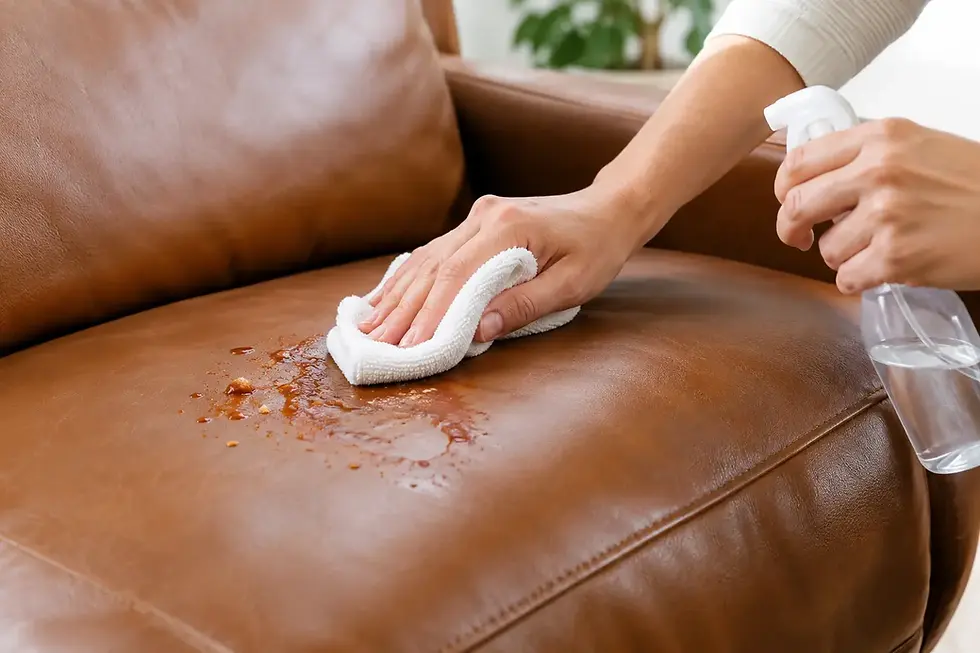
For a fresh food or drink spill, act promptly. Blot the area with a clean absorbent cloth, working from the outside of the mark towards the centre. Do not rub, as this can push the spill deeper into the grain or spread it across the surface.
A leather-safe stain cleaner can then be used according to its instructions. It is most likely to help with recent, surface-level marks. Old stains, oily marks and dye transfer are more difficult because they may have penetrated the finish or altered its colour.
6. A leather protection cream after cleaning
Cleaning and conditioning are not the same job. Once a sofa is clean and fully dry, a suitable leather protection cream can help reduce future soiling and make routine wiping easier. This is especially worthwhile on busy family sofas and lighter-coloured leather.
Choose a protector made for finished furniture leather. Heavy conditioners, waxes and oils may be appropriate for some uncoated or aniline leathers, but they can create uneven darkening or an unwanted shine on protected sofas. If you are unsure what type of leather you own, use the minimum product necessary until you have confirmed it.
7. Professional restoration for damage that cleaning cannot fix
Some problems are not cleaning problems at all. Fading from sunlight, colour loss on seat edges, cracking finishes, scuffs, scratches, bleach spots, ink, glue and nail polish often need a repair process rather than another cleaner.
Professional restoration can involve careful cleaning, surface preparation, targeted repairs and colour matching to restore the original appearance and finish. For a good-quality sofa, this is frequently more cost-effective than replacement, particularly when the structure and comfort of the furniture are still sound.
Products and methods to avoid on leather sofas
It is understandable to reach for whatever is under the kitchen sink when a spill happens. Unfortunately, common household products can do more harm than the original mark. Avoid using washing-up liquid, all-purpose sprays, disinfectant wipes, bleach, alcohol-based cleaners, acetone, hairspray and abrasive cream cleaners. These can strip protective coatings, remove colour and leave dry, pale or sticky patches.
Baby wipes are another frequent mistake. They may seem mild, but many contain alcohol, moisturisers or detergents that are not suitable for leather finishes. Saddle soap is also not a universal answer. It was developed for tack and may leave residues or alter the feel of modern upholstered leather.
Steam cleaning deserves caution too. Heat and moisture can affect adhesives, finishes and the leather itself. A sofa should never be soaked in an attempt to remove a stubborn mark.
How to clean a leather sofa safely at home
Start by vacuuming the sofa with a soft brush attachment, paying attention to creases and beneath loose cushions. Grit left in these areas acts like fine sandpaper when people sit down.
Next, apply a small amount of leather cleaner to a cloth, not directly to the furniture. Wipe gently in manageable sections, changing to a fresh part of the cloth as dirt lifts. Do not chase one mark with repeated rubbing. Let the leather dry naturally away from radiators, fires and direct sunlight, then assess the result before applying a compatible protector.
For ordinary maintenance, a light clean two to four times a year is usually enough. Homes with children, pets, pale leather or frequent use may benefit from more regular care. Daily use does not mean daily cleaning - over-cleaning can wear the finish just as surely as neglect.
When it is time to call a leather specialist
If a mark has changed the colour of the leather, feels rough or sticky, or has not improved after one careful attempt with a suitable product, stop there. The same applies to peeling, flaking, cracked finishes and deep scratches. These signs call for a restoration approach, not more force.
At Ashbourne Leather Care, photographs and location details can be used to assess the damage and provide a quotation before an on-site visit. For homeowners across Dublin, Meath, Kildare and Louth, this means practical advice and specialist work without the inconvenience of taking a sofa away.
A well-chosen cleaner protects your leather from everyday wear. For the accidents and visible damage that cleaning cannot reverse, timely professional care can bring the colour, finish and beauty of your sofa back to life.


Comments