


Best Leather Sofa Restoration Methods Explained
- ashbourneleathercare

- Jul 11
- 5 min read
Updated: Jul 17
Best Leather Sofa Restoration Methods Explained. A leather sofa can look tired long before it is ready to be replaced. Faded seat cushions, worn headrests, scratches from pets, a splash of bleach or an ink mark can make a good-quality piece feel out of place in an otherwise well-kept home. The best leather sofa restoration methods are not one-size-fits-all fixes. The right approach depends on the type of leather, the cause of the damage and whether the finish itself has been affected.
For homeowners, the goal is usually simple: bring back the colour, comfort and smart appearance of the sofa without the cost and disruption of buying new furniture. In many cases, professional restoration can achieve exactly that, on site and without taking the sofa away.
Choosing the Best Leather Sofa Restoration Method
Best Leather Sofa Restoration Methods Explained. Leather is durable, but its surface is not invincible. Most modern leather sofas have a protective coloured finish over the hide. When that finish wears, fades or becomes damaged, the repair needs to rebuild and blend the surface rather than merely cover it up.
A proper assessment comes first. What appears to be a stain may be colour loss. What looks like a scratch may have cut through the finish and exposed the leather beneath. A dark patch may be body oils built up over years, while a pale mark could be bleach damage that has stripped colour from the surface.
The best result comes from treating the actual problem, not applying a generic cleaner or dye. This is why a photo-based quotation is useful: clear images in daylight, together with your location and a brief description of what happened, help a specialist identify the likely repair process before visiting.
Deep cleaning for ingrained dirt and body oils
Cleaning is often the first stage of restoration, particularly on sofas with darkened headrests, armrests and seating areas. Everyday contact transfers natural oils from skin and hair, along with residue from household products. Over time, this can leave leather looking dull, greasy or uneven in colour.
A specialist leather clean removes this build-up with products designed for upholstery leather. The aim is to lift dirt safely without stripping the factory finish or soaking the material. Household cleaners, washing-up liquid, baby wipes and strong sprays can do more harm than good. They may leave residue, dry the leather or weaken the protective coating.
Cleaning can make a significant visual difference where the issue is surface grime. It will not, however, restore worn colour, repair a scrape or remove a chemical stain that has altered the finish. Where wear is visible after cleaning, colour restoration is usually the next step.
Colour restoration for faded and worn areas
Colour loss is one of the most common reasons people consider leather sofa refurbishment. It often begins on seat edges, armrests and the back cushions where the sofa gets the most use. Dark brown, black and cream sofas can all fade, although the damage may show differently depending on the colour and finish.
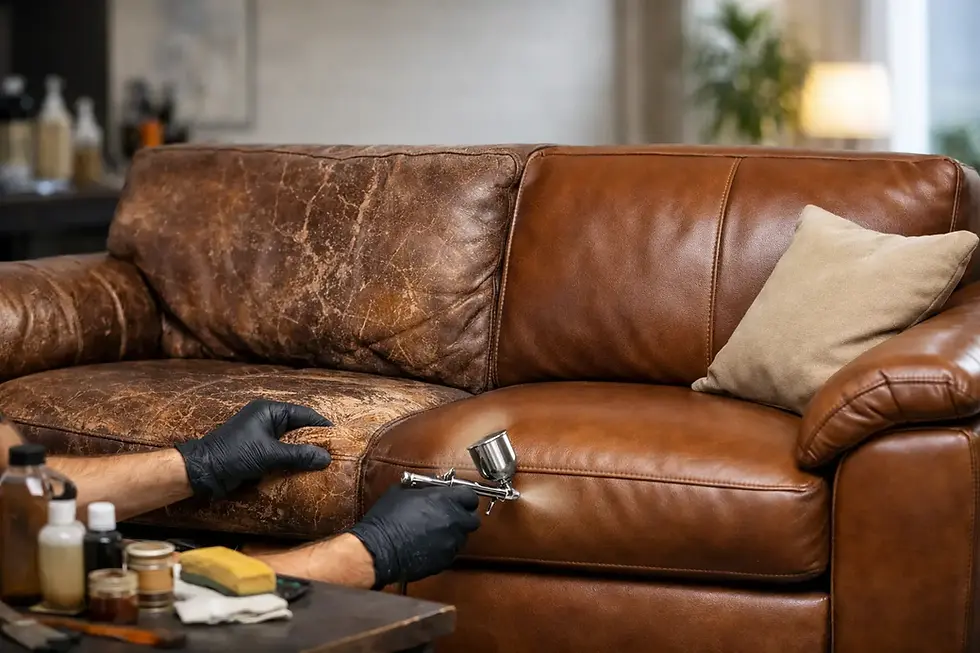
Professional colour restoration involves carefully preparing the area, matching the existing shade and applying specialist colour in light, controlled layers. The work is then finished with a protective coating in the correct sheen, whether that is matt, satin or a gentle gloss. This matters because a colour match alone can still look wrong if the repaired area is noticeably shinier or flatter than the rest of the sofa.
For widespread wear, refurbishing connected panels or a larger section can give a more natural result than treating one small patch in isolation. There is a balance to consider: targeted repairs are efficient for local damage, while broader colour work may be the better choice when the whole sofa has faded unevenly.
Repairing scuffs, scratches and scrapes
Scuffs and scratches need attention before colour is applied. Light surface marks may only require preparation and refinishing, but deeper scratches from a buckle, pet claw or sharp object can leave raised edges, roughness or exposed leather.
The repair method depends on depth. A technician may smooth damaged edges, use flexible repair compounds where needed and recreate the texture of the surrounding leather before restoring the colour and finish. Done well, the repaired area blends into the panel rather than looking like a painted-over mark.
DIY repair kits can be tempting for small scuffs. They can be useful for very minor marks if the colour is close and the leather is otherwise sound. The risk is that an unsuitable filler, heavy-handed sanding or an incorrect top coat creates a harder repair to correct later. On a prominent seat cushion or armrest, professional work is generally the safer investment.
Treating ink, glue, nail polish and accidental stains
Accidents happen quickly, especially in busy homes. Ink from a pen, nail polish, glue, paint and make-up can all bond to the leather finish. Bleach and other harsh chemicals are different again, as they may remove colour rather than leave material sitting on the surface.
The most useful first step is restraint. Do not scrub the area or reach for nail varnish remover, bleach, white spirit or an abrasive sponge. These products can spread the stain, dissolve the finish or create a larger discoloured patch. If a spill is fresh, gently blot it with a clean, dry cloth without pressing it further into the leather.
A specialist can assess whether the mark can be safely lifted, whether the surface needs a local repair, or whether colour restoration is required. Ink and glue may need careful removal followed by refinishing. Bleach stains often need colour rebuilt in the affected area, as the original pigment has been damaged.
Fixing cracks, peeling and damaged finishes
Cracking and peeling require a more careful diagnosis than ordinary wear. Genuine leather can dry and crack over time, particularly if it has been exposed to direct heat, strong sunlight or unsuitable cleaning products. Peeling may also indicate bonded leather or a heavily coated material, where the surface layer is failing.
Repair is possible in many situations, but expectations should be realistic. Small cracks, worn areas and local peeling can often be stabilised, filled and refinished to improve the sofa considerably. If large areas of a bonded leather surface are breaking down, the repair may be more extensive and may not offer the same long-term outcome as restoration on good-quality genuine leather.
This is where honest advice matters. A specialist should explain what can be restored convincingly, what will need ongoing care and when replacement may be more sensible. The best repair is not simply the quickest option - it is the one that suits the condition and value of the furniture.
Protecting a Restored Leather Sofa
Once a sofa has been restored, sensible care helps preserve the result. Keep it away from radiators, stoves and prolonged direct sunlight where possible. Heat dries leather, while sunlight can fade colour and make wear more noticeable on exposed sections.
Use products made specifically for your type of leather and avoid over-conditioning. More product is not always better, particularly on protected leather finishes. Regular light cleaning is preferable to leaving oils and dirt to build up for years. If a spill occurs, blot promptly and seek advice before trying a household remedy.
It is also worth rotating loose cushions where practical. This helps distribute use and reduces the obvious contrast between frequently used seats and less-used sections of the sofa.
When to Call a Leather Restoration Specialist
If the damage is visible every time you walk into the room, it is usually worth getting an expert opinion. Colour loss, scuffs, ink, bleach marks, discolouration, nail polish and glue can often be repaired more effectively than homeowners expect, especially when addressed before the damage spreads or becomes ingrained.
Ashbourne Leather Care provides mobile leather furniture restoration across Dublin, Meath, Kildare and Louth, bringing specialist colour repair, cleaning and refurbishment directly to your home. Send clear photos of the affected area, include a wider photo of the sofa and share your location for a straightforward quotation.
Your sofa has already earned its place in your home. With the right repair method and careful workmanship, it can look cared for again rather than worn out.


Comments