


Best Products for Leather Stain Removal at Home
- ashbourneleathercare

- Jul 11
- 5 min read
Updated: Jul 17
Best Products for Leather Stain Removal at Home. A leather sofa can look as though it is beyond saving after an ink mark, food spill or mystery stain appears on the cushion. The good news is that the best products for leather stain removal are usually specialist leather-care products, not whatever happens to be under the kitchen sink. Choosing the right one matters because leather is a finished surface, not a fabric. The wrong cleaner can remove colour, leave a pale ring or make a small stain far more noticeable.
For most homeowners, the aim should be simple: lift the contamination without disturbing the leather's colour or finish. That means identifying the stain first, using the mildest suitable product, and knowing when to stop. Some damage - particularly bleach, nail polish, glue and deep ink - is less a cleaning problem than a colour-restoration job.
Start with the leather, not the stain
Best Products for Leather Stain Removal at Home. Most modern leather furniture is protected leather. It has a coloured coating and clear protective finish, which makes it more forgiving than untreated leather but still vulnerable to harsh chemicals and excessive rubbing. Older furniture, premium aniline leather and nubuck are more absorbent. These leathers can darken quickly with moisture and need a more cautious approach.
Before using any cleaner, check the manufacturer's care label if it is available. Then test the product on a small hidden area, such as the rear edge of a seat cushion. Apply it to a soft white cloth rather than directly to the sofa. A white cloth is useful because it helps you see whether colour is transferring from the leather.
Fresh stains are generally easier to manage. Blot a spill gently as soon as possible, working from the outside towards the centre. Do not scrub. Rubbing pushes liquid into the grain, spreads the mark and can wear through the finish on high-use areas.
Best products for leather stain removal by problem
There is no single bottle that safely removes every leather stain. A good leather-care kit is built around the type of contamination and the finish of the upholstery.
pH-neutral leather cleaner for everyday marks
For general grime, food residue, light drink spills and surface marks, a pH-neutral cleaner made specifically for finished leather is the best starting point. It is designed to clean the coating without stripping its protective layer or leaving the sofa sticky.
Use a small amount on a clean, soft cloth or a gentle leather-cleaning brush. Work in light circular motions over a manageable area rather than attacking one tiny spot. Cleaning the full cushion panel can prevent a clean patch from standing out against surrounding build-up. Wipe away residue with a barely damp cloth and allow the leather to dry naturally.
Avoid soaking the leather. Too much water can creep into seams, affect the backing and cause tide marks, especially on more absorbent finishes.
Specialist ink remover for pen marks
Ballpoint ink is one of the most common calls for leather restoration. A specialist leather ink remover can work well on fresh, light marks on protected leather, but it is not risk-free. Ink often penetrates the clear finish and can migrate deeper over time, so repeated aggressive applications may lift the colour before they lift the stain.
Apply the remover sparingly with a cotton bud or cloth, following the product instructions exactly. Dab rather than rub, and check the cloth constantly for colour transfer. If the ink is still visible after a careful attempt, stop. A professional can assess whether it can be removed safely or whether the affected area needs colour blending afterwards.
Do not use hairspray, perfume, nail varnish remover or alcohol wipes as an ink remedy. These home treatments may seem effective for a moment, but they can soften or dissolve the finish and leave a larger, duller patch behind.
Leather degreaser for body oils and headrest marks
Dark patches on headrests, armrests and favourite seats are often caused by natural oils from skin and hair products. These marks build up gradually, making them harder to shift with a standard cleaner alone. A purpose-made leather degreaser is better suited to this type of contamination.
Degreasers should be used carefully because they are stronger than routine cleaners. Follow the instructions, work in short applications and allow the product to draw out the oil. If the leather remains dark, shiny or sticky after treatment, further cleaning may not be the answer. The coating may have worn or the colour may have changed, requiring refurbishment rather than more product.
Leather protector for preventing the next stain
A leather protector does not remove a stain, but it is one of the most worthwhile products to use after cleaning. It helps reduce the absorption of everyday spills and makes future marks easier to lift before they settle.
Choose a protector suitable for furniture leather, not a heavy conditioner designed for boots or saddles. Apply it only once the surface is fully clean and dry. A quality protector should leave the sofa feeling natural, not greasy or overly glossy. If your furniture has a matt finish, always check that the product will not add unwanted shine.
Products to keep away from your sofa
Household cleaners are often too harsh, too alkaline or too wet for upholstered leather. Washing-up liquid can leave residue that attracts more dirt. Baby wipes may contain moisturisers, fragrance or alcohol. Vinegar can alter the finish, while bicarbonate of soda can be abrasive when rubbed in.
Nail varnish remover and acetone are particularly damaging. They may remove nail polish, glue or a dye transfer, but they can also strip the leather's topcoat and colour in seconds. Bleach stains present a different issue altogether: the chemical has already removed or altered the colour, so cleaning cannot put it back.
Oil-based conditioners should also be used with care. Leather furniture does benefit from appropriate maintenance, but over-conditioning can leave the surface slippery, darken some leathers and interfere with later repair work. If a product is not clearly labelled for your type of leather upholstery, it is safer not to experiment on a visible area.
When cleaning will not solve the problem
Some stains are actually damage to the leather finish. A pale bleach splash, a scuff that has exposed a lighter underlayer, a nail polish mark, dried glue or a stubborn dye transfer may need more than a stain remover. In these cases, trying stronger products usually increases the repair area.
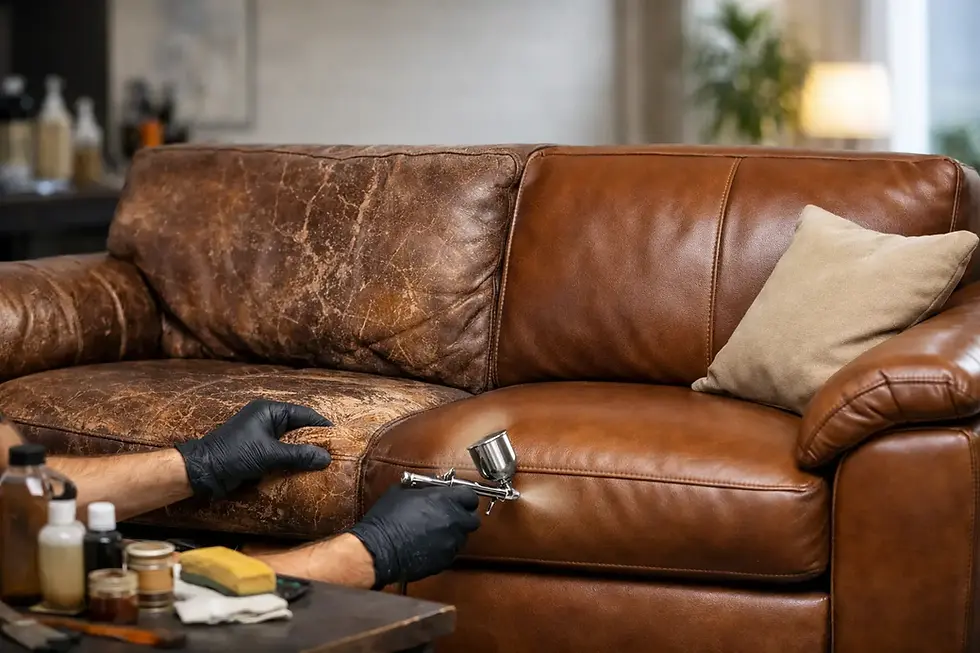
Professional restoration can involve carefully removing remaining contamination, repairing the surface where needed, matching the original colour and applying a new protective finish. This is particularly valuable where a stain sits on a prominent cushion, armrest or headrest and a replacement sofa would be an unnecessary expense.
Colour matching is not simply a matter of applying a brown, black or cream dye. Leather changes with age, light exposure and wear, so a successful repair needs to blend with the surrounding upholstery. That is why a stain that appears small can still benefit from specialist attention.
A sensible approach before you buy
Take a clear photograph in daylight before purchasing a stain-removal product. Note what caused the mark, when it happened and whether the leather is smooth, soft and absorbent, or coated and wipeable. This information helps you avoid buying a general cleaner for a problem that needs an ink remover, degreaser or colour repair.
If you do use a product, keep the treatment gentle and limited. Clean once, assess the result in good light and resist the temptation to repeat the process until the surface feels dry or looks patchy. A stain that remains stable is often easier for a specialist to restore than one that has been repeatedly treated with unsuitable chemicals.
For homeowners in Dublin, Meath, Kildare and Louth, Ashbourne Leather Care can assess stained, faded and damaged leather furniture from photographs before arranging an on-site repair. A clear photo and your location are often the quickest route to the right solution.
Your sofa has already earned its place in your home. Treat a fresh mark carefully, use products made for leather rather than general household cleaning, and call for help before a small accident becomes a permanent patch.


Comments