


Best Repairs for Pet Damage on Leather Sofas
- ashbourneleathercare

- Jul 29
- 5 min read
Best Repairs for Pet Damage on Leather Sofas. A dog jumping up for a cuddle or a cat choosing the armrest as a scratching post can leave a leather sofa looking far older than it is. The best repairs for pet damage depend on whether the leather has been marked on the surface, scratched through its colour. The good news is that many of these problems can be repaired professionally without replacing the entire sofa.
Leather furniture is an investment, and pet damage does not automatically mean that investment is lost. With the right repair method, a visible scratch, faded patch or small scuff can often be blended back into the surrounding leather so the furniture looks cared for again.
Start by identifying the type of pet damage
Best Repairs for Pet Damage on Leather Sofas. Not all claw marks are alike. A light scuff on the finish needs a very different approach from a deep scratch that has cut into the leather itself. Looking closely at the damage before attempting a fix will help avoid making it worse.
Surface scuffs are usually the least serious. They may appear as pale lines, dull patches or areas where the top colour has been disturbed, but the leather remains intact. Deeper scratches can feel rough to the touch and may expose a lighter layer beneath the original colour, because the structure of the leather has been damaged as well as its finish.
It also matters whether your sofa is protected, pigmented leather or a more natural. Most modern family sofas have a coloured protective finish that can be cleaned, repaired and recoloured with excellent results.
Best repairs for pet damage: scratches and scuffs
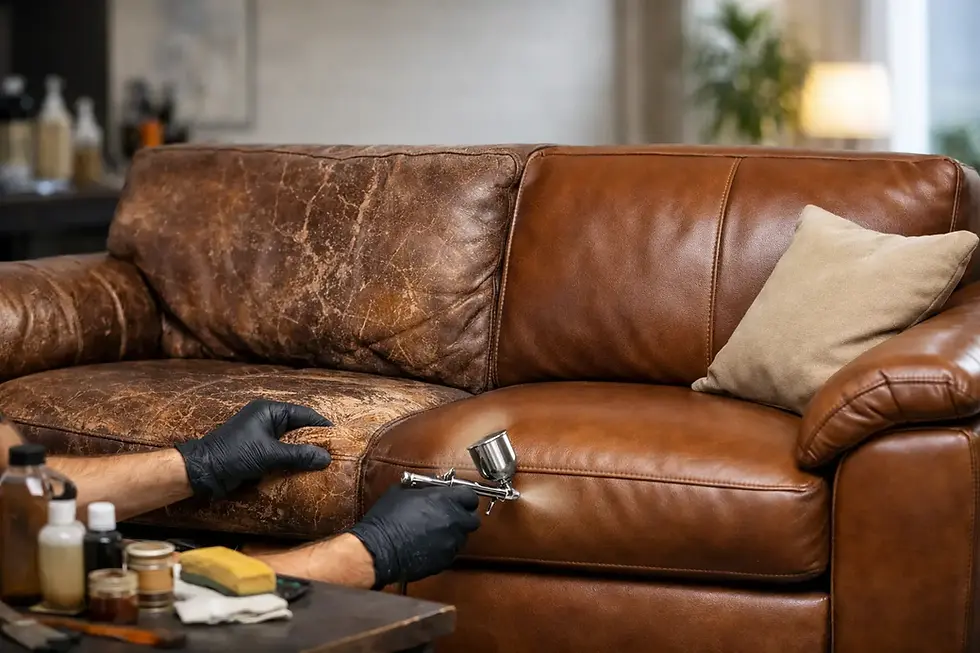
For light claw scuffs, professional cleaning and colour restoration are often the most effective solution. The affected area is carefully prepared, then colour is built back up and matched to the existing sofa. A suitable finish is applied to restore an even sheen and help the repaired area sit naturally alongside the original leather.
This is more than simply applying colour over a mark. If dirt, body oils or old cleaning residues are left behind, the new finish may not adhere properly. Careful preparation and accurate colour matching are what make the difference between a temporary cover-up and a repair that looks at home on your furniture.
Deep scratches need more attention. Where claws have cut through the coloured surface, a flexible leather filler may be used to level the damaged area before recolouring. The repair must remain supple as the cushion is used, so household fillers, superglue and rigid craft products are poor choices. They can dry hard, crack under pressure or leave an obvious shiny patch.
A well-finished scratch repair should reduce the visibility of the mark significantly while preserving the natural feel and flexibility of the leather. Very deep cuts may still leave a slight trace on close inspection, but the aim is a tidy, durable result that restores the overall appearance of the sofa.
What to do before a repair
If the scratch is fresh, avoid rubbing it with wet wipes, polish, baby oil or random leather products from the cupboard. These can push dirt into the mark, alter the surrounding finish or create a greasy area that complicates repair.
Instead, gently remove loose dust with a soft dry cloth and keep pets away from the affected section until it can be assessed. Taking clear photographs in natural daylight is useful, especially a full photo of the sofa and close-ups of the damage. This allows a specialist to see the location, colour and likely repair needed before visiting.
When pet damage has caused colour loss or staining
Repeated scratching can wear colour away from favourite pet perches, particularly on armrests, seat fronts and cushion edges. Dog saliva can also leave darkened or sticky-looking areas, while muddy paws may transfer grime into the grain of the leather.
Professional leather cleaning removes built-up dirt without stripping the finish, and colour restoration can revive areas that have become pale, patchy or worn. Where the sofa has faded more widely, restoring the colour across a larger panel may produce a more balanced finish than treating one spot alone.
This approach is particularly valuable on darker sofas, where pale claw lines tend to stand out, and on cream or ivory leather, where dirt and staining can make the furniture look tired quickly. The right repair is based on the actual condition of the leather, not just the colour of the visible mark.
Avoid DIY fixes that make the repair harder
It is understandable to want a quick solution when guests are coming or a new scratch appears. Yet many DIY attempts create additional work. Shoe polish, permanent marker, furniture wax, household glue and strong cleaning sprays can all change the colour or texture of leather.
Be especially careful with online repair kits that promise one-colour solutions. Leather sofas rarely have a flat, uniform tone. Light, use and manufacturing variation all affect the colour, and an unmatched repair can be more noticeable than the original scratch.
If you do use a leather cleaner, test it in an inconspicuous place first and follow the product instructions exactly. Never soak leather, scrub aggressively or use heat to speed up drying. Leather can stiffen, shrink or lose its finish when treated harshly.
Prevent the next scratch without hiding the sofa
Once the damage has been repaired, a few practical changes can help protect the finish. Keep your pet's claws trimmed, provide a scratcher close to the sofa if you have a cat, and use a washable throw on the pet's preferred sleeping spot. A throw is particularly useful over one armrest or a favourite cushion, rather than covering the entire sofa if you still want to enjoy its appearance.
Regular gentle cleaning also matters. Removing dust, oils and everyday grime helps preserve the protective finish, making it less vulnerable to wear. If your pet has an accident on the leather, blot it promptly rather than rubbing, then seek advice if staining remains.
Get a clear repair plan before replacing your sofa
The condition of a pet-damaged leather sofa can be difficult to judge from the room. What looks like a ruined armrest may only need targeted filling and colour restoration. Equally, a tear that appears small can need reinforcement to prevent it spreading further.
Ashbourne Leather Care provides mobile leather furniture restoration across Dublin, Meath, Kildare and Louth. By sending photographs of the damage and your location, you can receive a straightforward quotation and understand the likely repair before arranging an on-site visit.
Your sofa has already earned its place in your home. Before spending on replacement furniture, have the damage assessed properly - careful leather repair can bring back the colour, comfort and pride you felt when you first chose it.


Comments