


Can Bleach Damage Leather? What to Do Next

Can Bleach Damage Leather? What to Do Next. A splash of bleach can turn an otherwise well-kept leather sofa into the first thing you notice when you walk into the room. So, can bleach damage leather? Yes. Even a small amount can remove colour, dry the surface and leave a pale or uneven patch that ordinary cleaning will not put right.
The good news is that a bleach mark does not automatically mean replacing your furniture. In many cases, professional colour restoration can bring the damaged area back into line with the rest of the sofa, restoring a natural, even finish in your own home.
Why bleach damages leather
Bleach is designed to break down colour and lift stains. That makes it useful on certain washable household surfaces, but it is far too aggressive for most leather upholstery. Rather than simply sitting on the surface, bleach can affect the protective finish and the colour coating beneath it.
On pigmented leather, which is common on modern sofas and chairs, the first visible sign is often a lighter spot. The patch may look yellowish, pinkish, white or simply faded compared with the surrounding leather. The exact colour depends on the original dye, the strength of the bleach and how long it was left in contact with the furniture.
Bleach can also remove oils from the leather finish. Once dry, the affected area may feel rougher, stiffer or less supple than the rest of the upholstery. If the spill was large, or bleach was allowed to soak in, the damage can extend beyond the obvious mark.
What bleach damage on a leather sofa looks like
Can Bleach Damage Leather? What to Do Next. A bleach accident is not always immediately obvious. A damp cloth used with a cleaning product may leave a faint mark that becomes clearer only after the leather dries. In other cases, colour loss appears within minutes.
Common signs include a noticeably pale patch, a ring-shaped mark from a spill, streaking where bleach was wiped across the surface, or a dull area with a changed texture. Dark brown, black, red, navy and green leather often show bleach damage particularly clearly because the contrast is stronger.
It is easy to mistake the result for a stain and reach for more cleaning products. This usually makes matters worse. Bleach damage is generally colour loss or finish damage, not a mark that can be lifted away.
Different leathers react differently
Most household leather furniture has a protective top coating and can usually be repaired successfully through careful preparation, colour matching and refinishing. However, aniline, semi-aniline, nubuck and suede leathers need a different approach because their appearance is more natural and their surfaces are more absorbent.
The location of the damage matters too. A small bleach spot on a seat cushion is often easier to blend than a broad splash across a large back panel. Cracked, heavily worn or previously recoloured leather may require more restoration work before colour can be applied evenly.
That is why clear photographs in natural light are the best starting point. They help a leather repair specialist assess the type of damage, the likely finish and the most suitable repair method before visiting.
What to do straight away after a bleach spill
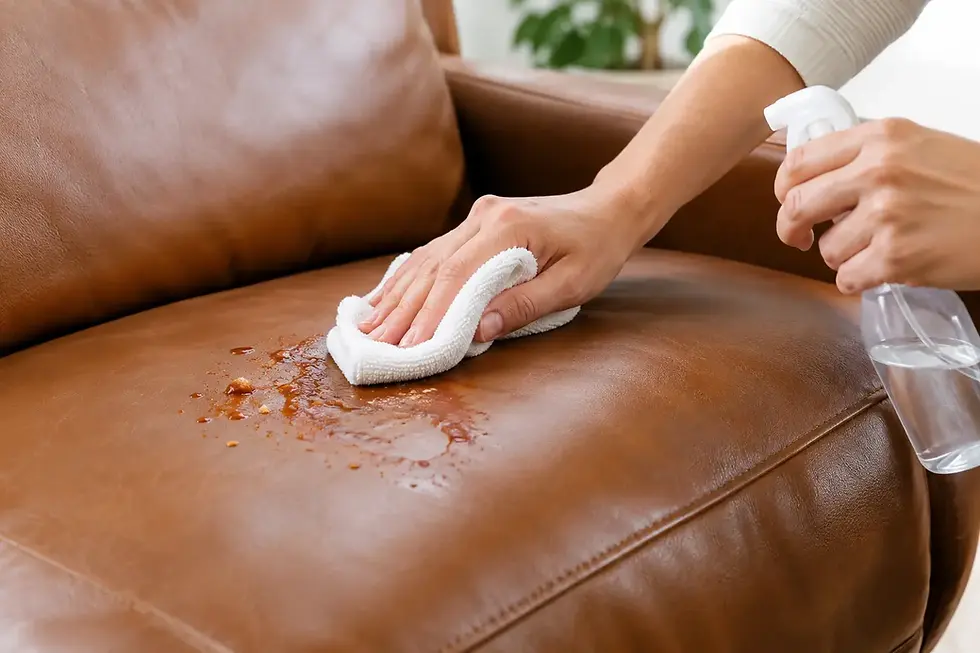
Speed matters, but rubbing does not. If bleach has only just landed on the leather, gently blot the area with a clean, white absorbent cloth to remove excess liquid. Work from the outside of the spill towards the centre so that it does not spread further.
Next, lightly wipe the affected area with a separate cloth dampened with clean water, then blot it dry. Do not soak the leather, scrub it, use hot water or apply household cleaners in an attempt to neutralise the bleach. The aim is simply to remove any remaining product without forcing moisture further into the upholstery.
Allow the area to dry naturally at room temperature. Avoid hairdryers, radiators and direct sunlight, all of which can dry leather too quickly and make texture changes more noticeable.
If colour loss is already visible, take photographs once the leather is dry. Include one close-up image and one photo showing the full cushion or panel. This gives a repair specialist the detail needed to advise you accurately.
What not to use on bleach-damaged leather
When a beloved sofa has been marked, the temptation to try a quick fix is understandable. Unfortunately, many popular online remedies create a bigger and more expensive repair.
Do not use shoe polish, household paint, permanent marker, fabric dye or coloured polish on furniture leather. These products rarely match the original shade or sheen, and they can crack, rub off onto clothing or make later professional restoration more difficult. Oils, waxes and heavy conditioners can also darken the patch temporarily without replacing the lost colour.
Avoid mixing cleaners or applying vinegar, bicarbonate of soda, washing-up liquid or alcohol-based wipes. Bleach has already altered the finish. Further chemical treatment can enlarge the affected area, strip more colour or leave a shiny, sticky surface.
Can bleach-damaged leather be repaired?
In many cases, yes. A professional repair is not about covering the patch with a random colour. It is a controlled restoration process designed to rebuild the look and feel of the damaged leather.
The area is first assessed and carefully prepared to remove residue and create a stable surface. Where needed, the leather is treated to improve texture or address dryness. A specialist colour is then mixed to match the surrounding upholstery as closely as possible, taking account of the leather's age, fading and original finish.
Colour is applied in light, controlled layers and blended beyond the visible damage so there is no harsh edge. Finally, an appropriate protective finish is applied to match the existing sheen, whether that is matt, satin or a gentle gloss. Once cured, the repaired area should sit naturally within the rest of the furniture rather than looking like a painted-on patch.
A perfect outcome depends on the leather type, the extent of the bleach exposure and the condition of the sofa overall. Very old leather, extensive colour loss and heavily damaged natural leather can require wider panel restoration. Even then, repair is often a far more practical option than replacing quality furniture that is otherwise sound.
Why professional colour restoration is worth considering
Bleach marks tend to draw the eye because they interrupt a large, uniform surface. On a sofa, a small pale spot can make the entire piece look tired or neglected. Restoration addresses the visible damage while helping preserve furniture that already suits your home and has years of use left in it.
There is also a practical advantage to an on-site service. You do not need to arrange collection, transport a bulky sofa or be without it for weeks. A specialist can assess the leather in the room where it is used, work on the affected area and restore it with the surrounding colour and lighting in view.
For homeowners in Dublin, Meath, Kildare and Louth, Ashbourne Leather Care provides mobile leather furniture repair and colour restoration for accidental damage including bleach stains, scuffs, ink, glue and nail polish. Sending clear photos and your location is the simplest way to receive a quotation and understand what can be achieved.
Preventing another bleach accident
Keep bleach and strong cleaning sprays away from leather furniture, especially when cleaning nearby floors, skirting boards or bathrooms. Decanting products into unlabelled bottles is best avoided, as is leaving cleaning cloths on sofa arms or cushions where residue can transfer unnoticed.
For routine care, use products made specifically for leather upholstery and follow the manufacturer's instructions. Dusting with a soft dry cloth and dealing with spills promptly is usually more useful than frequent deep cleaning. Leather benefits from gentle, consistent care, not harsh chemicals.
A bleach mark can feel like the end of a favourite sofa, but it is often a repairable interruption rather than permanent ruin. Leave the area alone once it is clean and dry, photograph the damage clearly, and get specialist advice before trying to disguise the lost colour yourself.


Comments