


Leather Refinishing for Faded and Worn Sofas

Leather Refinishing for Faded and Worn Sofas. A leather sofa can begin to look tired long before it is ready to be replaced. The usual signs are easy to spot: colour worn away from the seats and arms, dull patches where sunlight has caught it, scuffs from daily use, or a stain that never quite disappeared. Professional leather refinishing addresses those visible problems and can restore the colour, finish and overall appearance of well-loved furniture in your own home.
For many households, replacement is an expensive answer to a repairable problem. If the frame, cushions and leather are fundamentally sound, refurbishment can be a practical way to keep a good sofa looking at home in the room it was chosen for.
What leather refinishing can restore
Leather Refinishing for Faded and Worn Sofas. Leather refinishing is more than applying colour over a worn surface. A proper restoration process begins with assessing the leather itself, the type of damage, the original shade and the finish required. The aim is not to make a sofa look artificially painted, but to bring back an even, natural-looking finish that suits the rest of the furniture.
It is particularly effective for areas affected by general wear. Seat cushions, headrests, armrests and front panels take the most contact and often lose colour before the rest of the sofa. Scuffs, scratches and surface abrasions can make this wear appear worse than it is, especially on darker leather where a lighter underlayer becomes visible.
Colour loss caused by daylight is another common issue. A sofa placed near a window may fade unevenly, with one side looking noticeably lighter than the other. Refinishing can rebalance the colour so the piece looks consistent again.
Accidental marks may also be repairable, depending on their depth and the product involved. Ink, bleach, nail polish, glue and household cleaning products can all damage leather differently. Bleach, for example, often strips the colour rather than simply leaving a surface mark. That calls for careful colour restoration, not more cleaning.
When a sofa is a good candidate for refinishing
The best results usually come from leather that is worn at the surface but remains structurally healthy. If the leather feels supple, the stitching is secure and there are no major tears, colour restoration can make a dramatic difference without the cost and disruption of replacing the furniture.
A specialist will look at whether the issue is fading, a transfer stain, a coating failure, cracking, accidental damage or a combination of several problems. These details matter because the right repair for a small scuff is not necessarily the right repair for a cracked seat cushion or a bleach mark.
There are limits. Leather that has become badly dry, worn may need targeted repair before refinishing can begin. Extensive damage can still be improved in many cases, but it is better to have a realistic assessment than to expect surface colour alone to solve an underlying leather condition.
Real leather, bonded leather and coated finishes
Many modern sofas have a protective coloured coating on the surface. This does not mean they cannot be restored. In fact, worn colour on coated leather is often one of the most suitable problems for professional refinishing.
Bonded leather and heavily damaged imitation leather require a more cautious approach. Their surface layers can break down differently from natural leather, and durability depends on the condition of the material beneath. Sending clear photos before any work is arranged helps a specialist identify what is likely to achieve a worthwhile result.
What happens during professional leather refinishing
Good preparation makes the difference between a temporary cover-up and a finish that looks right and lasts. The sofa is first cleaned to remove body oils, everyday dirt, polish residues and contaminants that could prevent repair materials or colour from bonding properly.
Damaged areas are then prepared. Depending on the problem, this can involve smoothing scuffs, treating scratches, repairing surface cracks or stabilising small areas of damage. The repair is blended as carefully as possible into the surrounding leather so it does not stand out once the colour is applied.
The colour is matched to the existing furniture. This is a skilled part of the process, particularly where a sofa has faded unevenly or has a distinctive tone such as warm tan, oxblood, cream, grey or deep green. The goal may be to restore the original colour, or to achieve a consistent finish across worn sections.
Colour is applied in controlled layers rather than in one heavy coat. Once the desired coverage is achieved, an appropriate finish is added to match the original appearance, whether that is matt, satin or a light sheen. The sofa is then left looking refreshed, with the repaired areas integrated into the wider surface.
Because this work can be completed on site, there is usually no need to arrange collection, transport or weeks without your furniture. Ashbourne Leather Care provides mobile leather furniture restoration across Dublin, Meath, Kildare and Louth, making the process straightforward for homeowners.
Why DIY leather repairs can disappoint
A DIY kit can seem tempting when a scuff is small or the colour loss is limited to one cushion. Some minor maintenance jobs are manageable, but refinishing has a few common pitfalls. The wrong shade can leave a patch that is more obvious than the original damage, while an unsuitable product can create a shiny, sticky or uneven surface.
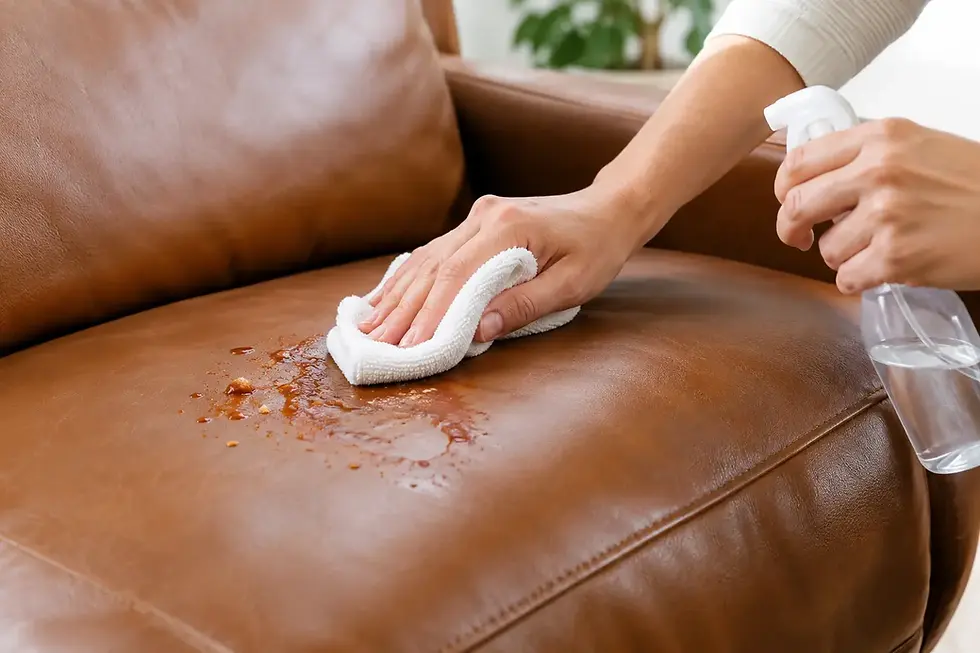
Household cleaners are another frequent cause of trouble. Wipes, sprays, solvent-based products and strong degreasers can remove protective coatings, dry the leather or spread a stain. Trying several products in succession can make later repair more difficult, especially with ink, glue or nail polish.
The trade-off is simple: DIY may cost less at the outset, but professional work offers better preparation, colour matching and finish control. For a premium sofa or a highly visible piece of furniture, those details are usually what determine whether the result looks convincing.
Caring for refinished leather furniture
Once leather has been restored, sensible care will help preserve the finish. Regular gentle dusting and wiping with a suitable leather cleaner prevents grime from building up in the areas that receive the most use. Avoid soaking the leather or using harsh multi-purpose cleaners, as excess moisture and chemicals can affect both the surface and colour.
Keep sofas away from prolonged direct sunlight where possible. Closing blinds during the brightest part of the day, moving a lamp that creates concentrated heat, or adjusting the position of the furniture can all reduce uneven fading over time.
It also helps to act quickly after accidents. Blot spills rather than rubbing them, and avoid applying unknown products in a hurry. With ink, bleach, glue and nail polish, a photo taken before any attempted cleaning gives a leather repair specialist a far clearer starting point.
Getting a clear quote before work begins
The simplest way to assess leather furniture damage is through good photographs. Take one wider image of the sofa, then close-ups of the affected area in natural light. Include a photo from a slight angle if the problem is cracking, peeling or a scratch, as this shows the depth and texture of the damage.
A useful quotation should reflect the type of damage, the size of the affected area, the colour-matching work required and whether repairs are needed before refinishing. This approach is more accurate than offering a one-size-fits-all price, because a faded armrest and a sofa with bleach damage across several cushions are very different jobs.
A worn leather sofa does not need to become the piece everyone avoids sitting on or looking at. If the damage is visible but the furniture is still worth keeping, a professional assessment can show what is possible - and often brings back the colour and finish you thought were gone for good.


Comments