


Can Cracked Leather Be Recoloured? What to Know
- ashbourneleathercare

- 6 days ago
- 5 min read
Can Cracked Leather Be Recoloured? What to Know. A cracked leather sofa can make an otherwise well-kept room feel tired very quickly. The good news is that can cracked leather be recoloured is often a question with a positive answer - but colour alone is rarely the first step. For a repair that looks natural and lasts, the damaged surface needs to be assessed, stabilised and prepared before the colour is restored.
For many homeowners, professional restoration is a practical alternative to replacing a good-quality sofa just because the seat cushions, arms or headrests have become worn. The right repair can bring back an even colour, a smoother finish and the cared-for appearance your furniture once had.
Can cracked leather be recoloured successfully?
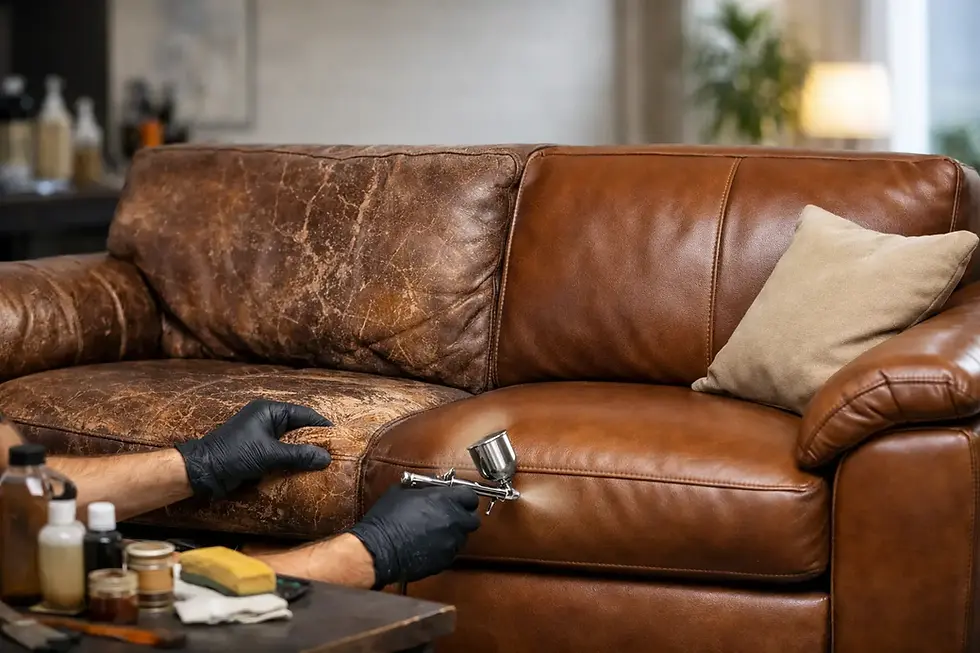
Yes, cracked leather can often be recoloured successfully, particularly where the cracking is mainly in the protective finish and colour coating rather than deep damage to the leather itself. This is common on pigmented leather sofas, which are widely used in family homes. Areas that receive the most friction - such as seat fronts, armrests and headrests - can gradually lose colour and develop fine cracks as the finish dries, flexes and wears away.
A proper recolouring process does more than cover the damage. The surface is cleaned to remove body oils and old cleaning residues, loose finish is carefully prepared, fine cracking may be repaired or filled where suitable, and the colour is matched and applied in light layers. A protective finish is then applied to help the restored area stand up to everyday use.
The result depends on the condition of the furniture. Fine surface cracking and colour loss can usually be improved dramatically. If the leather has split right through, become brittle or is lifting away in large flakes, it may need a more involved repair. In some cases, replacement panels or upholstery work may be the better long-term option.
Not all cracks mean the same thing
Can Cracked Leather Be Recoloured? What to Know. The word ‘cracked’ covers several different problems, and this is why a photo assessment is so useful. What looks like a crack from across the room may simply be worn colour on the top coating. Equally, a deep crease can expose weakened leather beneath it.
Surface finish cracking
This is the most repairable type of wear. The leather itself may still be sound, but the coloured finish has developed fine lines, dull patches or small areas of flaking. It is especially noticeable on darker sofas, where pale wear marks show through, and on cream or beige furniture, where grime settles into the cracks.
After the surface is prepared, a specialist can repair the finish, recolour the affected area and blend it into the surrounding leather. When carried out carefully, the repair should not leave the sofa looking freshly painted or noticeably different in sheen.
Cracking in the leather itself
If the fibres of the leather have dried out and started to break, recolouring can improve the appearance but cannot make severely damaged material new again. Deep cracks may need flexible repair compounds and reinforcing work before colour is applied. The aim is to make the area neat, comfortable and less vulnerable to further deterioration.
The key is to be realistic. A professional can often transform the look of a worn sofa, but no honest repairer should promise that heavily split leather will be indistinguishable from untouched leather at very close range.
Peeling bonded leather
Bonded leather deserves a separate mention. It is made using leather fibres combined with other materials and finished with a surface coating. When that coating starts to peel, the issue can be more widespread than it first appears. Recolouring may improve small worn patches, but widespread peeling often continues because the underlying surface is failing.
Before spending money on a repair, it is worth having the material and the extent of the damage assessed. A good solution should suit the condition of the furniture, not simply cover it temporarily.
Why recolouring without repair usually fails
It is tempting to buy a leather dye or touch-up kit and apply it directly over cracked areas. This can make the damage look better for a short time, but it often fails because the cause of the cracking has not been addressed.
Cracks collect dirt, oils and cleaning products. If colour is applied over contamination, it may not bond correctly. If loose or unstable finish remains underneath, the new coating can lift with it. Applying too much colour in one go can also leave the leather stiff, shiny or prone to cracking again when the cushion flexes.
Colour matching is another challenge. Leather is rarely one flat shade. Even a black sofa can have warmer or cooler tones, while brown, tan, grey and cream leathers can vary noticeably between panels due to light exposure and use. A repair needs to blend with the whole piece, including its original level of gloss or matt finish.
This is why a specialist repair normally involves preparation, flexible products, colour matching and a protective topcoat - not just adding colour to a damaged patch.
What a professional leather recolouring service involves
The exact process varies with the sofa and the damage, but professional restoration generally starts with a close inspection. The technician will identify the leather type, check whether the cracking is superficial or structural, and look for related issues such as stains, scuffs, fading or previous DIY repairs.
The damaged area is thoroughly cleaned and prepared. Where appropriate, worn edges and minor surface cracks are smoothed before flexible repair materials are used. Colour is then mixed or selected to match the existing leather and applied in controlled layers, allowing the finish to remain supple.
Once the colour has been blended, a suitable protective coating is applied. This matters because furniture leather needs to cope with daily contact, movement and occasional spills. The final finish should look consistent with the rest of the sofa rather than drawing attention to the repair.
For homeowners in Dublin, Meath, Kildare and Louth, an on-site service also means there is no need to arrange transport for a large sofa or be without it for weeks. Ashbourne Leather Care can assess photos of the damage and your location first, then provide a quotation for a practical repair at your home.
When recolouring is worth it
Recolouring is often worthwhile when the frame, cushions and overall upholstery are still in good condition. It can be particularly cost-effective for quality leather furniture that has faded near a window, developed wear on the seats, or suffered an isolated accident such as an ink mark, bleach stain, nail polish spill, glue residue, scuffs or scratches.
It also makes sense when the damage is localised. A worn armrest does not necessarily mean the whole sofa needs replacing. Restoring that section and blending the colour can extend the life of the furniture while keeping its original character.
There are occasions when replacement is more sensible, such as extensive peeling across several panels, large tears, severe deterioration or problems with the structure and cushioning. A clear assessment helps you make that decision before investing in a treatment that will not deliver the result you want.
How to prevent repaired leather from cracking again
Once leather has been restored, regular care can make a real difference. Wipe away spills promptly with a soft, slightly damp cloth and avoid harsh household cleaners, alcohol-based wipes, bleach and abrasive pads. These can strip the protective finish and dry the surface.
Keep leather furniture away from strong direct sunlight where possible, as UV exposure contributes to fading and dryness. Try not to sit repeatedly on the same arm or perch on the front edge of cushions, as constant pressure can speed up wear in those areas.
Avoid home remedies such as olive oil, cooking oils or heavy waxes. They may darken the leather, leave it greasy and interfere with future repair work. Use products intended for your leather type and follow the instructions carefully.
If your sofa is showing fine cracks, fading or rubbed-away colour, acting early usually gives the best result. A timely repair can stop a small worn patch becoming the part of the sofa everyone notices.


Comments