


Can Leather Furniture Be Restored?
- ashbourneleathercare

- Jun 27
- 5 min read
A faded sofa, a scuffed armrest, an ink mark on the seat cushion - these are the moments when people start asking, can leather furniture be restored? In many cases, yes, it can. Leather is one of the few upholstery materials that can often be repaired, recoloured and revived rather than replaced, which is why professional restoration is usually worth considering before you start shopping for a new suite.
The key is understanding what kind of damage you are looking at. Not every mark means the leather is ruined, and not every tired-looking sofa needs replacing. Quite often, what looks beyond saving is actually a straightforward restoration job in the hands of a specialist.
Can leather furniture be restored if it looks badly worn?
This is where leather has a real advantage over fabric. Surface wear, loss of colour, light cracking, scuffs and general dullness can often be treated successfully. If your sofa has gradually faded from sunlight, gone shiny in high-use areas, or picked up the usual family wear over the years, restoration is often a practical and cost-effective option.
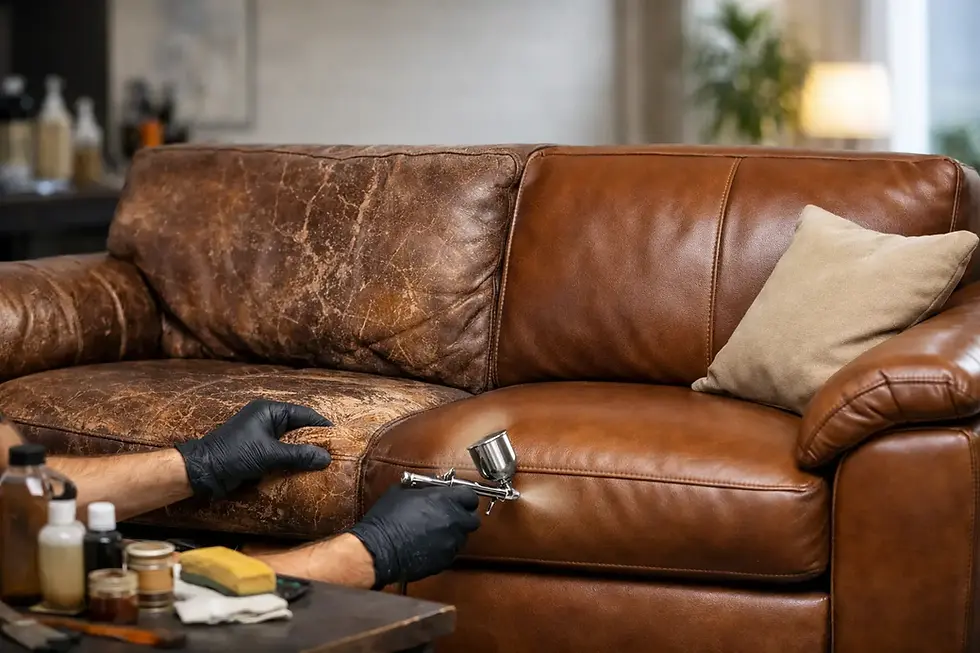
Professional leather restoration usually focuses on bringing back the finish, colour and overall appearance of the furniture. That may involve deep cleaning, repairing worn areas, reapplying colour, and refinishing the surface so it looks fresher and more even again. The aim is not to make an old sofa look factory-new at any cost. The aim is to restore its appearance properly, extend its life and make it look right in your home again.
That said, the result depends on the condition of the leather underneath. If the hide is severely torn, heavily dried out, or structurally failing, there may be limits to what can be achieved. Good restoration is about honest assessment as much as skilled repair.
What types of leather damage can be restored?
A lot more than most homeowners expect. Everyday wear is often very repairable, especially when caught early. Colour loss on seat cushions, worn headrests, scuffed corners, scratches from pets, and grime built up from years of use are all common issues.
Accidental damage can also often be treated. Ink marks, bleach spots, nail polish, glue, food stains and similar mishaps do not always mean the end of the furniture. Some of these jobs need targeted repair rather than simple cleaning, particularly when the original finish has been stripped or chemically altered. Bleach, for example, does not just stain leather - it removes colour. That means the solution is usually colour restoration rather than stain removal.
The same goes for scratches and scrapes. If the surface has been broken or roughened, the repair may involve smoothing, filling, recolouring and sealing the area so it blends back into the surrounding leather. Done properly, the repaired section should not jump out at you every time you enter the room.
When restoration works best
Leather restoration works best when the furniture is fundamentally worth saving. That usually means the frame is sound, the cushions are still usable, and the damage is mainly cosmetic or surface-level. A quality leather sofa with wear on the arms and seats is often an ideal candidate.
It also makes sense when replacement would be expensive or inconvenient. Many households would rather restore a well-made sofa they already like than spend far more on a new one that may not be better quality. There is also the practical side. Large furniture is awkward to remove, replace and match with the rest of the room. Restoration avoids a lot of that disruption.
For many customers, the appeal is simple - keep the furniture you already own, improve how it looks, and do it without turning the house upside down.
Can leather furniture be restored at home?
There is a big difference between maintenance and restoration. Basic leather care at home can help with day-to-day upkeep. Wiping spills quickly, using suitable leather cleaners, and avoiding harsh household products can all help protect the finish.
But proper restoration is another matter. DIY kits can be tempting, especially when the damage looks small, but colour matching leather is far more technical than it seems. So is dealing with cracks, scuffs, finish damage or chemical marks. The risk with home repairs is that the area ends up darker, shinier, rougher or more obvious than it was before.
We regularly see furniture that has been made harder to repair by the wrong product being used first. Baby wipes, multi-surface sprays, magic erasers and strong cleaning chemicals can strip the finish and spread the problem. What started as a minor mark can quickly become a larger repair.
If the issue is more than light surface dirt, professional assessment is usually the safer route.
What happens during professional leather restoration?
The process depends on the type of damage, but it generally starts with identifying the leather finish and assessing the condition of the affected areas. Not all leather behaves the same way, so using the right method matters.
A professional restoration may involve cleaning away built-up oils and dirt, preparing the worn sections, carrying out minor repairs, restoring lost colour and applying a new protective finish. On accidental damage jobs, the approach is more targeted. Ink, bleach, glue and nail polish all require different treatment, and the wrong method can make them worse.
The biggest advantage of specialist work is control. Colour can be matched properly, repairs can be blended, and the finish can be adjusted to suit the existing look of the furniture. That is what gives a result that feels like part of the original sofa, not a visible patch job.
For homeowners, convenience matters too. A mobile, on-site service means the furniture stays where it is. You send photos, receive a quotation, and the work is carried out in your home. That is often far easier than arranging transport for a large sofa or chair.
How do you know if your sofa is worth restoring?
A simple rule is this: if you still like the furniture, and the damage is mainly to the leather surface rather than the structure, restoration is usually worth exploring. High-end sofas, sentimental pieces and furniture that fits your room properly are all strong candidates.
You should also think about the cost of replacement. A professionally restored leather suite can often represent far better value than buying new, especially when modern replacement furniture may not match the quality of what you already own.
There are cases where restoration may not be the best route. If the sofa frame is broken, the cushions have collapsed beyond repair, or the leather is extensively torn across multiple panels, the economics can change. A good specialist will tell you that clearly. The point is not to promise miracles. It is to give you a realistic view of what can be improved and whether the result justifies the cost.
Why professional restoration often beats replacement
Replacing leather furniture sounds simple until you price it properly. Good leather is expensive. Then there is delivery, disposal of the old furniture, waiting times, and the gamble of whether the new piece will feel as comfortable as the one you have lived with for years.
Restoration solves a different problem. Instead of starting again, it improves what is already there. If the sofa suits your home and the damage is localised or wear-related, restoration is often the more sensible option.
That is why so many homeowners across Dublin, Meath, Kildare and Louth look at repair first. With the right treatment, a tired sofa can look fresher, cleaner and more presentable without the cost and hassle of replacement. For families dealing with spills, scuffs or accidental damage, it is also reassuring to know that many problems are fixable.
At Ashbourne Leather Care, the focus is on exactly that kind of practical result - restoring leather furniture on site, matching colour carefully, and helping customers keep pieces that still have years of life left in them.
If your leather furniture is marked, faded or simply looking worn, do not assume it is finished. In many cases, it can be restored well enough to change how the whole room feels again.


Comments