


Furniture Colour Restoration Trends for Leather
- ashbourneleathercare

- Aug 8
- 6 min read
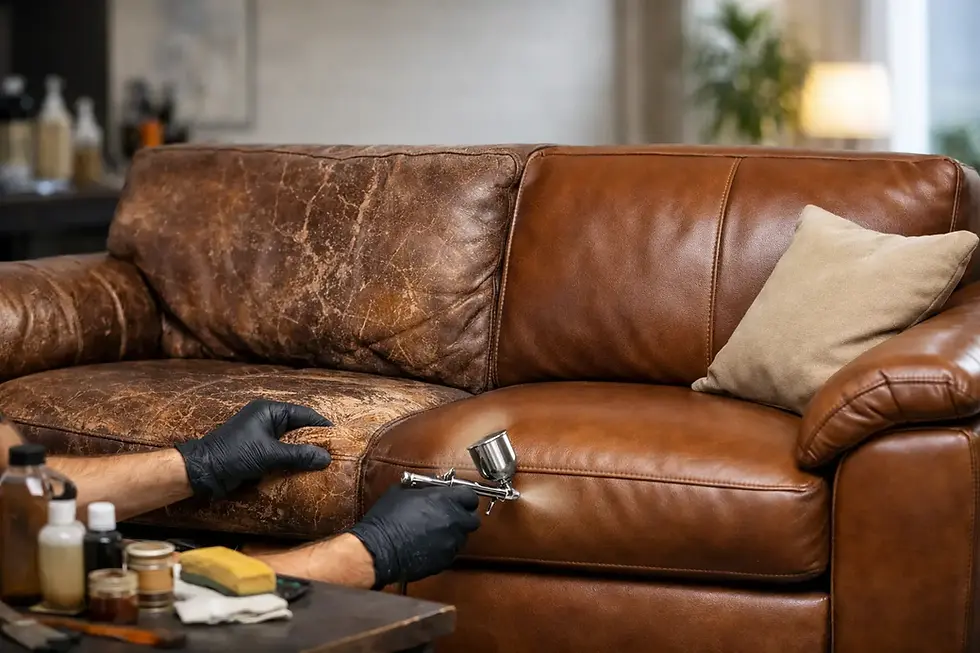
Furniture Colour Restoration Trends for Leather. A leather sofa can still be comfortable and structurally sound while looking tired around the headrests, seat cushions and armrests. That is why furniture colour restoration trends are moving away from quick cover-ups and towards considered, professional refurbishment that preserves the character of the piece. For many Irish homes, restoring the leather already in the room makes far more sense than replacing a quality sofa because its colour has faded, worn away or been marked by an accident.
Furniture colour restoration trends are becoming more practical
The biggest shift is not towards a single fashionable shade. It is towards making furniture last longer. Homeowners are looking closely at what can be repaired before they commit to the cost, disruption and waste of buying new. A faded brown corner suite, a black recliner with worn armrests, or a cream leather chair marked by dye transfer can often be improved substantially with the right preparation, colour work and finish.
This is particularly relevant for leather. Unlike fabric, leather can show colour loss in specific high-contact areas long before the rest of the sofa needs attention. The aim is not simply to make those areas darker. It is to restore an even, natural-looking colour and finish that sits comfortably with the undamaged leather beside it.
There is also a growing preference for keeping well-made furniture in use. Premium leather sofas are designed to give years of service, yet visible wear can make a whole room feel less cared for. Colour restoration offers a practical middle ground: retain the sofa you know and like, while dealing with the damage that is spoiling its appearance.
The return of the original colour
Furniture Colour Restoration Trends for Leather. For most homeowners, the preferred trend is restoration rather than reinvention. A sofa was chosen to suit the flooring, wall colour and the rest of the home. Changing it from dark brown to grey, for example, is a much larger undertaking than restoring the original tone and can produce an uneven result if the leather type, prior coatings and construction are not properly assessed.
Professional colour matching is therefore central to a good restoration. Leather is rarely one flat colour. Even a black sofa may have a particular sheen, warmth or depth that needs to be respected. Browns may contain red, tan or antique undertones, while creams and ivory shades can vary considerably from one manufacturer to another.
The best results come from matching the existing leather rather than relying on a generic colour. This is especially important where only the seats, piping, arms or a single cushion require attention. A carefully blended repair should improve the damaged section without drawing attention to it every time you walk into the room.
Matt, natural finishes are in demand
High-shine leather was once associated with a freshly cleaned sofa, but it can make a repair stand out and may leave the furniture looking artificial. A more natural, low-sheen finish is increasingly preferred because it reflects how many modern leather sofas looked when new.
The finish matters as much as the colour. A colour that is technically correct can still look wrong if it is too glossy, too flat or does not feel consistent across the restored area. The right protective topcoat helps provide a uniform finish and supports day-to-day durability, particularly on frequently used seats and armrests.
That does not mean every sofa should be matt. Some traditional leather furniture has a softer satin finish, while certain pieces are deliberately more polished. The correct approach depends on the leather, its original appearance and the condition of the surrounding panels. Restoration should suit the furniture, not force it to follow a passing look.
Targeted repairs instead of whole-sofa recolouring
One of the most useful furniture colour restoration trends is a move towards targeted work. If a dog has scratched one arm, a child has left ink marks on one cushion, or a bleach splash has removed colour from a small section, there may be no need to recolour every panel.
Targeted restoration can address localised scuffs, scrapes, small tears, colour loss and accidental stains while retaining as much of the original finish as possible. It is a sensible option when the rest of the sofa remains in good condition, and it can be more cost-effective than extensive refurbishment or replacement.
However, there are occasions when a wider restoration is the better choice. If the seat cushions and arms have all faded at different rates, a local repair may look too distinct against heavily worn surrounding leather. In that case, treating the main high-wear areas together can create a more balanced result. A specialist should assess the photographs and condition before recommending the scope of the work.
Warm neutrals still work hard in Irish homes
When homeowners do choose to update colour rather than restore it exactly, warm neutrals remain popular. Rich cognac, warm tan, soft taupe and deep chocolate tones tend to work well with timber floors, neutral walls and the natural light found in many Irish living rooms. They also tend to be more forgiving of everyday family life than very pale leather.
Cream and light grey leather are still sought after for bright, contemporary spaces, but they ask more from the owner. Denim dye transfer, food marks, makeup, ink and general grime are easier to see, while sunlight can cause uneven fading over time. A lighter sofa can look excellent, but regular care and prompt attention to fresh spills are essential.
Darker colours have their own trade-off. Black, navy and charcoal can disguise some marks, yet surface wear can appear pale or grey where the protective finish has broken down. The colour is not the only consideration. The condition of the leather and how the sofa is used should guide the decision.
Repair first, colour second
A lasting result starts with the leather itself. If there is cracking, peeling, loose stitching, deep scratching or residue from household cleaning products, those issues need attention before colour is applied. Colour cannot disguise every problem, and applying it over an unstable surface can lead to a disappointing finish.
Preparation may involve careful cleaning, treating damage, smoothing worn areas and building colour in controlled layers. The final finish needs to be appropriate for the leather and the level of wear. This is why household dyes, shoe creams and off-the-shelf recolouring products can be risky. They may temporarily mask a problem but often fail to match, transfer onto clothing or leave the leather feeling stiff.
Bleach marks are a good example. Bleach can remove the colour from leather quickly, but the affected area may also need preparation and repair before colour can be blended back in. The same applies to nail polish, glue, ink and paint. Trying several cleaning products first can spread the damage or affect the existing finish, making professional restoration more involved.
On-site restoration suits real family homes
Convenience is shaping restoration choices too. A large leather sofa is awkward to transport, and a collection service can leave a household without its main seating for days. On-site work allows the furniture to stay where it belongs while a specialist deals with the affected areas in the home.
For homeowners in Dublin, Meath, Kildare and Louth, the straightforward first step is to take clear photographs of the sofa and the damage, along with a note of the location. Images showing the full piece, a close-up of the affected area and the colour in natural light give a clearer basis for a quotation. They also help establish whether the issue is isolated wear, a stain, surface damage or a more extensive restoration job.
Ashbourne Leather Care focuses on this practical approach: assess the problem, explain what can realistically be achieved, and carry out the restoration on site where suitable. It is designed to remove the uncertainty from a job that can otherwise feel like a reason to replace the furniture.
Choose restoration that will still look right next year
The strongest trend is simple: repair quality furniture with care, rather than treating visible wear as the end of its life. Fashionable colours will continue to change, but a well-matched restoration, a natural finish and properly repaired damage will always look more convincing than a rushed cover-up.
If your leather sofa has faded, scuffed or suffered an accidental mark, do not assume replacement is the only answer. Clear photos can be the start of bringing a valued piece of furniture back to life, with colour and finish that feel at home in the room again.


Comments