


How to Restore Colour to Faded Leather
- ashbourneleathercare

- Jun 29
- 6 min read
A faded leather sofa rarely goes all at once. It starts at the headrest, the seat cushions or the arms - the places used every day. What looked rich and even a few years ago can begin to appear dry, patchy and tired. If you are wondering how to restore colour to faded leather, the first thing to know is this: colour loss can often be improved, but the right approach depends on why the leather faded in the first place.
Leather furniture fades for a few common reasons. Sunlight is a major one, especially in bright rooms where the same section gets constant exposure. Body oils, general wear, harsh cleaning products and simple age can also strip away the original finish. In some cases the leather has not just faded - it has also dried out, cracked or lost its protective topcoat. That matters, because adding colour without fixing the surface first usually leads to disappointing results.
What causes leather to lose its colour?
Most household leather furniture is finished leather, which means the hide has been dyed and then sealed with a protective coating. Over time, that coating wears down. Once it does, the colour beneath can become uneven, dull or rubbed away completely.
This is why one sofa can look fine in the corners but badly worn on the front edge of the seat. It is not always poor quality. More often, it is normal wear concentrated in high-contact areas. If there has been a spill, bleach splash, ink mark or an attempt to scrub away a stain, the damage can be more severe and the colour loss more obvious.
The key point is that faded leather is not one single problem. Light surface dullness is very different from worn pigment, and both are different again from bleach damage or cracking. Knowing which one you are dealing with helps you decide whether a simple refresh will work or whether the leather needs proper restoration.
How to restore colour to faded leather at home
If the fading is light and the leather is otherwise in good condition, a careful at-home approach may improve the appearance. Start with cleaning. Dirt, oils and old product residue sit on the surface and can make leather look more faded than it really is. Use a leather-safe cleaner and a soft cloth, and work gently. Aggressive scrubbing can remove more finish, not less.
Once clean, let the leather dry naturally. At that stage, assess the surface properly in daylight. If the colour is simply dull but still fairly even, a leather conditioner or refresher product may bring back some depth. This works best on leather that is dry-looking rather than genuinely worn through.
If there are obvious pale patches, rubbed areas or sections where the original colour has clearly gone, a conditioner alone will not solve it. That is where many homeowners waste time and money. Moisture can improve feel and appearance, but it does not replace lost pigment.
For genuine colour loss, a leather colourant may be needed. These products are designed to restore the visible finish, but they need to be matched properly and applied to a prepared surface. If the leather is not cleaned, lightly keyed and stabilised first, the new colour may sit unevenly or wear away quickly. Even when the shade looks right in the bottle, it can dry darker, lighter or flatter than expected.
When DIY works - and when it usually does not
There is a place for DIY, but only within limits. If you have minor fading on a small area and the leather is not cracked, torn or heavily worn, a home repair can sometimes make the furniture look noticeably better. This is particularly true on footstools, dining chair seats or less visible panels.
Large seating areas are less forgiving. A three-seater sofa with faded cushions and worn arms needs consistency across the whole piece. Matching one section to another is where colour restoration becomes specialist work. Small differences in tone, sheen and finish stand out immediately on leather furniture.
The same applies if the damage is linked to an accident. Bleach spots, glue marks, nail polish spills and ink stains often affect both the colour and the finish. Trying to cover them without treating the damage underneath can leave the area looking stiff, shiny, rough or simply the wrong shade.
Signs your faded leather needs professional restoration
If the leather feels rough, looks patchy after cleaning, or has visible wear on contact points, it is usually beyond a simple home fix. The same goes for cracking, scuffs that have broken the surface, or any fading combined with accidental damage.
Professional restoration is not just about applying colour. It usually involves surface preparation, local repair where needed, colour matching, controlled application and a protective finish to help the result last. That process is what gives the leather a more natural, even appearance rather than a painted look.
For homeowners, the real advantage is practical. A good leather sofa often costs far more to replace than to restore. If the frame and cushions are still sound, bringing back the colour and finish can make the whole piece feel right again without the expense and disruption of buying new furniture.
What to avoid when trying to restore faded leather
The biggest mistake is using general household cleaners. Products meant for kitchens or bathrooms can strip the finish, dry the leather and make colour loss worse. Baby wipes are another common culprit. They seem gentle, but many contain ingredients that are not suitable for leather coatings.
Another mistake is over-conditioning. People often assume faded leather just needs feeding. In reality, too much product can leave residue, affect adhesion and complicate later restoration work. Leather should be cleaned and treated with purpose, not saturated in creams and oils.
Poor colour matching is a close third. A near-enough brown is rarely near enough once it is on the sofa. Leather tones have warmth, depth and sheen that need to be reproduced properly. If one arm comes up redder, duller or glossier than the rest, the repair draws attention instead of solving the problem.
How a specialist restores colour properly
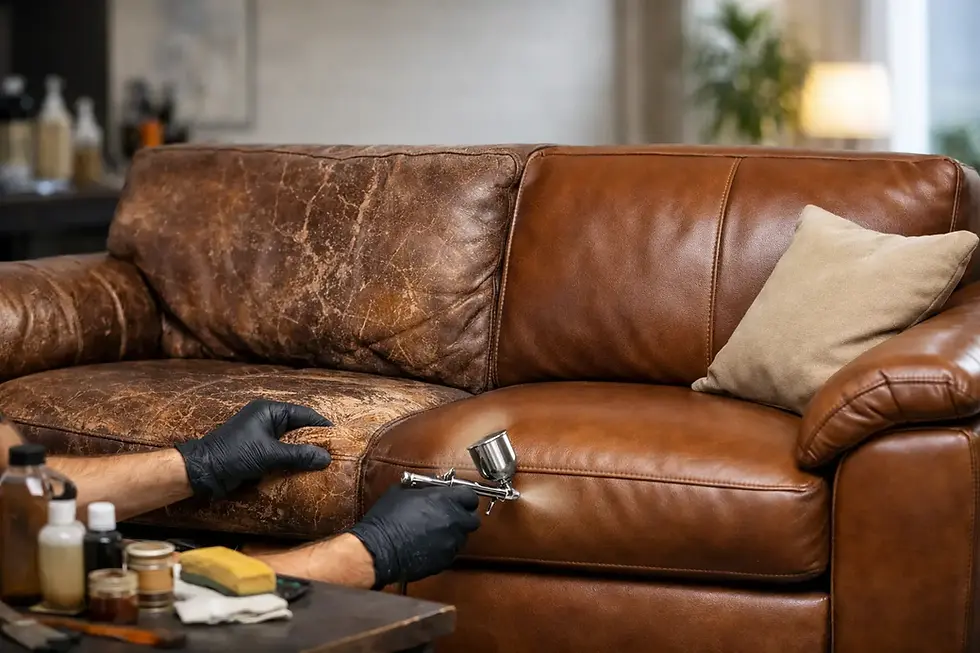
When colour restoration is done well, it should look like the leather has been revived, not coated over. The first step is identifying the damage accurately. Some areas need cleaning only, some need local repair, and some need full recolouring across the worn sections so the finish blends naturally.
Surface preparation comes next. This removes contamination, smooths damaged areas and creates the right base for fresh colour. If there are scuffs, scratches or light cracking, these can often be addressed before the colour work begins.
The colour itself then has to be matched to the furniture as it is now, not just what it may have looked like when new. That is an important difference. The goal is not to make one cushion look factory-fresh while the others remain aged. The goal is an even, believable finish across the piece.
Finally, a protective topcoat helps seal the restored area and improve durability. That topcoat also affects the final sheen, which is why professional results tend to look more natural. On leather furniture, finish matters just as much as colour.
Choosing the right next step
If your sofa has light, general dullness, begin with safe cleaning and an honest assessment in natural light. If the leather still looks healthy and the fading is mild, a modest at-home refresh may be enough. If the colour has rubbed away, the surface is worn, or there is damage from spills or household accidents, a proper restoration is usually the smarter option.
For many homeowners, the appeal of specialist help is not just the finish. It is the convenience. With a service such as Ashbourne Leather Care, you can send photos, get a quotation and have the work carried out on site without removing the furniture from your home. That makes colour restoration a practical alternative to replacement, especially for quality sofas that are structurally sound but visibly tired.
Faded leather does not always mean the end of the furniture. In many cases, it simply means the surface has done years of hard work and now needs the right treatment to look its best again.


Comments