


How Does Mobile Leather Refurbishment Work in Ireland?

A faded sofa, a white mark from bleach, cleaning or a fresh ink line on the armrest can make an otherwise good room feel worn overnight. So, how does mobile leather refurbishment work in Ireland? Rather than removing your furniture and leaving you without it for days, a leather specialist comes to your home, assesses the damage and carries out the appropriate restoration on site.
For homeowners in Dublin, Meath, Kildare and Louth, it is a practical way to bring a leather sofa, chair or footstool back to a smart, cared-for finish without the cost and disruption of replacement. The best approach depends on the leather, the damage and the condition of the surrounding upholstery, which is why a proper assessment comes first.
How Mobile Leather Refurbishment Works in Ireland
Mobile refurbishment is a targeted restoration service, not simply a quick polish over a problem. It can involve deep cleaning, stain treatment, repairing surface damage, rebuilding worn colour and applying a protective finish that suits the furniture.
The process normally begins before a technician arrives. You send clear photographs of the affected area, a wider photo of the furniture and your location details. This allows the specialist to judge the likely work involved, identify obvious concerns and provide a quotation. A photo assessment is efficient, but it may be refined once the leather is examined in person, particularly where previous repairs, extensive fading or hidden cracking are involved.
On the agreed day, the furniture stays in your home. The work area is prepared carefully and the repair is completed with as little disruption as possible. Many common issues can be treated in a single visit, although drying and curing time will vary according to the repair, colour work and room conditions.
First, the Leather and Damage Are Assessed
Not all leather furniture behaves in the same way. A protected, coloured leather sofa can often be cleaned, recoloured and refinished very effectively. Heavily worn leather need a more considered approach because their absorbency, texture and original finish differ.
The technician checks whether a mark sits on the surface or has penetrated the material, whether colour loss is localised or spread across several cushions, and whether the leather remains structurally sound. Scuffs, scratches and dye transfer may require surface preparation and colour restoration. Ink, nail polish, glue and bleach marks require careful treatment because aggressive household cleaners can make the damage worse.
Cracking also needs an honest assessment. Light surface wear and early cracking can often be improved significantly. If leather has become very dry, brittle through to the backing, refurbishment may still improve its appearance but cannot always make it look factory-new. A specialist should explain what is realistic before any work begins.
Cleaning Creates the Right Foundation
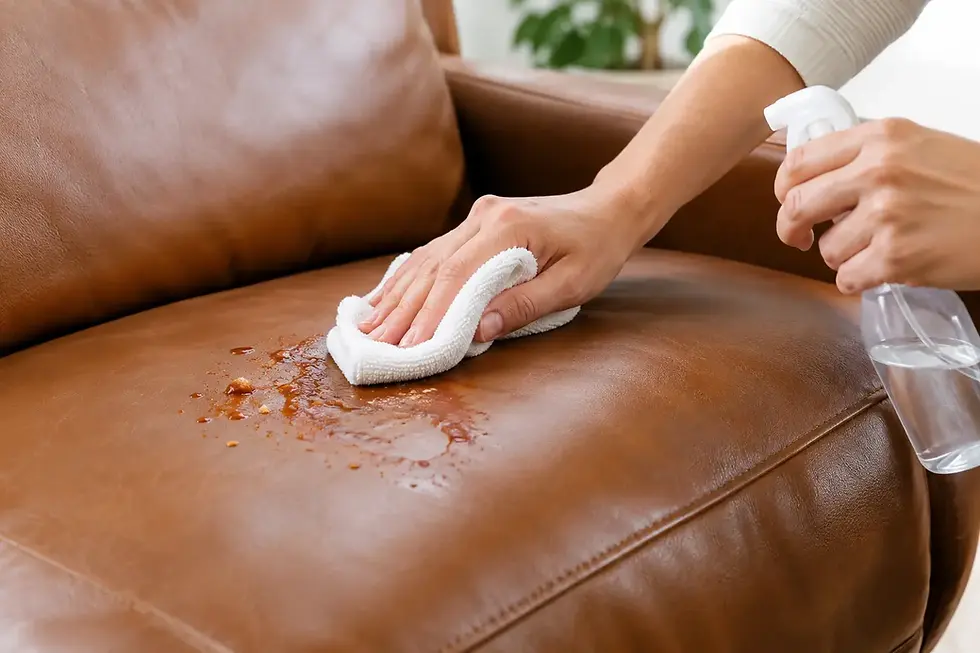
Good refurbishment starts with cleaning. Everyday use leaves behind body oils, dust, pet residue, food spills and cleaning-product build-up. On pale leather, these can make headrests, armrests and seat edges look noticeably darker than the rest of the sofa.
Professional cleaning removes this contamination without soaking the leather or stripping the finish unnecessarily. This matters because applying colour over dirt, grease or silicone-based products can reduce adhesion and leave an uneven result.
Cleaning alone can make a marked difference where the issue is surface grime. However, it will not reverse sun fading, replace missing colour or repair a scrape. In those cases, cleaning is the essential preparation for the next stage rather than the complete solution.
Repairs Are Built Up Before Colour Is Restored
For scratches, scuffs and small accidental damage, the affected area is prepared so it can accept repair materials and colour. Raised edges may be smoothed, loose finish removed and small surface losses filled where appropriate. The aim is to reduce the visibility and feel of the damage while keeping the repaired area flexible.
A repair to a sofa arm is different from a repair to a decorative back panel. High-contact areas need materials and finishing methods that can cope with regular use. This is where craftsmanship matters: a repair that looks good at first but is poorly prepared may wear prematurely.
Some marks are more challenging than others. Bleach can remove colour permanently, while glue and nail polish may alter the surface finish. Ink can spread if treated incorrectly. There is no one-bottle answer for every accident, which is why attempting a strong solvent or online remedy before assessment is rarely wise.
Colour Matching and Recolouring Bring Back the Finish
Once the leather is clean and repaired, colour can be matched to the existing upholstery. This may mean restoring one damaged patch, blending colour across a worn armrest or refreshing larger faded sections so they sit naturally with the rest of the suite.
Colour work is applied in controlled, fine layers rather than one heavy coat. Building the colour gradually helps the finish look even and keeps the leather supple. The final appearance also needs to reflect the original sheen. A matte leather sofa should not be left glossy, and a soft satin finish should not be turned flat and chalky.
Where an entire sofa has faded unevenly, treating only the worst section may make the contrast more obvious. In this situation, broader refurbishment can create a more consistent result. Equally, a small isolated scuff does not usually justify recolouring every cushion. The right scope is based on the condition of the furniture and the finish you want to achieve.
A Protective Finish Helps the Repair Last
After repair and colour restoration, a suitable top finish is applied to help protect the treated area from normal wear. This stage helps create the correct feel and level of sheen while improving resistance to everyday rubbing and handling.
The furniture then needs time to dry and cure. Your technician will advise when it is safe to sit on, clean or cover the repaired area. Avoid placing throws, cushions or damp clothing directly on freshly restored leather until the recommended curing period has passed. Patience at this point protects the quality of the result.
What Can Be Refurbished On Site?
Mobile leather refurbishment is particularly useful for the damage households see most often: faded cushions, worn armrests, scratches from pets, scuffs from shoes, ink marks, dye transfer from clothing, small bleach spots, nail polish spills and glue residue. It can also improve general dullness and colour loss caused by sunlight and years of use.
It is not a replacement for reupholstery where leather is badly torn, missing in large sections or failing across the whole piece. Nor can any restoration remove every sign of severe age from heavily damaged leather. But many sofas that appear ready for the skip are still strong, comfortable and well worth restoring.
That is the value of an on-site service. You keep the furniture you chose for your home, avoid transport risks and can see the work carried out where the sofa belongs. Ashbourne Leather Care focuses on this kind of practical restoration, helping homeowners revive leather furniture without the upheaval of replacing it.
Getting the Best Result From Your Appointment
Clear photos give the quotation process the best starting point. Take one close-up of the damage, one photo showing its position on the sofa and one wider image in natural light if possible. Mention what caused the mark and whether you have already used any product on it. This can affect the treatment needed.
Before the visit, make space around the furniture and keep pets and children away from the work area. Afterwards, follow the care advice provided. Regular gentle cleaning and prompt attention to fresh spills will help maintain the restored finish. Avoid harsh sprays, wipes and household chemicals unless they are specifically suitable for your type of leather.
A damaged leather sofa does not automatically need replacing. If the frame and comfort are still right for your home, a professional on-site assessment is a sensible first step towards giving it the care - and the second life - it deserves.


Comments