


How to Clean Worn Leather Upholstery

Updated: Jul 6
A leather sofa rarely wears out all at once. It usually starts with the headrest looking a bit dull, the seat cushions feeling slightly dry, or the arms showing darker patches from daily use. If you are wondering how to clean worn leather upholstery without making the finish worse, the key is to treat dirt, wear and colour loss as three different problems. Cleaning helps with built-up grime. It does not reverse cracking, restore missing colour, or repair damage caused by bleach, ink, glue or heavy scuffing.
That distinction matters, because one of the most common mistakes homeowners make is over-cleaning leather that is already tired. Scrubbing harder will not bring back worn pigment. In some cases, it can strip the surface further and leave the leather looking patchy. A careful approach gives you the best chance of improving the appearance while keeping the upholstery stable.
How to clean worn leather upholstery safely
Start by checking what kind of leather you have. Most household leather sofas have a protected finish, which means there is a coloured and sealed surface on top. This type is generally easier to clean than unfinished or absorbent leather, but it can still be damaged by harsh products. If the furniture has a suede-like feel, a very open grain, or darkens quickly when damp, stop before applying anything. That sort of material needs a different treatment.
Before using any cleaner, vacuum the upholstery gently with a soft brush attachment. Focus on seams, creases and the gaps around cushions where grit builds up. This step is more important than many people realise. Small particles of dust and debris act like fine sandpaper when rubbed into the leather during cleaning.
Once the loose dirt is removed, use a soft cloth that is only lightly dampened, not wet, to wipe the surface. This helps lift surface dust and lets you see where the genuine wear is. If the cloth starts picking up colour from the leather, stop straight away. That can be a sign that the finish is already weakened.
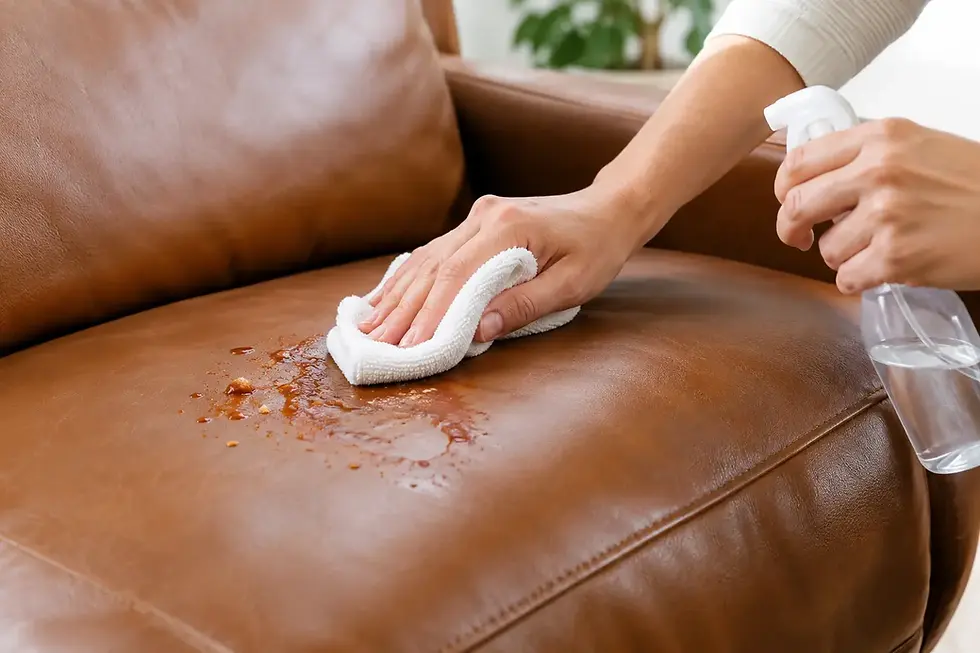
Use a proper leather cleaner rather than washing-up liquid, multi-surface spray or baby wipes. Household products often leave residue, dry the finish, or cause discolouration over time. Apply the cleaner to the cloth rather than directly onto the furniture, then work in small areas with light pressure. You are trying to lift body oils and everyday grime, not scrub the leather back to new.
Pay special attention to the high-contact areas - arms, headrests, front seat edges and the centre of cushions. These tend to collect the most grease and dirt. If one section looks darker than the rest, it may be grime, but it may also be wear in the topcoat. Cleaning will help if it is dirt. If it remains uneven after careful cleaning, that points to surface damage or colour loss rather than poor hygiene.
What cleaning can and cannot fix
This is where expectations need to be realistic. Cleaning can improve leather that looks dull, sticky, slightly darkened from use, or generally tired. It can remove a layer of everyday soil that hides the original finish. It may also improve mild marks if they are sitting on the surface.
What it cannot do is rebuild worn leather. If the top colour has rubbed away, if the surface is cracked, or if there are scuffs that have broken through the finish, cleaning alone will not solve it. In fact, worn areas often look more obvious after cleaning because the dirt that was masking the damage is gone.
The same applies to accidental damage. Ink, bleach stains, nail polish, glue and heavy scrapes need a more targeted repair process. Trying to clean these aggressively at home often spreads the problem or fixes it permanently into the surface.
The biggest mistakes people make with worn leather
The first is using too much water. Leather upholstery should never be soaked. Excess moisture can affect the finish, weaken adhesives and leave tide marks, especially around seams.
The second is using the wrong product because it sounds gentle. Soap, vinegar mixes, disinfectant sprays and baby wipes are all common examples. They may seem harmless, but leather finishes are not the same as fabric or plastic surfaces.
The third is confusing conditioner with repair. A good leather protection cream or conditioner can help maintain suppleness and improve feel, but it will not replace lost colour or close cracks. If the sofa looks faded or rubbed through, the issue is usually in the finish, not just the leather underneath.
Another mistake is rubbing one spot repeatedly to chase a stain. Worn leather has less tolerance for friction. What begins as a small mark can quickly become a shiny patch, a rough patch, or a lifted area of colour.
When worn leather needs more than cleaning
If your sofa has gone beyond general dirt and is showing clear signs of use, the right answer is often refurbishment rather than cleaning. This usually applies when the leather looks faded on the cushions, discoloured on the arms, or scratched and patchy in the places you use every day.
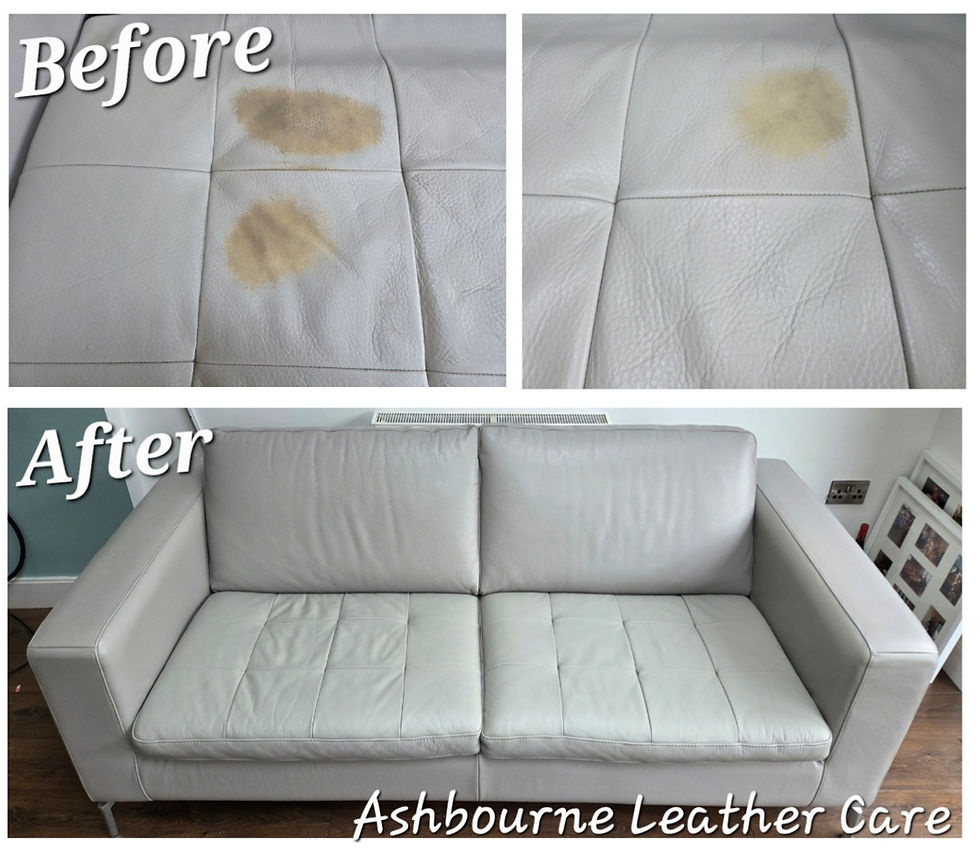
Professional restoration deals with the surface properly. That can mean deep cleaning followed by preparation of the damaged area, colour restoration and refinishing so the repaired section blends back into the rest of the piece. For homeowners, the main benefit is straightforward - you keep the furniture you already like, and it looks presentable again without the cost of replacement.
It also matters if the damage is isolated. A single bleach spot, a pen mark on one cushion, or wear concentrated on the front edge of one seat does not usually justify buying a new suite. Targeted repair is often the more sensible option.
How to tell if you should stop and call a specialist
There are a few signs that home cleaning has reached its limit. If the leather feels rough, looks lighter in worn areas, or shows cracking in the coloured surface, the finish has likely broken down. If a stain has a chemical look to it, such as a pale patch from bleach or a hard glossy patch from glue, it is not a standard cleaning job. If colour comes off on your cloth, the surface is unstable and needs careful professional handling.
The same goes for older sofas that have sentimental or financial value. It is one thing to test a cleaner on a budget dining chair. It is quite another to experiment on a quality leather sofa that anchors your sitting room.
For homeowners in Dublin, Meath, Kildare and Louth, a mobile service can make this much easier. Ashbourne Leather Care works on site, which means you can get a clear view of what is cleanable, what is repairable and what sort of finish can realistically be restored without moving the furniture out of your home.
Aftercare matters just as much as the clean
Once the upholstery is clean, the next step is keeping it that way without accelerating wear. Regular light vacuuming and occasional wiping with a dry or barely damp microfibre cloth will do more good than infrequent heavy scrubbing. Keep leather away from direct sunlight where possible, as fading and drying are far worse in bright, exposed spots.
Try to deal with fresh spills quickly, but gently. Blot rather than rub. If you have children or pets, it is worth paying extra attention to the front edges of cushions and armrests, because these are usually the first areas to show grime and abrasion.
If the sofa is already showing signs of wear, think in terms of preservation rather than rescue by cleaning. Gentle maintenance can slow further deterioration, but it will not turn back damage that is already visible. That is where restoration becomes the better investment.
A worn leather sofa does not always need replacing, and it does not always need an aggressive clean either. Often, the best result comes from knowing where cleaning ends and proper repair begins. If your upholstery is simply dull from use, careful cleaning can make a noticeable difference. If it is faded, scuffed, stained or losing colour, a specialist restoration approach will protect the leather and bring back the finish far more effectively than any bottle from the cupboard.


Comments