


How to Remove Biro From Leather Without Damage

How to Remove Biro From Leather Without Damage. A biro mark on a leather sofa can look far worse than it is - especially when it is fresh and sharply coloured against a pale cushion. The key to learning how to remove biro from leather is acting calmly. Rubbing hard, reaching for household solvents, or trying several products in quick succession can spread the ink and damage the leather finish.
Leather furniture is not all the same. A protected, pigmented leather sofa will usually tolerate careful cleaning better than an absorbent aniline or nubuck leather. The age of the mark, the ink colour, the sofa’s finish and any previous wear all affect the right approach. Start gently, stop if the colour begins to lift, and call a specialist if the mark remains visible.
First, identify the leather and the ink mark
Most modern leather sofas have a protective surface coating and an applied colour finish. On this type of leather, biro ink often sits partly on or within the upper finish rather than soaking straight through. That gives you a better chance of improving the mark without a full repair.
Older, worn or very soft leather can be more vulnerable. If water darkens the leather immediately, the surface has a natural suede-like feel, or the sofa has a mottled, unsealed appearance, do not use ink removers or alcohol-based products. These leathers can absorb liquid quickly and may need controlled professional treatment.
Fresh biro marks are generally easier to deal with than stains that have been sitting for days or weeks. Body heat, sunlight and everyday use can drive ink further into the finish. A dark blue or black line may also leave a faint shadow after cleaning, particularly on cream, white, tan or light grey leather.
How to remove biro from leather safely
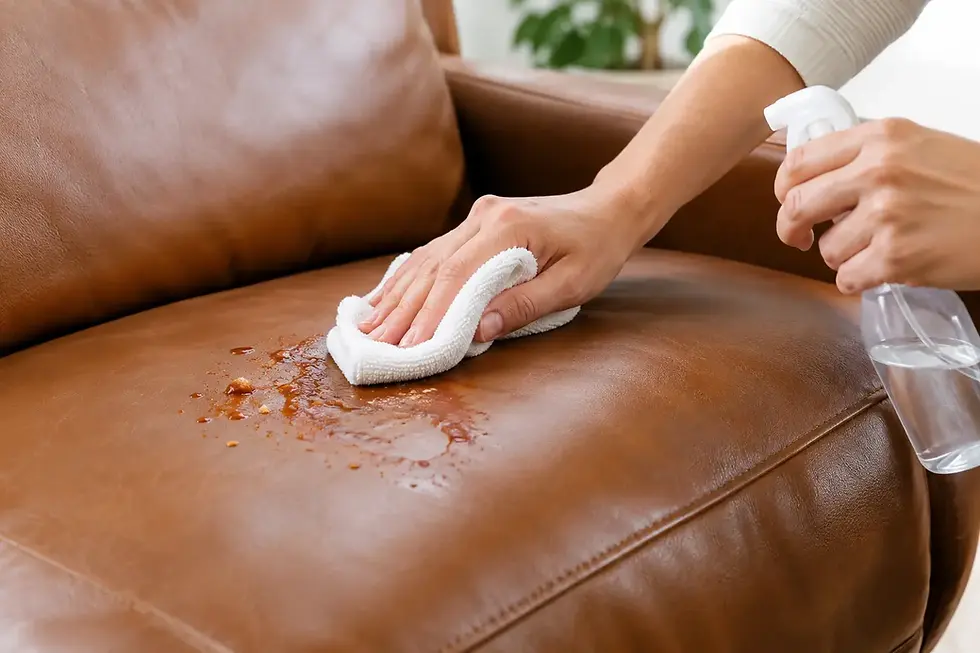
How to Remove Biro From Leather Without Damage. Begin by blotting the affected area lightly with a clean, dry white cloth. Do not scrub. The aim is to lift any loose ink and keep it from spreading into a larger patch. Avoid coloured cloths, kitchen roll that sheds fibres, and rough sponges.
Next, use a leather cleaner designed for finished upholstery, following the product instructions closely. Apply the cleaner to a soft cloth rather than directly onto the sofa. Work around the edge of the mark first, then gently dab towards the centre. This helps prevent a visible ring forming around the stain.
If the ink remains, a specialist leather ink remover may help, but it should be used with restraint. Test it on an inconspicuous area first, such as the rear or lower side of a cushion. Use a cotton bud or soft cloth for precise application and lift the ink in short, controlled passes. Change to a clean part of the cloth often so you are not putting ink back onto the leather.
Allow the area to dry naturally between attempts. Repeatedly wetting the leather can affect its finish, especially around seams, piping and worn areas. Once the ink has lifted as far as it safely can, apply a suitable leather protection product if appropriate for your sofa’s finish.
It is better to improve a biro mark carefully than to turn a small line into a pale, rough or sticky patch. If there is no improvement after one or two gentle attempts, stop cleaning.
Products and methods to avoid
Online cleaning tips often make biro removal sound simple. The problem is that many recommended products are made for hard surfaces, not coloured and coated upholstery leather. They can remove more than the ink.
Avoid nail polish remover, bleach, acetone, white spirits, hairspray, hand sanitiser and strong household cleaners. These can strip the protective finish, break down the colour coating or leave a dull patch that attracts dirt. Even rubbing alcohol can cause trouble on many leather sofas, particularly if the leather is already faded, dry or worn.
Baby wipes are another common temptation. Some contain moisturisers, fragrance or cleaning agents that leave residue behind. A wipe may appear to remove the ink at first, but it can leave the surrounding leather sticky, streaky or discoloured.
Do not use heat to dry the sofa quickly. Hairdryers, radiators and direct sunlight can dry out leather and make existing wear more noticeable. Let the treated area air dry at room temperature.
When cleaning is no longer enough
Sometimes the ink is removed but the leather does not look right afterwards. This is common where the biro has penetrated the finish, where an unsuitable cleaner has been used, or where the sofa was already showing signs of colour loss. You may be left with a faint blue shadow, a light patch, a change in sheen or an uneven area that stands out in certain light.
That is where leather repair and colour restoration become more effective than further cleaning. A specialist can assess whether the area needs stain treatment, a localised colour repair, refinishing or protection. The goal is not simply to hide the mark, but to restore the colour and finish so it blends with the rest of the furniture.
This is particularly worthwhile for light-coloured sofas, premium leather suites, or marks on prominent areas such as seat cushions, armrests and headrests. Replacing a good sofa because of one biro accident is rarely necessary.
A professional repair can restore the finish
At Ashbourne Leather Care, we regularly see accidental ink marks alongside scuffs, scratches, faded colour, glue, bleach and nail polish damage. Each issue needs a different treatment. An ink mark on a cream leather cushion may need careful removal followed by colour matching, while a dark sofa with surface wear may require a more focused finish repair.
Professional restoration is carried out on site, so there is no need to transport a bulky sofa or be without your furniture for an extended period. Photos of the affected area, the wider sofa and your location help us assess the damage and provide a quotation before work begins.
A successful repair should look natural from normal viewing distance and feel right when you sit on it. This depends on accurate colour matching and matching the original level of sheen, whether the leather has a matt, satin or slightly glossy finish.
Preventing future biro marks on leather furniture
Pens find their way onto sofas more often than people expect. Children doing homework, paperwork at the kitchen table, visitors, and a pen left in a pocket can all lead to a sudden ink mark. Keep loose pens away from seating areas where possible, and check pockets before settling into the sofa.
Regular leather cleaning and protection also make a difference. A well-maintained protective finish gives dirt and accidental marks less opportunity to settle into the surface. It will not make a sofa completely biro-proof, but it can make early cleaning safer and more effective.
If biro has marked your leather furniture, resist the urge to experiment with harsh products. Take a clear photo in natural light, keep the area dry, and get advice before a small accident becomes a larger restoration job. With the right treatment, your sofa can regain the clean, cared-for appearance that made you choose it in the first place.


Comments