


How to Remove Makeup From Leather Sofa Safely
- ashbourneleathercare

- Aug 10
- 5 min read
How to Remove Makeup From Leather Sofa Safely. A foundation mark on a leather sofa can look far worse than it is, particularly on cream, tan or pale grey furniture. The key is to act calmly: to remove makeup from leather safely, you need to lift the residue from the surface without stripping the protective finish or driving pigment further into the grain.
Make-up is rarely just one substance. Foundation may contain oils, waxes and colour pigments; mascara can be waxy and deeply coloured; lipstick often combines both. The right approach depends on the product, the leather type and how long the mark has been sitting there. A rushed scrub with the wrong cleaner can leave a larger, duller patch than the original stain.
Start by protecting the leather finish
How to Remove Makeup From Leather Sofa Safely. Most modern leather furniture has a coloured, protective surface coating. This finish gives the sofa its even colour and makes everyday cleaning possible. It is also why strong household products are risky: they can break down the coating, remove colour or leave a shiny or bleached-looking area.
Before attempting any cleaning, check that the furniture is leather rather than suede, nubuck or another absorbent finish. Smooth, coated leather is generally more forgiving. Suede and nubuck should not be treated with water or standard leather cleaner at home, as moisture can darken the material and change its texture.
If the makeup is fresh, begin by gently lifting away any excess with a clean, dry white cloth or a soft spoon. Do not rub. Rubbing warms oils and waxes, spreads colour across a wider area and may push the product into creases or stitching.
How to remove makeup from leather at home
For a small, recent mark on smooth leather, use a clean microfibre cloth that is only slightly damp with lukewarm water. Wring it out thoroughly first. Then dab the outside edge of the stain and work gradually towards the centre. This helps prevent a visible ring forming around the affected area.
Use light pressure and keep checking the cloth. If colour transfers, turn to a clean section rather than putting the makeup back onto the sofa. Once the mark has lifted, wipe the area with another barely damp cloth and gently dry it with a soft towel.
If water alone does not shift the residue, a proper leather cleaner designed for finished upholstery may help. Always test it first on a concealed section, such as the rear edge of a cushion or underneath the sofa. Apply the cleaner to the cloth, not directly to the leather, and follow the product instructions closely.
It is better to make two or three gentle attempts than one aggressive attempt. Leather responds well to careful cleaning, while excessive moisture and friction can damage its colour and sheen.
Foundation and concealer marks
Foundation is one of the most common stains we see on leather sofas, especially on headrests and armrests. Because it often contains oils and pigment, it can leave a dark or orange-toned patch even after the surface residue has been removed.
Start with the damp-cloth method. If a faint shadow remains, a specialist leather cleaner may lift more of it. Avoid saturating the leather. The aim is to remove the makeup while keeping the surrounding finish consistent.
A mark that looks like it has soaked into the leather, or one that returns as the area dries, may need professional treatment. This does not necessarily mean the sofa is permanently stained. It can mean the finish needs deeper cleaning, colour correction or refinishing in that localised area.
Lipstick, lip balm and cream makeup
Lipstick, lip balm and cream blush can be more difficult because of their waxy or oily base. First lift any solid residue carefully without scraping the leather. Then blot with a dry white cloth before trying a lightly damp cloth or suitable leather cleaner.
Do not use heat to melt the product away. A hairdryer or heated cloth may soften the wax, but it can also encourage oils to travel into the finish and make the affected patch more noticeable.
Mascara, eyeliner and brow products
Mascara and liquid eyeliner can leave strong black or brown pigment, while brow products may contain oils that cling to the coating. These marks benefit from patience. Dab lightly and use a clean part of the cloth each time.
Avoid rubbing at stitching, piping or textured grain. Makeup can collect in these areas, and vigorous cleaning may cause uneven colour on the raised parts of the leather.
Products not to use on a leather sofa
When faced with a visible mark, it is tempting to reach for whatever is in the kitchen or bathroom cupboard. That is where accidental damage often begins. Keep the following away from leather furniture unless a leather specialist has specifically advised otherwise:
Baby wipes, face wipes and make-up remover wipes, which may contain alcohol, oils or moisturisers that leave residue or affect the finish.
Nail polish remover, acetone, bleach and solvents, which can quickly remove colour and dissolve protective coatings.
Washing-up liquid, laundry products and multi-purpose sprays, which are not formulated for leather upholstery.
Abrasive pads, magic erasers and hard brushes, which can scuff the surface and create a permanently dull patch.
Household remedies may appear to work at first, but the problem can become visible later as the leather dries. A cleaned spot that is lighter, shinier, sticky or rough to the touch is usually a sign that the finish has been affected.
When a makeup stain needs professional leather restoration
Home cleaning is sensible for a small, fresh surface mark on smooth leather. It is less suitable when the makeup has been sitting for days, has spread across a large area, or has already been treated with several products. Older foundation marks, lipstick on pale leather and dark mascara stains are particularly likely to need a more controlled approach.
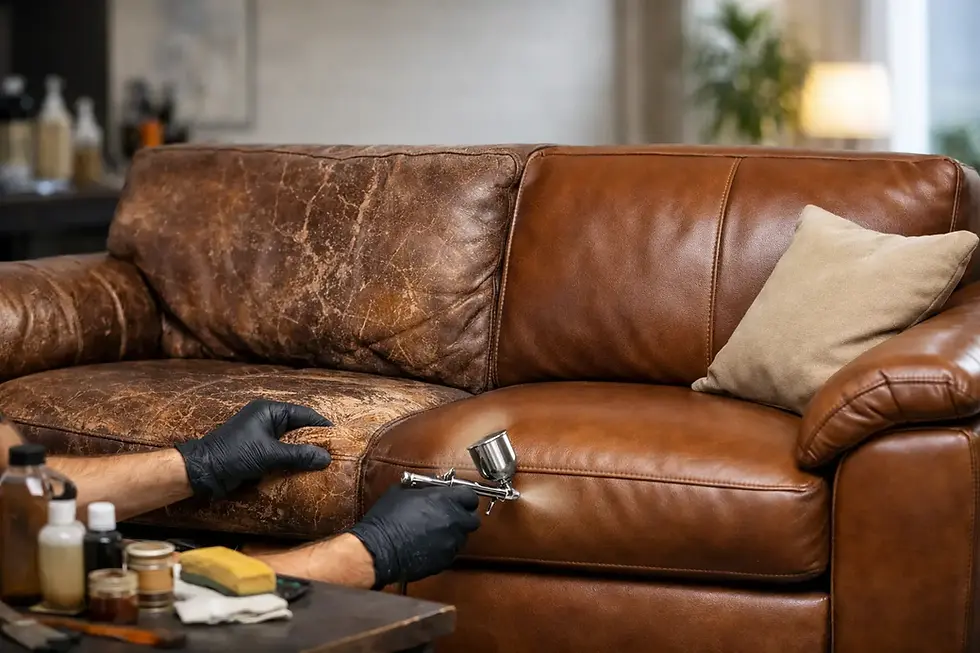
Professional restoration is also the right choice if the leather is faded, worn or cracked around the stain. Cleaning a damaged area can reveal colour loss that was already present beneath the makeup. In these cases, targeted cleaning can be followed by colour restoration and refinishing, helping the repair blend naturally with the rest of the sofa.
At Ashbourne Leather Care, we assess the damage from photos before providing a quotation. This makes it easier to identify whether the mark needs cleaning alone or whether a localised colour repair will achieve the best result. Work is carried out on-site, so there is no need to move a heavy sofa or arrange collection.
Preventing future makeup marks on leather
The easiest prevention is to avoid applying makeup while sitting on the sofa, but real homes are not always that tidy. A washable throw over a favourite seat can help, particularly in homes where the sofa is used for getting ready before work, school events or nights out.
Regular, gentle leather care also makes a difference. A clean, well-maintained protective finish is easier to wipe down than leather that is dry, heavily worn or already losing colour. Pay attention to headrests and armrests, where face products, hair products and natural skin oils build up over time.
If makeup has marked your leather furniture, resist the urge to keep trying stronger products. Take a clear photograph in natural light, note what caused the stain and how long it has been there, then get specialist advice. A careful repair can bring your leather back to life and help you keep the furniture you chose for your home looking its best.


Comments