


How to Repair Leather Scuff Marks on a Sofa

How to Repair Leather Scuff Marks on a Sofa. A dark scrape on the arm of a cream sofa can make the whole room feel untidy, even when the damage is small. The good news is that it is often possible to repair leather scuff marks without replacing the furniture. The right approach depends on whether the leather surface has simply picked up a mark, lost some colour, or been cut deeply enough to expose the material underneath.
Leather furniture is built to be lived with, but everyday use takes its toll. Shoes brushing against a footstool, pets jumping onto a sofa, bags catching an armrest and children’s toys can all leave visible scuffs. Treating the damage carefully, rather than reaching for a household cleaner, gives you the best chance of a tidy, lasting result.
First, check what kind of scuff you have
Not every scuff is a scratch, and that distinction matters. A surface transfer mark may sit on top of the leather finish and can sometimes be removed with gentle cleaning. A colour scuff means the protective coating or colour layer has worn away. A deeper scrape may have damaged the leather itself and need filling, colour matching and refinishing.
Run a clean fingertip lightly across the area. If it feels smooth but looks darker or lighter than the surrounding leather, it may be a surface mark or colour loss. If you can feel a rough edge, catch, split or indentation, the damage is more than cosmetic. Avoid picking at raised edges, as this can pull away more of the finish.
The type of leather also affects the repair. Most modern sofas have pigmented leather with a coloured protective finish, which can usually be cleaned and professionally recoloured very effectively.
How to repair leather scuff marks safely
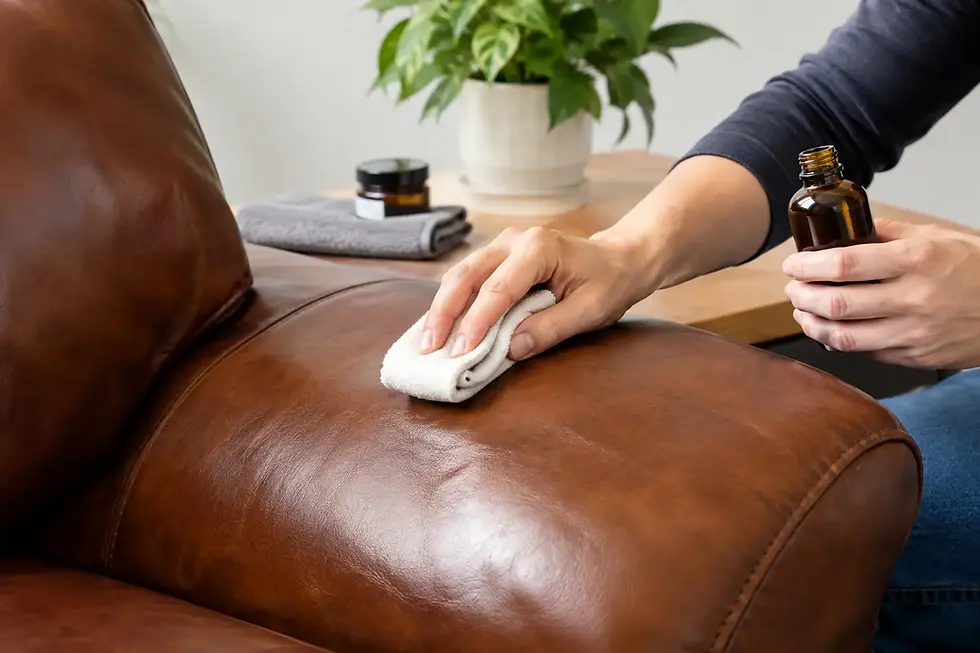
For a very light mark, begin with the least aggressive option. Dust the area using a soft, dry microfibre cloth, then wipe it gently with a cloth that is only slightly damp. Do not soak the leather or scrub back and forth. Let it dry naturally before deciding whether the scuff has improved.
If the mark remains but the leather is intact, use a leather cleaner made specifically for upholstery, following its instructions and testing it first in a hidden area. Apply the product to a cloth rather than directly onto the sofa. Work slowly, using light pressure, and stop if colour begins to lift onto the cloth.
A suitable leather protector or conditioner can improve the appearance of a minor dull scuff once the area is clean and dry. It may restore a little richness and reduce the contrast of a light mark, particularly on darker leather. However, conditioner does not replace missing colour, repair a scrape or rebuild a damaged finish. Applying more product than necessary can leave the surface greasy or uneven.
When the scuff has removed colour, a professional repair is usually the better choice. The repair process may involve cleaning and preparing the damaged section, smoothing the edges, applying a flexible filler where needed, matching the colour to the sofa, and applying a durable finish. Done correctly, this restores both the colour and the sheen so the repair blends with the surrounding upholstery rather than looking like a painted patch.
Products and quick fixes to avoid
A sofa is not a pair of shoes. Shoe polish, permanent marker and household paint may disguise a scuff briefly, but they rarely match upholstery leather in colour, flexibility or finish. They can also make later professional restoration more difficult.
Avoid using acetone, nail polish remover, bleach, alcohol-heavy sanitiser, washing-up liquid or abrasive cream cleaners. These can strip the protective coating, dry the leather and create a larger pale patch than the original scuff. Magic erasers are also too abrasive for most finished leather surfaces.
Oils and home remedies are another common problem. Olive oil, coconut oil and petroleum jelly can darken leather temporarily, attract dirt and interfere with colour repair. If a social media tip promises to remove a scuff instantly using an item from the kitchen cupboard, it is rarely a sensible option for a valuable sofa.
When a scuff needs professional attention
How to Repair Leather Scuff Marks on a Sofa. Professional restoration is worthwhile when the leather has lost colour, the scratch is rough to the touch, the scuff is on a highly visible area, or the sofa has a specialist finish. Pale, cream, white and two-tone leathers are particularly difficult to touch up without an accurate colour match. So are older sofas where the original colour has changed gradually with sunlight and use.
It is also sensible to call a specialist if the scuff sits beside other damage, such as fading, cracking, ink marks, glue or pet scratches. Treating the whole affected panel can create a more natural finish than trying to repair one small spot in isolation. This is especially true on large sofa arms, seat cushions and headrest areas, where changes in colour or sheen are easy to notice.
A proper furniture repair is designed to remain flexible as the leather moves. That matters on seating, where the surface is constantly stretched and compressed. A rushed touch-up can crack, peel or wear away quickly, leaving the sofa looking worse than before.
Preparing your sofa for a repair visit
If you decide that the scuff needs specialist work, avoid experimenting with more products before sending photographs for a quotation. Take a clear photo of the full sofa, one of the affected panel and a close-up of the damage in natural daylight if possible. Include a photo from an angle that shows texture, scratches and any colour loss.
Mention what caused the damage if you know. A scrape from a zip, a pet claw mark and a solvent spill can look similar at first glance but require different preparation. It also helps to say whether you have already used any cleaner, polish or repair kit on the area.
For homeowners in Dublin, Meath, Kildare and Louth, Ashbourne Leather Care provides mobile, on-site leather furniture restoration. This means your sofa can be assessed and repaired in your home, without the disruption of arranging collection or being without your furniture for an extended period.
Keeping repaired leather looking its best
Once a scuff has been repaired, regular gentle care will help protect the result. Dust leather weekly with a soft cloth and clean it periodically with a suitable upholstery leather cleaner. Keep sofas away from strong, direct sunlight where possible, as UV exposure can fade colour and dry the finish over time.
Try to address fresh marks early. Ink, dye transfer from clothing and adhesive residue are easier to manage before they become ingrained. Blot spills rather than rubbing them, and keep harsh household products well away from leather upholstery.
Scuffs are part of family life, but they do not have to be the reason to replace a good sofa. A careful assessment and the right repair method can bring the colour, finish and pride back to the furniture you already love. If the mark is visible every time you walk into the room, clear photographs are the simplest first step towards bringing your leather back to life.


Comments