


Professional Leather Repair at Your Doorstep

That pale patch on the sofa arm, the ink mark left by a pen, or the cracked seat cushion you notice every evening can make an otherwise lovely room feel tired. Professional leather repair at your doorstep offers a practical alternative to replacing furniture that is still comfortable, well made and worth keeping.
A leather sofa does not need to be beyond use before it deserves attention. Many of the issues homeowners see as permanent - fading, scuffs, stains, colour loss and accidental marks - can often be carefully repaired and refurbished in the home. The result is furniture that looks cared for again, without the disruption of collection, transport or weeks without your sofa.
Why professional leather repair at your doorstep makes sense
Leather furniture is a significant investment. Replacing a quality sofa because of a few damaged areas can be expensive, particularly when the frame, cushions and overall comfort are still in good condition. Restoration focuses on the visible problem while preserving the furniture you already know and enjoy.
On-site repair is also far more convenient than arranging for a large sofa to be removed. There is no need to manoeuvre it through hallways, organise delivery times or leave a room half empty while you wait. A specialist works at your premises, assessing the leather in its usual light and carrying out the agreed repair where the furniture belongs.
This approach is especially useful for busy households across Dublin, Meath, Kildare and Louth. Whether the damage is on a family-room corner sofa, a favourite armchair, or leather couch, the process can be arranged around your home rather than the other way round.
What can be repaired and restored?
Leather is durable, but daily life leaves its mark. Sunlight can fade exposed areas, body oils can darken headrests and armrests, and repeated use can wear away the original colour on seats and edges. These are common signs of a well-used sofa, not necessarily reasons to replace it.
Targeted leather repair can address scuffs, scratches, scrapes, and small surface damage. It can also improve accidental marks caused by ink, bleach, nail polish and glue. The correct treatment depends on the leather type, the cause of the damage and how deeply the surface has been affected. A dark ink mark, for example, may need a different approach from a bleach splash that has removed the colour itself.
Colour restoration is often one of the most noticeable improvements. Where leather has faded or worn through on contact areas, a carefully matched colour can restore a more even appearance. Once the finish is rebuilt, the repaired section should sit naturally with the surrounding leather rather than standing out as an obvious patch.
Cleaning also has a valuable role, particularly on sofas that have become dull or uneven over time. Professional cleaning removes built-up grime more safely than harsh household products, helping the true condition and colour of the leather show through.
Not every mark should be treated the same way
It is tempting to reach for supermarket wipes, strong cleaners or online stain-removal advice the moment an accident happens. Unfortunately, these quick fixes can spread a stain, strip colour or leave a shiny, sticky area that is harder to repair afterwards.
Bleach, solvents, acetone and abrasive cleaners are particularly risky on finished leather. If a fresh spill occurs, gently blot it with a clean dry cloth rather than rubbing. Then take clear photographs before trying anything further. A specialist can assess the damage from the photos and advise on the most suitable next step.
The value of an on-site specialist assessment
A good repair begins with understanding what is actually happening to the leather. Two sofas may appear to have the same brown colour, yet one may have an aniline finish and another a protected, pigmented surface. Their repair requirements can differ considerably.
An on-site service allows the technician to inspect the affected area, assess the surrounding colour and finish, and plan a repair that suits the furniture. Light in your home matters too. Colour matching should work in the room where the sofa is used, not just under workshop lighting.
The most efficient first step is usually simple: send photographs of the damage, along with your location and a brief description of what happened. This helps establish whether the issue is suitable for repair and provides the basis for a quotation. It is a straightforward way to get clarity before committing to a visit.
At Ashbourne Leather Care, the focus is on restoring leather furniture with practical, targeted work rather than pushing customers towards unnecessary replacement. A clear quotation lets you decide whether restoration is the right value for your sofa and your home.
When refurbishment is a better choice than replacement
For many homeowners, the decision comes down to cost, convenience and attachment to the furniture. If the sofa is structurally sound and comfortable, professional refurbishment can make strong financial sense. It also avoids the expense and hassle of disposing of a large item before its useful life is over.
Restoration is particularly worthwhile when the damage is localised. A scratched arm, faded headrest, worn seat edge or accidental stain may draw the eye, but it does not mean the entire sofa has failed. Repairing the affected area can refresh the look of the whole piece.
There are occasions when replacement may be the more sensible option. Extensive cracking across multiple panels, severe peeling on bonded leather, major cushion failure or widespread structural damage may limit what a cosmetic repair can achieve. A reputable specialist should be honest about those limits. The aim is not to promise perfection where the material cannot support it, but to give you a realistic view of the likely result.
What to expect from the repair visit
Once the quotation is accepted, the work is completed at your home wherever possible. The exact process varies, but it may involve cleaning and preparing the leather, repairing damaged areas, rebuilding lost colour and applying a finish suited to the original look.
Careful preparation makes a major difference. A repair that is rushed over dirt, oils or unstable colour is unlikely to last as well as one completed properly. The specialist may work in thin layers, allowing each stage to settle before moving to the next. This is how a repair develops a natural appearance rather than a heavy painted look.
You should expect clear communication about the area being treated, the anticipated finish and any sensible aftercare. Most repairs are designed to blend into the existing leather, but older furniture may retain some overall variation from years of use and sunlight. That is normal, and it is often part of the character of real leather.
Keeping restored leather looking its best
After a repair, regular gentle care will help protect the finish. Keep leather furniture away from strong direct sunlight where possible, as prolonged exposure can fade colour and dry the surface. Wipe up spills promptly and avoid placing sharp objects, rough throws or heavily dyed clothing against vulnerable areas.
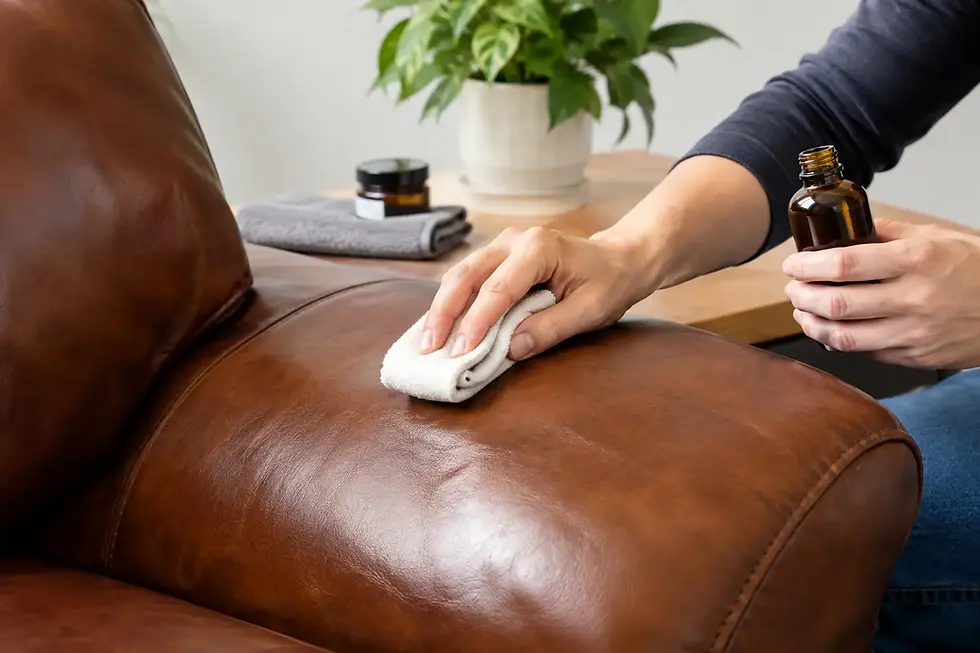
For everyday maintenance, use a soft clean cloth and leather-appropriate products. Household sprays, baby wipes and washing-up liquid may seem harmless, but they can leave residues or interfere with protective coatings. If you are unsure whether a product is suitable, it is better not to experiment on a visible panel.
Pay attention to the places that take the most use: seat fronts, armrests, headrests and the usual favourite spot on the sofa. Addressing early wear is often simpler and more cost-effective than waiting until colour loss or cracking becomes extensive.
A damaged leather sofa can change the feel of a room, but it does not have to stay that way. Take a few clear photos, note the cause of the damage and seek a professional view before assuming replacement is the only answer. With the right repair, the furniture you chose for your home can look at home there again.


Comments