


How to Treat Yellow Stains on Leather Sofa
- ashbourneleathercare

- Jul 17
- 5 min read
How to Treat Yellow Stains on Leather Sofa. A yellow patch on an otherwise well-kept sofa can make the whole room feel tired. Yellow stains on leather sofa surfaces are especially frustrating because they rarely look like a simple spill, and scrubbing at them can make the finish worse. The right response depends on whether the yellowing is sitting on the surface, has changed the leather coating, or is part of wider wear and colour loss.
For homeowners, the aim is not simply to make the stain less noticeable for a few days. It is to protect the leather, preserve its original finish and avoid turning a small area of discolouration into a larger repair.
Why yellow stains appear on leather sofas
Not every yellow mark has the same cause. A pale yellow patch on a cream or white sofa may be caused by body oils, hair products, hand cream, sun cream, or household cleaning residue. On darker furniture, yellowing can appear where the protective topcoat has worn away or reacted to sunlight, heat or cleaning chemicals.
Leather is usually finished with colour and a protective coating. When this surface is damaged, the leather may absorb contaminants more easily and its colour can change. This is why a mark that looks like dirt may not lift with ordinary leather cleaner.
Body oils and everyday contact
Headrests, armrests and seat edges are common problem areas. Natural oils from skin and hair, along with moisturiser, sunscreen and styling products, gradually build up. They can leave a yellow or brownish cast, particularly on light-coloured leather.
This type of staining often develops slowly rather than after one obvious accident. If the leather feels slightly tacky, looks darker around contact points or has an uneven sheen, surface contamination and worn protection may both be involved.
Sunlight and heat exposure
A sofa placed near a bright window, radiator, stove or conservatory glass can discolour unevenly over time. Light leather may turn yellow, while darker colours may fade or take on a warmer, patchy tone. Heat can also dry the finish, making it more prone to cracking and further staining.
It is worth checking whether the yellow area matches the part of the sofa exposed to daylight. If cushions are a different colour underneath or behind the sofa, UV exposure is likely to be part of the issue. Cleaning alone will not correct colour that has faded or changed within the finish.
Cleaning products and chemical reactions
General household sprays, bleach-based products, washing-up liquid, alcohol wipes and strong degreasers are not suitable for leather furniture. Even when they seem to remove a mark at first, they can strip the coating, alter the colour or leave residue that attracts more dirt.
A yellow patch can also appear after an attempt to remove ink, glue, nail polish or a food spill. The original stain may be gone, but the leather’s colour or protective layer has been affected. This needs restoration rather than more aggressive cleaning.
Ageing and finish breakdown
Older leather sofas can yellow as their coating oxidises or loses its original appearance. This is more noticeable on white, ivory, cream and pale grey furniture. In some cases, the yellowing is localised around worn areas; in others, it is spread across a whole cushion or sofa.
Where the finish has deteriorated, a professional can prepare the surface, match the colour and restore a consistent protective coating. That is a more durable solution than covering the problem with polish or dye from a DIY kit.
What to do when you spot yellow staining
How to Treat Yellow Stains on Leather Sofa. Start gently. Remove loose dust with a clean, dry microfibre cloth, then assess the area in natural daylight. Take a clear photograph before trying anything, particularly if the sofa is light-coloured or the stain has appeared after a household accident. A photo helps identify whether the issue is likely to be dirt, colour transfer, chemical damage or fading.
If the mark is fresh and you know what caused it, blot it lightly with a dry cloth. Do not rub. Rubbing spreads oils and liquids, pushes them into the leather and can create a shiny patch around the stain.
For mild surface grime, use only a leather cleaner designed for finished upholstery, and test it first on a hidden area. Apply the product to the cloth rather than directly onto the sofa. Work with a light touch, avoid soaking the leather and allow it to dry naturally. If no improvement is visible after a careful attempt, stop there.
This is one of those situations where persistence can be costly. Repeated cleaning with stronger products may remove the coating before it removes the yellowing.
What not to use on a leather sofa
The temptation to use whatever is under the kitchen sink is understandable, but unsuitable products can quickly change the texture and colour of leather. Avoid bleach, disinfectant sprays, baby wipes, washing-up liquid, white vinegar, acetone, nail polish remover and abrasive cream cleaners.
Alcohol-based products can dry or dull the finish. Oils, waxes and silicone-heavy polishes may make a yellow patch look temporarily richer, but they can leave a greasy surface, alter the sheen and make later restoration more difficult. Magic eraser-style sponges are also too abrasive for many leather finishes.
Be cautious with internet remedies as well. A method that works on one type of leather may damage another. Aniline, semi-aniline, pigmented leather and corrected-grain leather react differently, and a sofa’s age and previous cleaning history also matter.
When cleaning is not enough
A professional assessment is sensible when the yellow stain remains after gentle cleaning, when the area has become lighter or rougher, or when the surface looks cracked, sticky or uneven. It is also the safer route if the sofa is white or cream, if the damage is close to stitching, or if a chemical product has already been used.
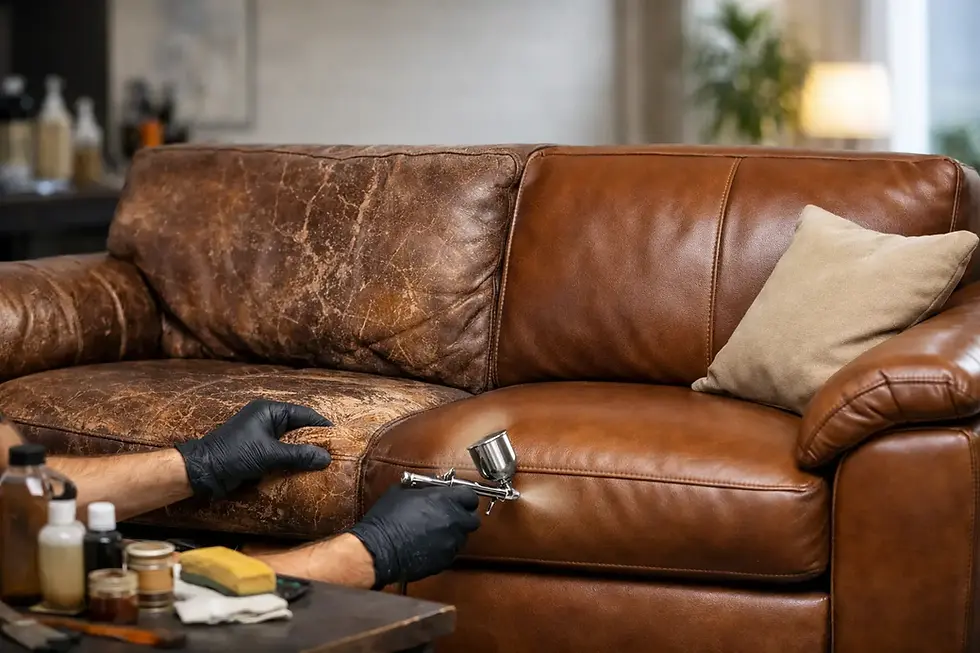
Restoration is particularly effective for yellowing linked to colour loss, UV exposure, worn headrests and accidental chemical damage. The process is not simply a cover-up. It may involve careful cleaning and preparation, colour matching, targeted recolouring and a new protective finish so the repaired section blends with the surrounding leather.
The achievable result depends on the leather type and extent of damage. A small isolated mark is often straightforward to improve. A whole sofa that has yellowed from years of sunlight may need broader colour restoration for an even result. A good specialist will explain the likely outcome before work begins rather than promising an unrealistic finish.
Preventing yellow stains from returning
Once the sofa has been cleaned or restored, a few practical habits can make a real difference. Keep it away from direct sunlight where possible, or use blinds during the brightest part of the day. Leave a gap between the sofa and radiators or other heat sources. Rotate removable cushions occasionally so everyday exposure is more even.
Try to keep hand creams, fake tan, sunscreen and hair products away from the leather until they have fully absorbed. This matters most on pale sofas and on favourite seats. A regular light clean using suitable leather-care products will remove everyday oils before they build into visible discolouration.
If children or pets use the sofa, deal with spills promptly and avoid covering the furniture with plastic or non-breathable throws for long periods. Trapped heat and moisture can affect both the leather and its finish.
Restore the look without replacing the sofa
A yellowed leather sofa does not automatically need replacing. Many marks that look permanent can be improved through the right combination of cleaning, recolouring and protective finishing, carried out on site with the furniture left in your home.
Ashbourne Leather Care provides photo-based quotations for leather furniture across Dublin, Meath, Kildare and Louth. Send clear photos of the affected area, along with your location, to find out what can realistically be restored. The sooner a yellow stain is assessed, the better the chance of bringing your leather back to a clean, even and cared-for finish.


Comments