


Leather Cleaner Review: What Actually Works?

Leather Cleaner Review: What Actually Works? A leather cleaner review should answer one practical question before anything else: will this product improve your sofa without changing its colour, finish or feel? For light day-to-day grime, the right cleaner can make a real difference. For ink, bleach marks, worn colour or a deep scuff, cleaning alone will not bring the leather back to its original condition.
That distinction matters. Many homeowners buy a cleaner hoping to remove a visible mark, then scrub harder when it does not disappear. The result can be a larger faded patch, a rough surface or damage to the protective finish. A good product is useful, but it needs to be used for the right job.
What a good leather cleaner can do
Leather Cleaner Review: What Actually Works? A suitable leather furniture cleaner is designed to lift ordinary surface dirt, skin oils and residue from the protective coating on finished leather. On a well-used sofa, those contaminants often show up on armrests, headrests and seat cushions as darkening or a dull, sticky-looking finish.
Used carefully, a quality cleaner can freshen the appearance of the leather, reduce everyday grime and prepare the surface for conditioning where appropriate. It can also make the true condition of the upholstery easier to see. Once the dirt is removed, you may find that the leather itself is in good shape, or you may see areas where the colour coating has worn away.
Cleaning is maintenance, not restoration. It will not replace missing colour, rebuild scratched leather or chemically reverse bleach damage. Any review that suggests one bottle will solve every leather problem deserves a cautious reading.
Leather cleaner review: the claims worth checking
Product descriptions can make leather care sound simple, and some are. The challenge is that sofas are not all finished in the same way, and the damage is not always sitting on the surface. Before choosing a cleaner, look beyond phrases such as “deep clean” or “restores leather”.
The most useful cleaner for regular furniture care is usually pH-balanced, intended specifically for leather upholstery and clear about the type of leather it is suitable for. It should remove surface soil without leaving an oily, overly glossy coating. Leather that looks artificially shiny after cleaning may feel pleasant at first, but residue can attract more dirt and alter the natural appearance of the furniture.
Be wary of products that promise to clean, condition, polish and recolour in one step. A multi-purpose product may be convenient for a lightly soiled chair, but it cannot assess whether your sofa needs cleaning, recolouring, filling, repair or a combination of services. Leather repair is rarely one-size-fits-all.
Scent is not a measure of performance either. A strong fragrance can make a sofa seem freshly cleaned while doing little to deal with body oils or embedded grime. The best result is a clean, even finish that still looks and feels like leather.
The test that should come before cleaning the whole sofa
Even a product labelled for leather should be tested first. Manufacturers use different dyes, coatings and finishes, and older furniture may have been treated with products you do not know about. A hidden area near the base or back of the sofa is the safest place to start.
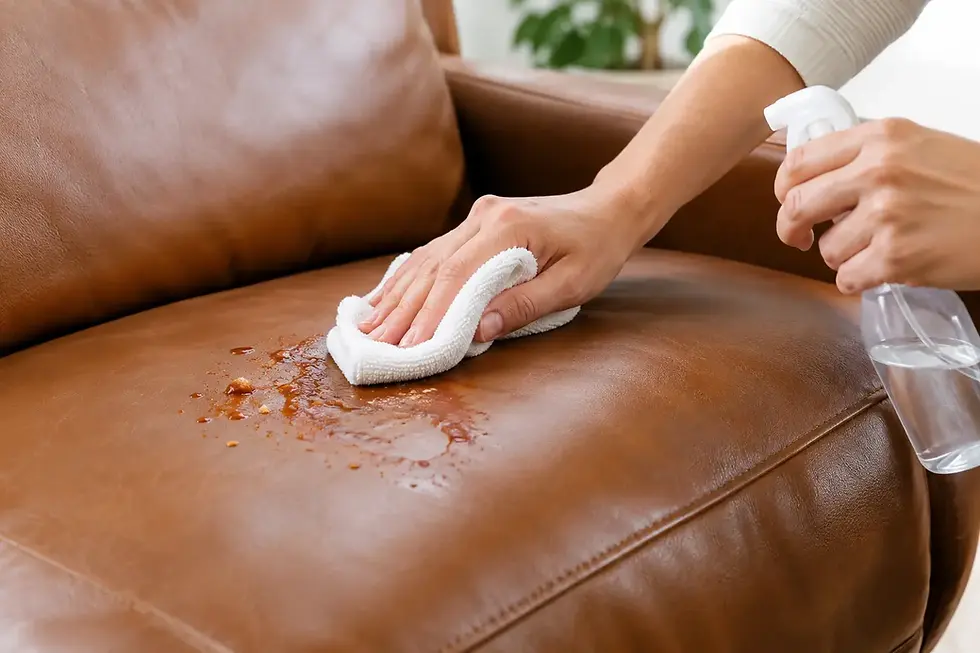
Apply a small amount of cleaner to a soft cloth rather than directly onto the furniture. Work gently over a small patch, then allow it to dry fully. Check for colour transfer, stickiness, darkening, a dull patch or any change in texture. If the cloth picks up colour, stop. That can indicate a compromised finish or surface colour that needs specialist attention.
Avoid soaking the leather. Excess moisture can travel into seams, cushion edges and the backing material, leaving tide marks or causing the leather to stiffen as it dries. A slightly damp cloth and light pressure are safer than a wet sponge and vigorous scrubbing.
Which common problems respond to cleaner, and which do not?
The answer depends on the cause of the mark. Surface dirt and fresh food residue can often be improved with a proper upholstery leather cleaner and a gentle approach. A build-up of everyday oils around the headrest may also lift noticeably, although repeated cleaning cannot correct a worn or faded colour layer beneath it.
Scuffs are more complicated. If a scuff has left a deposit from a shoe, bag or other object on top of the finish, careful cleaning may reduce it. If the scuff has removed colour, exposed a lighter layer or roughened the leather, it needs colour restoration or repair rather than further cleaning.
Ink, nail polish, glue and bleach deserve particular caution. These are not ordinary stains. Ink can spread when treated with the wrong solvent, nail polish remover can strip colour, and bleach changes the dye or finish itself. Glue may harden into the grain, while attempts to scrape it away can tear the surface. In these cases, a specialist assessment is the sensible first move.
The same applies to cracking, peeling and widespread fading. Conditioner cannot put colour back into faded leather. It may improve suppleness in suitable cases, but it cannot rebuild a finish that has worn through. Professional refurbishment can involve careful preparation, colour matching and the application of a durable new finish to blend the repair with the surrounding upholstery.
Household products to leave out of your leather cleaner review
Some popular home remedies create more work than they save. Washing-up liquid can leave residue and may dry the surface if used repeatedly. Baby wipes often contain ingredients not designed for furniture leather. Vinegar, baking soda and alcohol-based products can disturb the finish, particularly on coloured or older sofas.
Oils are another frequent problem. Olive oil, coconut oil and similar treatments can temporarily deepen the colour, which is sometimes mistaken for restoration. Over time, they can leave an uneven, greasy surface that attracts dirt and makes later professional work more difficult.
If you are unsure what caused a stain or whether a product is suitable, do not experiment in a prominent area. Take clear photographs in daylight first. A close-up image of the mark and a wider image of the furniture provide far more useful information than a description such as “a dark stain”.
How to clean leather furniture safely between professional visits
Routine care does not need to be complicated. Dust the sofa regularly with a clean, soft cloth or a vacuum brush attachment used gently. This stops loose dust collecting in seams and textured areas. Address spills promptly by blotting with a dry, absorbent cloth rather than rubbing them deeper into the surface.
For a general clean, use a tested leather cleaner sparingly on a soft cloth, working one small area at a time. Wipe away any remaining residue with a separate lightly damp cloth if the product instructions call for it, then let the leather dry naturally. Keep sofas away from strong direct sunlight and heat sources where possible, as both can contribute to fading and drying.
Frequency depends on the household. A sofa used every day by a busy family, pets or guests will need more attention than an occasional-use piece. In most homes, gentle cleaning a few times a year is enough. Constant cleaning, especially with heavy products, can be as unhelpful as no cleaning at all.
When professional leather restoration is the better value
Replacing a good leather sofa because of one damaged cushion, faded armrest or accidental spill is often unnecessary. If the frame, cushions and overall upholstery are still sound, targeted restoration can provide a much better result at a fraction of the disruption and cost of replacement.
Professional work is particularly worthwhile when the damage is visible, localised or colour-related. A technician can identify whether the issue is a stain, a loss of pigment, a damaged topcoat or physical wear. That diagnosis determines the right method, whether it involves cleaning, repairing a scrape, removing a specialist stain or restoring the colour and finish.
For homeowners in Dublin, Meath, Kildare and Louth, Ashbourne Leather Care provides on-site leather furniture restoration, so the sofa stays in your home while the work is completed. Sending photographs of the affected area and your location is the quickest way to establish what can be done and receive a quotation.
A cleaner is a useful part of looking after leather furniture, but it should not be asked to perform a repairer's job. Treat surface dirt gently, stop when a mark is not improving, and get advice before a small accident becomes a permanent feature of the room.


Comments