


Leather Discoloration Causes and Repairs
- ashbourneleathercare

- Jul 18
- 5 min read
A pale patch on the arm of a favourite sofa, a dark mark where someone rested their head, or colour that has slowly faded across the cushions can make the whole room feel less cared for. Leather discolouration is one of the most common reasons homeowners consider replacing furniture that is otherwise comfortable, well-made and structurally sound. In many cases, replacement is not necessary. The right assessment and restoration work can bring the colour and finish back into balance.
What causes leather discolouration?
Discolouration is not always a stain, and that distinction matters. A surface mark may sit on top of the leather finish, while fading, dye transfer or wear may have changed the colour itself. Each issue needs a different approach if the result is to look natural and last.
Sunlight is a frequent cause. Leather furniture positioned near a window, conservatory door or bright skylight can fade gradually, often leaving one side of a sofa noticeably lighter than the other. Dark brown, black, red and navy finishes can all lose depth over time, while lighter leathers may develop a yellow or uneven tone.
Body oils are another common culprit. Headrests, armrests and seat edges receive constant contact from skin, hair products, moisturiser and everyday household residue. At first, these areas may appear darker or shinier than the surrounding leather. Left untreated, the finish can become worn and the original colour may begin to lift.
Household accidents can cause more sudden leather discolouration. Ink, nail polish, glue, cleaning sprays, bleach and strong disinfectants can alter the finish within minutes. A product that seems harmless on a worktop may strip colour from leather or leave a pale, dry-looking patch. Attempts to scrub it away can spread the damage and remove even more pigment.
General wear also plays a part. Leather upholstery flexes every time it is used. Over years of sitting, cleaning and movement, the coloured finish can thin around seams, piping, cushion fronts and arm edges. Scuffs and scratches may expose a lighter layer beneath, making the damage appear more severe than it is.
Why the type of leather matters
Not all leather sofas are finished in the same way. Most modern household furniture has a protective coloured finish, which can often be cleaned, repaired and recoloured with excellent results. Other pieces may have a more natural, absorbent finish that reacts differently to moisture, oils and cleaning products.
This is why a quick internet remedy can be risky. Oils, creams, household polish and coloured balms may temporarily deepen a faded area, but they can also create dark patches, leave a greasy feel or interfere with professional colour matching later. Products sold as leather cleaners are not automatically suitable for every finish either.
A specialist looks at the location, pattern and feel of the affected area, not simply the colour. For example, an isolated light splash could indicate bleach damage, while a broad dull area on a seat may be colour loss from wear. A dark headrest may need careful cleaning before any colour work is considered. Treating the wrong problem can make a repair more difficult and more expensive.
When fading can be restored
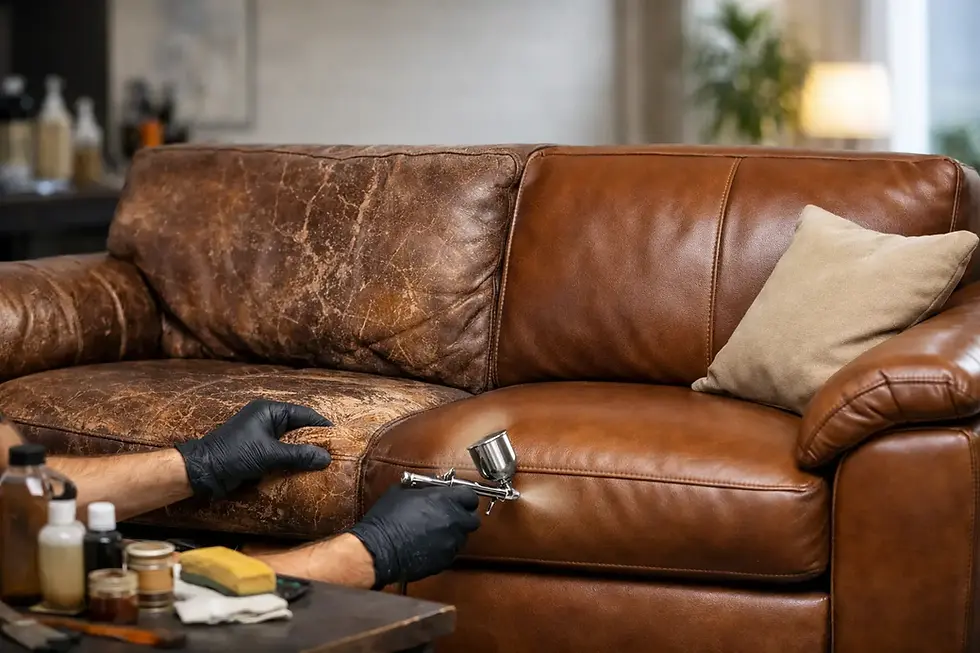
Faded leather does not necessarily need to be reupholstered. Where the leather remains supple and the damage is mainly in the surface colour, professional restoration can make a significant difference. The process usually involves preparing the affected area, cleaning away residue, addressing any minor scuffs or cracks, matching the existing shade and rebuilding the colour in controlled layers. A suitable protective finish is then applied to help the repaired area blend with the rest of the furniture.
Colour matching is where experience makes the difference. Leather rarely has a flat, single tone. Even a black sofa can have warmer or cooler undertones, while browns and creams may vary between cushions because of age, light exposure and use. The goal is not to make one small section look freshly painted. It is to restore a balanced, natural appearance that suits the furniture as it is now.
There are limits, and an honest assessment is part of good restoration. Severe cracking, extensive peeling, split leather or damage across every surface may require more involved work. If the material has become brittle or has been heavily stripped by chemicals, the safest solution may differ from a straightforward colour repair. However, many sofas that look beyond help in photographs are still strong candidates for refurbishment.
What to do when you notice a colour change
Act promptly, but do not panic-clean. If a spill has just happened, gently blot it with a clean, dry, white cloth. Avoid rubbing, as this can force the substance into the finish or spread it across a wider area. Do not use bleach, washing-up liquid, baby wipes, acetone, hairspray or abrasive creams. These are frequent causes of permanent marks.
For gradual fading or worn colour, avoid adding oils or off-the-shelf recolouring products before getting advice. A repair may look simple, but uneven application can leave hard edges and mismatched sheen. Furniture colour restoration requires the surface to be properly prepared and the finish to match the surrounding leather, whether that finish is matt, satin or lightly polished.
Take clear photographs in natural daylight. Include a close-up of the affected area and a wider image that shows its position on the sofa or chair. It also helps to photograph an undamaged section nearby, as this gives a useful reference for the original colour. If the damage came from a particular product, keep the container or note its name.
Professional leather discolouration repair at home
One of the advantages of specialist furniture restoration is that the work can often be completed where the furniture sits. There is no need to struggle with removing a large sofa, arranging transport or being without it for weeks. For homeowners, this makes colour restoration a practical alternative to replacement, especially for quality furniture that still fits the room and remains comfortable.
At Ashbourne Leather Care, the process begins with photographs and location details so the damage can be assessed and a quotation provided. On-site work is then tailored to the issue, whether that is faded colour, a bleach mark, ink damage, scuffs, worn armrests or a patchy finish. The focus is on restoring the appearance of the furniture with care, rather than disguising the problem with a one-size-fits-all product.
A professional repair also considers the finish around the damaged area. Correct preparation, colour application and sealing are all needed to prevent a repaired patch from looking too glossy, too dull or noticeably different after a few weeks of use. This is particularly important on pale leathers, heavily used seats and areas exposed to direct light.
Keeping restored leather looking its best
Once the colour has been revived, regular gentle care helps protect the result. Dust and light surface soil should be removed with a soft cloth, and spills should be dealt with quickly by blotting rather than rubbing. Keep sofas away from intense direct sunlight where possible, or use blinds and curtains during the brightest part of the day.
Try to keep harsh household chemicals well away from leather furniture. This includes spray cleaners, hand sanitiser, hair dye, nail products and bleach-based solutions. If a sofa is used every day, pay attention to the headrests and arms before oils build up and begin to affect the finish.
Leather is meant to be used, so small signs of age are normal. What matters is catching fading, stains and worn colour before a local issue becomes a larger one. A clear photograph and an expert opinion can often show that your sofa needs restoration, not replacement - and that is a far better place to start.


Comments