


Leather Recolouring Versus Reupholstery Costs

A faded leather sofa can make an otherwise well-kept room feel tired, yet replacing it is rarely the only answer. When weighing up leather recolouring versus reupholstery costs, the better value usually comes down to one question: is the leather itself still structurally sound?
For many homeowners, worn colour, scuffs, light scratches, stains and dull patches can be professionally restored at home. Reupholstery is a bigger undertaking, best reserved for leather that is badly cracked, torn across large areas, stretched beyond recovery or failing at the seams. Knowing the difference can save you from paying for more work than your furniture needs.
Leather recolouring versus reupholstery costs: the main difference
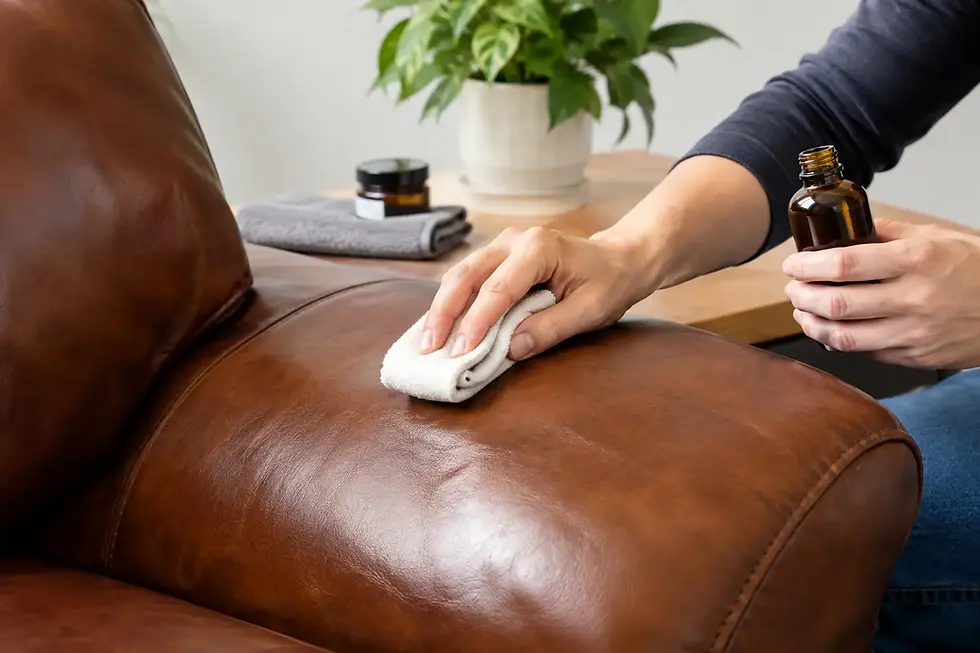
Leather recolouring is a restoration process. It focuses on repairing the visible finish of your existing upholstery - the colour, protective coating and surface appearance - while retaining the original leather. A specialist can clean the furniture, prepare damaged areas, carry out targeted repairs where needed, colour-match the leather and apply a new durable finish.
Reupholstery means removing the existing leather and replacing it with new material. Depending on the sofa, this can involve stripping it back, repairing foam or webbing, cutting and sewing new leather panels, and fitting them to the frame. It is skilled, labour-intensive work and generally carries a much higher cost.
That does not make reupholstery the wrong choice. A premium sofa with a strong hardwood frame may be worth rebuilding properly. But when the frame, cushioning and leather are fundamentally in good condition, recolouring can produce a dramatic improvement without the expense, disruption or material waste of a full recover.
What affects the cost of leather recolouring?
There is no sensible one-price answer for leather restoration. A small scuff mark on a chair is very different from restoring the colour across every seat, arm and back cushion of a large corner sofa. Professional quotations should reflect the condition, type and size of the furniture rather than relying on a generic price list.
The extent of colour loss is a key factor. Areas exposed to body oils, sunlight, pets and regular use - especially headrests, armrests and seat cushions - often need more preparation than the less-used parts of a sofa. A few faded areas may only need localised work, while an unevenly faded suite may benefit from a more complete recolour for a consistent finish.
Accidental damage also affects the amount of repair required. Ink, bleach, glue, nail polish, cleaning and deep scuffs must be carefully treated before colour can be restored. Bleach marks, for example, remove colour rather than simply sitting on the surface, so they need expert colour matching to blend the repair into the surrounding leather.
Why reupholstery is usually the larger investment
The cost of reupholstering leather furniture is not just the price of the new hide. Leather has to be selected, ordered and carefully cut to allow for the sofa's shape, seams, grain direction and any natural markings. Large sofas require a substantial amount of material, and matching the original colour or grain can be difficult if the design is older.
Then there is the labour. The existing cover must be removed, patterns created or adapted, new panels sewn, and the upholstery refitted correctly. If foam has lost its support, springs need attention or the frame is damaged, these repairs can add to the job. Furniture may also need to be collected or brought to a workshop, leaving you without it for a period of time.
For this reason, reupholstery is often best viewed as a refurbishment project rather than a cosmetic repair. It can be worthwhile where the sofa has real quality, sentimental value or a frame that would cost far more to replace. It is less appealing when the only issue is a faded seat or a collection of surface scuffs.
When recolouring offers better value
Recolouring is often the practical choice where the sofa is comfortable, supportive and structurally sound, but its finish no longer looks its best. Common examples include a dark brown sofa with pale, rubbed armrests; a black suite showing grey wear on the seat cushions; or a cream chair marked by an accidental spill.
The aim is not simply to cover the problem. Proper restoration involves cleaning away dirt and oils, preparing the affected leather, smoothing minor surface damage where possible, applying carefully matched colour and sealing the work with an appropriate finish. Done well, it restores a more even appearance while preserving the furniture you already know fits your home.
It also avoids the practical complications of arranging collection, choosing a completely new leather and waiting for a major upholstery project to be completed. For busy households in Dublin, Meath, Kildare and Louth, an on-site service can be a particularly useful alternative. You can have the condition assessed from photographs first, then arrange work at your home without moving a heavy sofa through doorways or downstairs.
When reupholstery is worth considering
Recolouring cannot replace missing material or rebuild leather that has failed over a large area. If the upholstery is extensively split, peeling away from its backing, badly stretched, brittle throughout or torn along several seams, reupholstery may be the more durable route.
It may also be appropriate if you want a complete design change. Changing from a worn burgundy suite to a pale neutral leather, altering the feel of the upholstery, or renewing cushions and internal support at the same time are all reasons to look beyond colour restoration.
Before committing, assess the whole piece rather than the surface alone. Check whether the cushions still support you, whether the frame creaks or moves, and whether there are recurring issues in multiple areas. A high reupholstery spend makes more sense on a well-built piece with years of life left in it than on furniture whose frame and interior have already reached the end of their useful life.
A simple way to decide
Start by looking closely at the damaged area. If the issue is colour loss, surface scuffing, staining, light cracking in the finish or a localised accident, request a restoration quotation first. Send clear photos in daylight, including a wider image of the full sofa and close-ups of the damage. This gives a leather specialist the best chance of advising accurately before a visit.
If there are widespread peeling, severe cracking through the leather itself, collapsed cushions or loose seams, ask whether restoration is still suitable or whether reupholstery is more realistic. An honest assessment matters. The least expensive option is not good value if it cannot give a lasting, presentable result.
It is also worth comparing against replacement, not just reupholstery. New leather-look furniture can appear cheaper at first, but may not match the comfort, build quality or longevity of a genuine leather suite already in your home. Restoring a quality sofa can be the more considered financial and environmental choice.
Get the right quotation for your sofa
The best comparison is based on your actual furniture, not a headline figure. Ask what preparation is included, whether stains or scratches need separate repair, how closely the colour can be matched and whether the work is localised or applied more widely for an even result.
Ashbourne Leather Care provides photo-based quotations and mobile leather restoration for homeowners who want to bring worn furniture back to life without the upheaval of full replacement. A few clear photographs and your location are usually enough to start the conversation.
Your sofa does not need to look brand new to be worth saving. If the leather is still sound beneath the wear, professional recolouring can be a sensible way to restore its colour, comfort and place in your home.


Comments