


Leather Repair for Couch to Restore Colour

A faded armrest, pale seat cushions and a scuffed front panel can make an otherwise good sofa look ready for replacement. Yet leather repair for couch: how to restore colour without replacing it is often far more straightforward than homeowners expect. Where the leather structure is still sound, professional cleaning, preparation and colour restoration can bring back a consistent, cared-for finish in your own home.
Replacing a quality leather sofa is expensive, disruptive and often unnecessary. The key is understanding whether you are looking at surface wear that can be restored, or deeper damage that needs a more targeted repair first.
Why leather loses its colour
Most leather sofas do not lose their colour evenly. The areas touched most often - headrests, armrests, seat edges and the front of cushions - gradually become lighter through everyday use. Body oils, hair products, cleaning residue and friction all affect the protective surface coating over time.
Sunlight can also fade exposed sections, particularly where a sofa sits beside a window or conservatory door. A dark brown or black sofa may start to look greyish in places, while lighter colours can become patchy or develop a yellowed appearance. Heat from radiators and repeated drying can make the finish feel less supple and more prone to wear.
Accidents create a different type of colour loss. Bleach, nail polish remover and harsh household products can strip or discolour the surface quickly. Ink, glue, scuffs and scratches may look like permanent marks, but the right repair method can often reduce or remove their appearance without changing the whole piece of furniture.
Can leather colour restoration save your sofa?
Leather Repair for Couch to Restore Colour. In many cases, yes. Colour restoration is particularly effective when the leather is faded, worn on contact areas, marked by scuffs or affected by local staining. It can also improve sofas with uneven sheen, where some panels look dull and others look unusually shiny from use.
The best results come when the underlying leather remains stable. Minor cracking, surface scratches and worn pigment can usually be repaired as part of the restoration process.
This distinction matters because not every sofa sold as “leather” behaves in the same way. Protected or pigmented leather, common on family sofas, is generally very suitable for professional recolouring. Bonded leather and some imitation leather products can peel when their surface coating fails, and restoration may be less predictable.
A clear photograph in good natural light helps a specialist identify what is likely to be possible before arranging a visit. Close-ups of the worn area, plus a wider photo showing the sofa’s overall colour, make colour matching and quotation more accurate.
Leather repair for couch colour loss: the professional process
Recolouring leather is not simply a matter of applying dye over a faded patch. A durable repair depends on careful preparation, accurate colour matching and a finish that feels right for the furniture.
Cleaning comes before colour
The leather must first be cleaned to remove built-up oils, dirt and residues. This is especially important on headrests and arms, where natural oils can stop a new coating from adhering properly. Cleaning also reveals the true extent of the damage. What looks like faded leather can sometimes be surface soiling, while a seemingly small mark may need local repair before colour is applied.
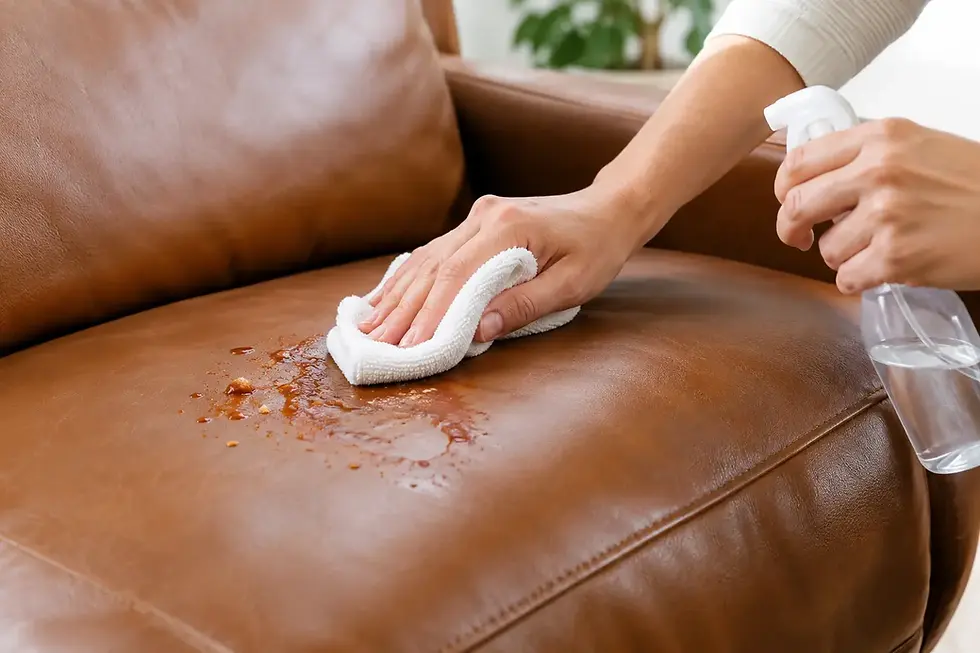
Using supermarket wipes, washing-up liquid or strong degreasers can make matters worse. These products may leave residue, dry the leather or disturb the original finish. If a stain has just happened, blot it gently rather than rubbing it in, and avoid experimenting with solvents or bleach.
Repairing the damaged surface
Scuffs, scratches, discolouration and roughened sections are addressed before colour restoration. Depending on the issue, this may involve smoothing damaged edges, filling minor surface loss or treating a local stain. The aim is not to hide a problem under colour, but to rebuild the surface so the repaired area sits naturally with the surrounding leather.
Pet scratches and cracked leather can often be improved, though it is sensible to expect a repair rather than an invisible miracle on heavily damaged leather. The condition, location and texture of the sofa all affect the final result. A repair on a smooth, plain panel is usually easier to blend than one across pronounced grain, piping or a deeply creased seat cushion.
Matching the colour and sheen
A sofa’s colour is rarely one flat shade. Even a black sofa can have warm, cool or brown undertones, while cream, tan and grey leathers show variation more readily. A professional colour restoration is matched to the existing leather and blended beyond the visibly worn area where needed, avoiding an obvious patch effect.
The finish is equally important. Leather can be matt, satin or slightly glossy. Applying the wrong level of sheen can make a repaired section stand out even if the shade is close. The final protective coating helps restore a more even appearance and gives the renewed surface greater resistance to day-to-day wear.
When a full-panel recolour is better than a spot repair
A small scuff on the side of a sofa may only need a targeted repair. But if an armrest has lightened gradually over years, treating the entire arm or blending into the adjoining panel often produces a more natural result. The same applies to seat cushions that have faded in the centre or headrests that have become darker from use.
Full sofa recolouring is sometimes the right choice where fading is widespread or where a customer wants to refresh the appearance of an older suite. It is still a restoration, not a shortcut. The work needs to respect the leather’s flexibility, original texture and finish.
There is a practical trade-off: local repair is usually the most economical route for isolated marks, while broader restoration gives better visual consistency when wear covers several areas. A specialist should assess the sofa rather than recommend the same solution for every problem.
What homeowners can do before and after restoration
Before a repair visit, avoid applying conditioners, polishes or home repair kits to the damaged area. They can interfere with preparation and make professional colour matching more difficult. If possible, move loose throws, cushions and small furniture away from the work area so there is clear access to the sofa.
After colour restoration, gentle routine care will help preserve the renewed finish. Dust with a soft dry cloth and clean spills promptly by blotting. Keep the sofa away from intense direct sunlight where possible, and avoid placing it directly against a radiator. Leather benefits from regular, suitable care, but it does not need frequent heavy cleaning.
Be cautious with denim, dark clothing and coloured throws, particularly on pale leather. Dye transfer can build up over time, and it is far easier to address early than after it has settled into a heavily used seat.
A convenient alternative to replacement
For homeowners, the biggest benefit of professional leather restoration is not only the visible improvement. It is the ability to keep a sofa that is comfortable, well-made and suited to the room, without the cost and inconvenience of shopping for a replacement and arranging delivery.
Ashbourne Leather Care provides mobile leather furniture restoration across Dublin, Meath, Kildare and Louth. By sending photographs of the damage and your location details, you can receive guidance on the likely repair and a quotation before booking an on-site visit.
If your leather sofa is faded, worn, discoloured, scuffed or marked but still has good life in it, do not assume replacement is the only answer. A few clear photos can be the first step towards bringing its colour, finish and place in your home back to life.


Comments