


Leather Repair Specialists for Sofas at Home
- ashbourneleathercare

- 5 days ago
- 5 min read
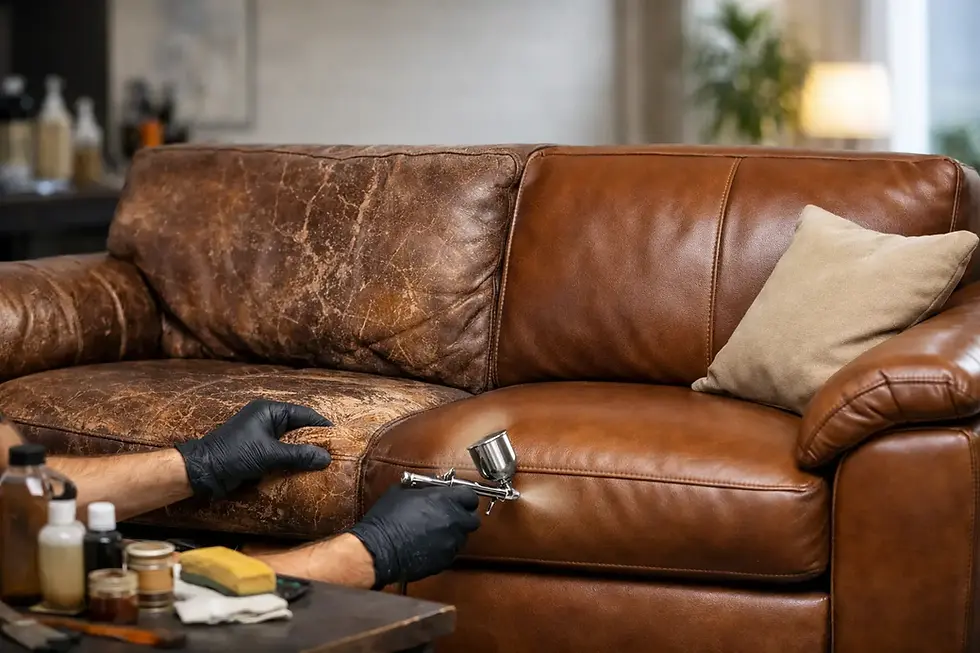
Leather Repair Specialists for Sofas at Home. A leather sofa can look tired long before it is ready to be replaced. A faded headrest, a darkened armrest, a scuff from a shoe or an accidental ink mark can draw attention every time you enter the room. Leather repair specialists focus on these visible problems, restoring the colour, finish and overall appearance of your furniture without the disruption or cost of buying new.
For homeowners, the real value is not simply making damage less noticeable. It is keeping a comfortable, well-made piece of furniture in use, particularly when it suits the room, has years of life left in it and would be expensive to replace like for like.
When leather furniture needs professional attention
Leather is durable, but daily life leaves its mark. Natural body oils can wear away colour on arms and headrests. Sunlight can fade areas near windows. Children, pets, keys, shoes and household products can create damage that ordinary cleaning will not remove.
The most common issues include scuffs and scratches, worn or cracked colour, food and drink stains, ink marks, glue, nail polish and bleach spots. Each needs a different approach. Trying one household remedy for every mark can make matters worse, especially on pigmented leather where the protective colour coating has already been damaged.
A professional assessment looks beyond the stain or scrape itself. The leather type, colour, location of the damage and condition of the surrounding finish all affect what can be achieved. A small scuff on a cushion may need a local repair and colour blend. Widespread fading across a sofa may be better treated with careful cleaning, preparation and full-panel colour restoration.
What leather repair specialists can restore
Leather Repair Specialists for Sofas at Home. Good leather restoration is about matching the repair to the problem rather than applying a one-size-fits-all treatment. The aim is to retain the character of the furniture while bringing back an even, cared-for appearance.
Fading, colour loss and worn areas
Arms, seat edges and headrests receive the most contact, so they often lose colour before the rest of the sofa. The leather may appear pale, patchy or dull, with a finish that no longer matches nearby areas.
Colour restoration can rebuild the worn surface and blend the shade with the existing upholstery. Where needed, a protective finish is applied to help the repaired area stand up to normal use. The result should look natural rather than freshly painted, which is why colour matching and preparation matter so much.
Scuffs, scratches and scrapes
Surface scuffs are common around the lower front of sofas and on chair arms. Some affect only the finish, while deeper scratches may have disturbed the leather itself. A proper repair can smooth the damaged area, restore lost colour and reapply an appropriate finish.
The outcome depends on the depth and age of the damage. Very deep scuffs, severe cracking may remain faintly visible at close range, but professional work can make them far less distracting and protect the area from further deterioration.
Ink, bleach, glue and nail polish marks
Accidental marks call for a measured response. Ink can spread if it is rubbed, bleach can remove colour permanently, and glue or nail polish may damage the surface if harsh solvents are used. Cleaning alone is not always the answer.
Leather furniture repair often involves safely reducing the contaminant where possible, treating the affected surface and restoring the colour and finish afterwards. This is particularly useful when the mark is in a highly visible place, such as the centre of a seat cushion or a sofa arm.
Why DIY repairs can be a costly gamble
There are plenty of leather wipes, dyes and repair kits on the market, but they are not always suitable for your sofa. Strong cleaners can strip the protective coating. Incorrect dye can leave a darker patch, a stiff texture or an obvious colour mismatch. Even products labelled for leather may be unsuitable for certain finishes.
DIY care does have a place. Gentle, regular cleaning with an appropriate leather cleaner can help remove day-to-day surface grime. Acting quickly after a spill, blotting rather than rubbing, and keeping leather away from direct heat are sensible habits.
However, once colour has been removed, the leather is cracking, or a chemical mark has appeared, specialist repair is usually the safer option. It avoids repeated experimentation on furniture that may have cost thousands of euros and is often still structurally sound.
The benefit of on-site leather restoration
Removing a large sofa from a home is inconvenient. It can involve arranging collection, moving other furniture, taking time off work and living without your seating while it is away. Mobile leather repair brings the service to the furniture instead.
At Ashbourne Leather Care, customers can send photos of the damaged area along with their location to request a quotation. This gives a clear starting point and helps identify whether the issue is likely to need localised repair, colour restoration or more extensive refurbishment. The work is then carried out on site, with care taken to restore the leather where it belongs.
This approach is especially practical for households in Dublin, Meath, Kildare and Louth. There is no need to transport bulky furniture, and you can see the condition of your sofa before and after the work is completed.
How to decide between repair and replacement
Repair is often the sensible choice when the sofa frame, cushions and comfort are still in good condition but the leather looks worn. It can also be the better route for premium furniture, matching suites or pieces that fit your room perfectly.
Replacement may be worth considering if the frame has failed, the cushions are badly collapsed, there is widespread severe splitting, or the cost of repair is no longer proportionate to the furniture's value. Even then, it is worth getting an informed opinion before making a decision. Surface damage can look more serious than it really is, particularly on dark leather where colour loss creates a stark contrast.
Think about the full cost of replacement, not only the ticket price. New furniture may involve delivery charges, disposal of the old sofa, waiting times and the risk that the new leather will not match the quality or comfort of what you already own. A targeted repair can be a practical way to extend the life of a piece you already enjoy using.
Choosing leather repair specialists with confidence
The best results come from a service that works specifically with leather upholstery, understands colour restoration and explains what is realistic for your particular damage. Be wary of anyone who promises that every repair will be completely invisible. Leather varies in grain, sheen and wear, and an honest specialist will set clear expectations.
Photos are useful for an initial quotation, particularly when they show the full sofa, a close-up of the damage and the surrounding area in natural light. Mention what caused the issue if you know. A bleach mark, for example, needs a different treatment from general fading, while an ink stain may need prompt attention.
Before any visit, avoid adding more products to the damaged area. Do not scrub, use baby wipes, apply shoe polish or attempt to cover the mark with a permanent marker. These quick fixes can alter the finish and make professional colour matching more difficult.
A worn leather sofa does not have to become the furniture you apologise for when visitors arrive. With the right assessment and a skilled on-site repair, many stains, scuffs and faded areas can be brought back into balance, helping your home feel cared for again without replacing a piece that still has plenty to give.


Comments