


Leather Sofa Upholstery Repair That Lasts
- ashbourneleathercare

- Jun 30
- 6 min read
Updated: Aug 11
Leather Sofa Upholstery Repair That Lasts. A leather sofa rarely wears out all at once. More often, one arm starts to fade, a seat cushion picks up scratches, or an accidental spill leaves a mark that will not shift. That is usually the point when people start looking into leather sofa upholstery repair - not because the whole piece is beyond saving, but because one visible problem is spoiling an otherwise good sofa.
In many cases, repair is the sensible option. Quality leather furniture is expensive to replace, and minor to moderate damage often affects appearance far more than structure. If the frame is sound and the leather still has life in it, targeted restoration can bring back colour, finish and comfort without the cost and disruption of buying new.
When leather sofa upholstery repair makes sense
The best candidates for repair are sofas with localised damage, general wear, or surface deterioration that has built up over time. Fading from sunlight, worn colour on headrests and armrests, cat scratches, scuffs from clothing, ink marks, nail polish spills are all common problems. They look serious, but many can be treated professionally on site.
The key point is that leather does not behave like fabric. You cannot approach it with off-the-shelf stain products, aggressive scrubbing or a one-size-fits-all patch kit and expect a clean result. Leather has a finish, a grain pattern and a colour system that all need to be handled properly. A good repair is not just about hiding damage. It is about restoring the surface so the repaired area sits naturally with the rest of the sofa.
That is why a specialist approach matters. The right method depends on the type of leather, the age of the sofa, the colour loss involved and whether the damage is purely cosmetic or extends into the material itself.
The most common problems we see
Everyday household use leaves patterns. Seat cushions lose colour where people sit most often. Arms become dull and darkened from skin contact. Corners take the brunt of knocks, pets and children. Then there are the one-off accidents - bleach splashes, pen marks, superglue, food spills or nail varnish.
Scuffs and scratches are among the most frequent issues. Light surface scratches may only affect the finish, while deeper ones can disturb the leather beneath. The repair route for each is different. Surface wear can often be refinished and recoloured, while deeper damage may need filling and texture work before colour is restored.
Cracks need a more careful assessment. Leave it too long, and normal use can widen the damage until the repair becomes more involved. Cracking is another area where timing matters. Once leather has dried and broken down badly, there is a limit to what any repair can achieve. Improvement is often possible, but perfection depends on the condition of the material.
Stains are often misunderstood. Some marks sit on the surface and can be removed safely. Others, especially ink, bleach and solvent-based products, alter the finish or the colour itself. In those cases, the job becomes a restoration rather than a clean. Trying random supermarket cleaners first can make the area worse and reduce the chance of an even result.
What professional leather sofa upholstery repair involves
A proper repair starts with assessment, not guesswork. Photos usually tell a lot - the location of the damage, the type of wear, how many panels are affected and whether a local repair or wider refurbishment is likely to be needed. That makes it easier to give a realistic quotation and set the right expectations before any work begins.
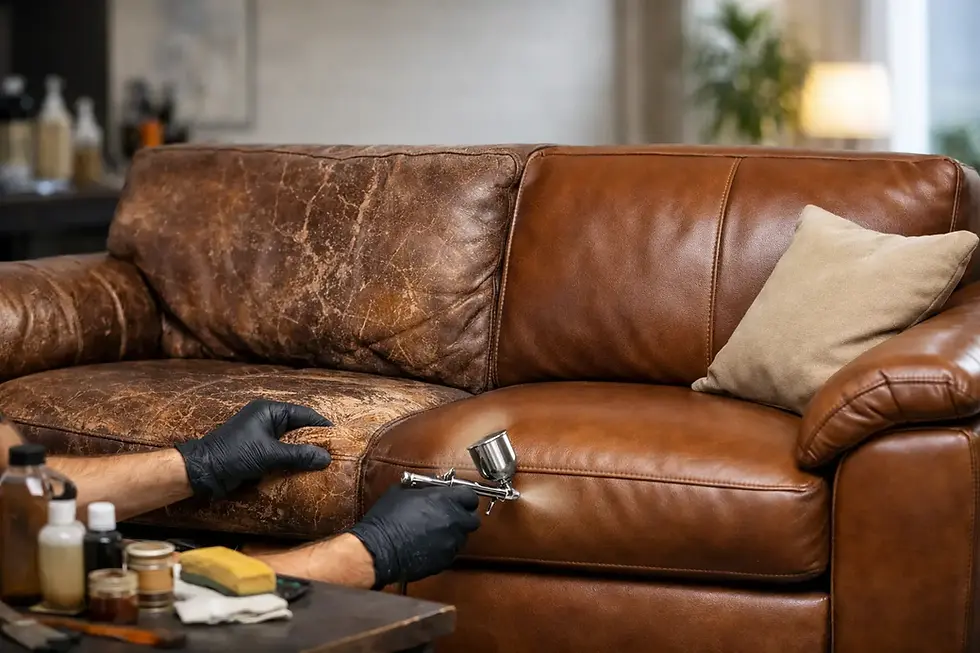
On site, the process depends on the issue being treated. A worn and faded sofa may need cleaning, preparation and colour restoration across high-use areas. A scratch may require stabilising the damaged section, rebuilding the surface and blending in the colour and sheen. A stain from bleach or nail polish may need localised refinishing to restore the original look.
What matters most is colour matching and finish matching. Leather is rarely one flat colour. Even black and brown sofas have variation in tone, depth and sheen. If the repair is the right colour but the wrong finish, it will still stand out. The aim is to restore the area so it looks consistent with the rest of the sofa under normal everyday viewing.
This is also why mobile service has real value. When repairs are carried out in your home, the technician can see the sofa in its actual lighting and work directly with the surrounding panels. That helps with blending, and it saves the inconvenience of removing bulky furniture from the room.
DIY repair kits versus specialist repair
People often ask whether a home repair kit will do the job. Sometimes, for a very minor scuff in a low-visibility spot, a simple product may improve the appearance. But there is a difference between improvement and restoration.
DIY kits tend to fall short when the damage involves colour loss, cracking, peeling finish or stubborn staining. The colour may be close in the bottle but wrong once dry. Fillers can leave a flat, obvious patch. Adhesives can stiffen the leather. Some products also create a shinier or duller area than the rest of the sofa, which draws more attention to the problem.
The trade-off is straightforward. DIY may seem cheaper at first, but if the result is poor, the area can become harder to repair properly later. Professional repair costs more upfront, yet it is often better value when you want the sofa to look right and wear well afterwards.
Repair or replace?
It depends on the condition of the whole piece. If you have a good-quality leather sofa with a solid frame and most of the upholstery still in decent order, repair is usually the better investment. Restoring worn seats, faded arms or accidental damage can extend the life of the furniture significantly and improve the whole room.
Replacement becomes more realistic when the leather is badly deteriorated across every panel, the cushions have collapsed, the frame is failing or the style no longer suits your home. Even then, many people are surprised by what can still be saved. A sofa does not need to be perfect to be worth repairing. It just needs to be worth keeping.
For households in Dublin, Meath, Kildare and Louth, on-site restoration is often the practical middle ground. You avoid the cost of replacement, the hassle of disposal and the wait for new furniture, while still dealing properly with the damage in front of you.
Getting the best result from a repair
Leather Sofa Upholstery Repair That Lasts. The earlier you deal with damage, the better the outcome tends to be. A small scratch, stain or split is easier to treat before wear spreads into surrounding areas. Keeping the sofa clean with suitable leather care also helps, but suitable is the key. Harsh cleaners, baby wipes and household sprays can strip finishes and cause more harm than good.
If you are seeking a quotation, clear photos make a real difference. Take one image of the full sofa, then close-ups of the damaged area in natural light. Mention your location and anything you know about the cause of the problem - for example, ink, bleach, pet scratching or general wear. That helps the repair specialist judge the likely method and scope of work.
Ashbourne Leather Care works this way because it keeps the process simple. You show the damage, receive a quotation, and the repair is carried out at your premises. For busy homeowners, that convenience matters nearly as much as the repair itself.
Why specialist repair is about more than appearance
A repaired sofa looks better, but that is only part of the value. It also lets you keep a piece of furniture that already suits your home, has the comfort you are used to and may have cost a significant amount to buy in the first place. For many families, that makes far more sense than replacing a whole suite because one section is worn or marked.
Good leather furniture is built to last, but it does need the right kind of attention when damage appears. Whether the issue is a faded cushion, a scratch on the arm, colour loss across high-use areas or an accidental spill that has left a lasting mark, the right repair can bring back the finish, the colour and the overall impression of the sofa.
If your leather sofa still has years left in it, a professional repair is often the most sensible next step - not a temporary cover-up, but a proper restoration that lets you enjoy the furniture again.


Comments