


Matching Leather Sofa Colours for a Natural Repair

Matching Leather Sofa Colours for a Natural Repair. A leather sofa rarely fades in one even, convenient shade. The seat cushions lighten where people sit, armrests darken from skin oils, and a sun-facing panel may lose colour entirely. That is why matching leather sofa colours is not simply a matter of applying brown, black or cream dye. A convincing repair needs to account for the sofa’s original colour, its current condition, its sheen and the way the leather has aged in your home.
When the colour is properly restored, a worn or damaged area should stop drawing the eye. The aim is not to make one small patch look freshly painted while the rest of the sofa tells a different story. It is to bring the leather back together so your furniture looks cared for, comfortable and natural again.
Why leather colour matching is more involved than it looks
Many sofas that appear to be one colour are actually made up of several tones. A tan leather may carry warm gold, red or olive undertones. Grey can lean blue, brown or green. Even black leather can look charcoal in worn areas and richer around protected edges. Selecting a colour by name alone is rarely enough.
Light also changes what you see. A sofa viewed beside a window in daylight can look very different under warm evening lamps. For this reason, an experienced technician assesses the leather in the room where it is used, rather than relying only on a generic colour chart or an online photograph.
The finish matters just as much as the pigment. Leather may be matt, satin or lightly glossy. A repair in the right shade but with too much shine can be as noticeable as a poor colour match. The final protective coating needs to blend with the existing finish, while still giving the repaired area the durability it needs for everyday use.
Matching leather sofa colours after common damage
Colour restoration is often requested after an accident rather than general ageing. Ink marks, nail polish, glue, bleach splashes and harsh cleaning products can all leave areas of obvious colour loss. Scuffs from shoes, pet scratches and scraped seams can remove the top finish, exposing a lighter layer beneath.
Each problem needs its own approach. A surface scuff may need careful preparation and localised recolouring. A deep scratch may first require repair work to smooth and strengthen the damaged leather. Bleach damage is particularly deceptive: cleaning may remove the spill, but it cannot put the original colour back where the bleach has stripped it away.
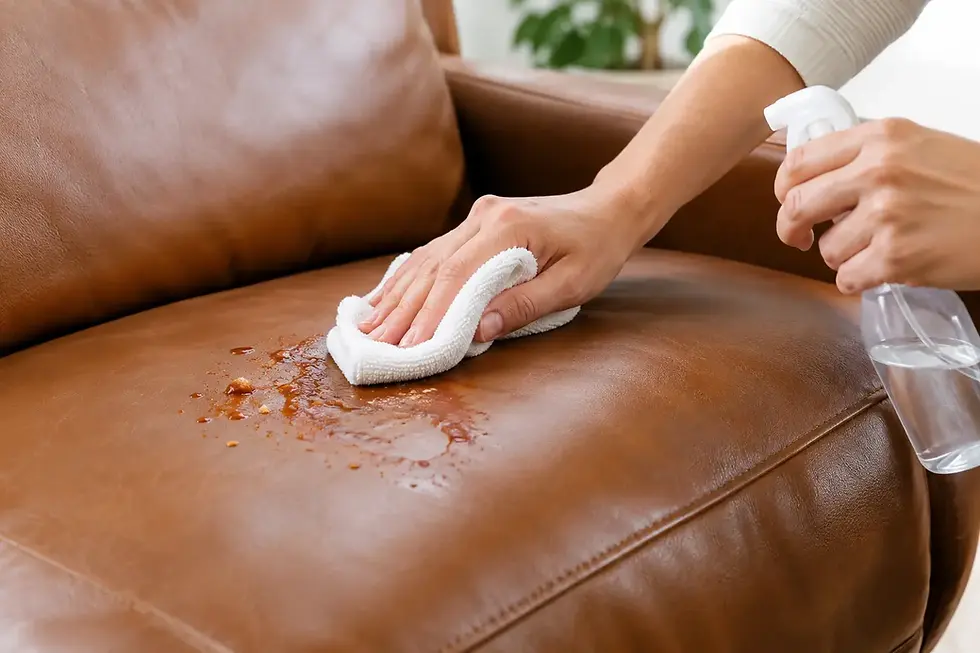
Trying to cover these marks with a household leather cream can make the result worse. Some products darken surrounding leather, leave residue that affects adhesion, or create an uneven sheen. They can also make later professional repair more time-consuming. If the mark is fresh, avoid rubbing it further or applying several products in quick succession. Take clear photographs and seek advice before attempting a fix.
Fading and colour loss need a broader view
A faded headrest, seat cushion or armrest is not always best treated as one tiny spot. If the surrounding panel has also changed colour through years of use, a specialist may blend the restoration across a wider area. This avoids a hard edge and gives a more balanced finish.
There is a sensible limit, however. A sofa with widespread fading across several cushions and panels may benefit from a more comprehensive recolouring service. This can be a cost-effective alternative to replacement, especially where the frame, cushions and leather remain in good condition. The right scope depends on how uneven the wear is and how close you want the finished sofa to look to its original appearance.
What a professional colour restoration process involves
Matching Leather Sofa Colours for a Natural Repair. Good leather restoration starts before colour is applied. The surface is cleaned to remove body oils, everyday grime and residues that would prevent a stable repair. Damaged areas are then prepared carefully. Where needed, scratches or cracks are treated so the leather feels smoother and looks more even.
The colour is then mixed and adjusted to suit the sofa. This is where experience makes a clear difference. Matching may involve building colour gradually rather than applying one heavy coat. Thin, controlled layers allow the technician to refine the tone and blend it into the surrounding leather.
Once the shade is right, the repair is sealed with a finish selected to suit the furniture. The coating protects the restored area and helps recreate the original look and feel. Done properly, the result should be flexible, comfortable to sit on and far less obvious than the original damage.
This is also why furniture does not need to leave your house for many repairs. Ashbourne Leather Care carries out targeted leather repairs and colour restoration on site, allowing homeowners across Dublin, Meath, Kildare and Louth to restore their sofa without the disruption of transporting bulky furniture.
Can you match leather colour from photographs?
Photographs are very useful for assessing the type of damage and preparing a quotation. A few clear images can show whether a sofa has scuffed dye, faded panels, cracking, staining or a more serious tear. Include a wider photo of the sofa, a close-up of the affected area and a picture taken in natural light where possible.
A photograph cannot always show the exact final shade. Mobile phone cameras automatically adjust light and colour, while artificial lighting can make leather appear warmer or cooler than it really is. That is normal. The image helps identify the likely repair method, with final colour matching carried out against the furniture itself during the on-site service.
When sending photos, it also helps to mention the sofa’s age, whether it sits near a radiator or window, and any products already used on the damage. These details can explain why a particular area looks different and help prevent unsuitable treatment.
How to protect a newly restored sofa colour
Restoration can make a dramatic difference, but leather still needs sensible day-to-day care. Keep strong cleaning sprays, bleach-based products and solvent removers away from the sofa. These are common causes of stripped colour and pale splash marks. Use a product designed specifically for your type of leather only when needed, and test it in an unobtrusive area first.
Try to limit prolonged direct sunlight, particularly on one arm or cushion. Closing blinds during the brightest part of the day can reduce uneven fading. If the sofa has loose cushions, rotating them regularly spreads wear more evenly. This will not stop natural ageing, but it can prevent one favourite seat from becoming noticeably lighter or more worn than the rest.
Be mindful of repeated friction too. Jeans, belts, keys in pockets and pet claws can all create scuffs on high-contact areas. Quick attention to a new mark is usually easier and less expensive than waiting until the leather has cracked, peeled or lost colour over a large section.
When repair is a better choice than replacement
Replacing a leather sofa because of one faded armrest or a bleach stain can feel wasteful, particularly when the structure is still sound and the furniture suits the room. Professional restoration is designed for precisely these situations: visible damage that spoils the appearance but does not mean the sofa has reached the end of its useful life.
Not every sofa is a candidate for a small local repair. Severe peeling, widespread breakdown of bonded leather, extensive structural damage or leather that has become very brittle may need a different solution. A clear assessment is more useful than a promise that every issue can be made invisible. In many cases, though, scuffs, stains, scratches and faded colour can be restored to a far better condition than homeowners expect.
If one patch of your sofa catches your eye every time you enter the room, do not assume replacement is the only answer. Clear photos of the damage and your location are usually enough to begin finding out whether a careful colour match can bring the leather back to life.


Comments