


Mobile Leather Refurbishment Service Review: Is It Worth It?
- ashbourneleathercare

- Jul 22
- 6 min read
Mobile Leather refurbishment Service Review: Is It Worth It? A marked, faded or scuffed leather sofa can make an otherwise well-kept room feel tired. Yet replacing it is often an expensive answer to a problem that can be repaired at home. This mobile leather repair service review explains what a professional on-site repair can realistically achieve, when it represents good value, and what to look for before arranging a visit.
For homeowners across Dublin, Meath, Kildare and Louth, the main attraction is simple: the furniture stays where it is. A specialist assesses the damage, prepares the affected area and carries out the restoration in your home, avoiding the inconvenience of collecting, transporting and being without your sofa for days or weeks.
What a mobile leather refurbishment service can repair
Mobile Leather Refurbishment Service Review: Is It Worth It? Professional leather restoration is not limited to a quick clean or a surface polish. The right approach depends on the leather type, its existing finish, the cause of the damage and how broadly the problem has spread.
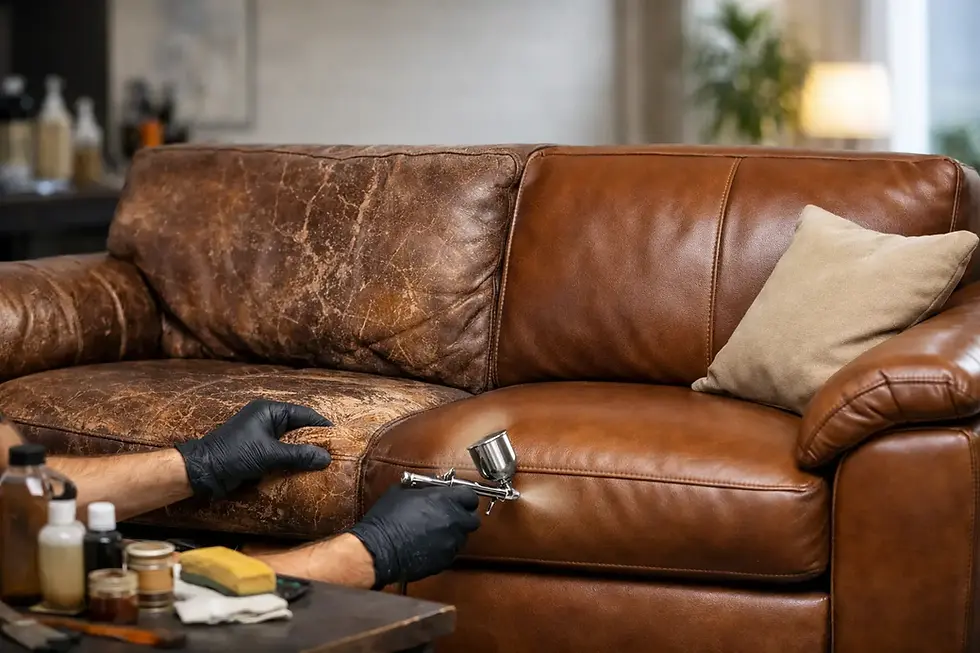
On-site work is particularly effective for common household damage. Scuffs from shoes, pet scratches, worn armrests, fading cushions and colour loss around headrests can often be restored to blend naturally with the surrounding leather. Ink marks, glue, nail polish and small bleach stains may also be treatable, although results depend on how deeply the substance has penetrated and whether a previous cleaning attempt has altered the finish.
A skilled repair usually involves more than applying colour over a mark. The leather must first be cleaned and prepared properly. Damaged areas may need filling or smoothing, before colour is carefully matched and applied in light layers. A suitable protective finish helps the repair sit comfortably with the rest of the upholstery and improves durability.
This is where a specialist service differs from a general cleaning job. Cleaning can remove surface dirt and improve the appearance of leather, but it cannot replace lost colour, rebuild a scratch or disguise a bleach mark that has stripped the finish.
Mobile leather refurbishment service review: the real benefits
Mobile Leather Refurbishment Service Review: Is It Worth It? The strongest reason to choose a mobile service is convenience, but the value goes further than saving a trip to a furniture workshop. Large leather sofas are awkward to move, and unnecessary handling can create new marks or strain seams. Having repairs completed in place avoids this disruption.
It also allows the technician to see the furniture in its normal setting. Natural daylight, room lighting and the colour of adjoining cushions can all affect how a repair is judged. Colour matching is never just about finding a broadly similar brown, black or grey. It is about recreating the tone and sheen that allow the repaired section to blend in when you are sitting in the room.
For many households, restoration is the sensible middle ground between living with damaged furniture and buying new. A quality leather sofa has a solid frame, comfortable cushions and years of life left in it, even if its surface looks worn. Restoring the visible damage can protect the investment and bring the room back together at a fraction of replacement cost.
There is also a practical advantage for busy homes. A mobile appointment means no removal arrangements, no waiting for delivery and no need to rearrange the room around missing furniture. The service is designed around restoring your own piece, not selling you a replacement.
What results should you expect?
A good leather repair should make damage far less noticeable and restore a more even, cared-for appearance. In many cases, a scuff, faded patch or accidental stain can be blended so successfully that it no longer catches the eye. This is especially true when the damage is localised and the surrounding leather is in reasonable condition.
However, an honest review must include the limits. Severe cracking across a whole sofa, badly dried leather or extensive peeling may require more involved refurbishment. Repairs can still improve the appearance substantially, but it may not be realistic to expect a heavily worn twenty-year-old suite to look factory-new.
The condition of the leather matters too. Some modern furniture is finished with coated leather, while other pieces may be semi-aniline, corrected grain. Each has different characteristics and needs a suitable repair method. A trustworthy specialist will assess this before promising a particular result.
Previous DIY treatments can also affect the outcome. Household cleaners, wipes, solvents, shoe polish and unsuitable leather products can remove colour, leave shiny patches or drive stains further into the surface. If you have already tried something, say so when requesting a quotation. That information helps the technician choose the safest route forward.
Is on-site leather restoration worth the cost?
It depends on the quality and condition of the furniture, as well as the type of damage. For a well-made sofa with a sound frame and comfortable seating, professional repair is often excellent value. Replacing a comparable leather suite can cost far more than treating a damaged arm, cushion, panel or headrest.
On-site restoration is also worth considering when the furniture fits your home perfectly. Perhaps it is a corner sofa that suits an awkward room, a favourite recliner, or a piece that is otherwise in excellent order. Repairing visible wear can extend its useful life without the disruption and expense of starting again.
There are situations where replacement may be the better choice. If the leather is failing across every panel, the cushioning has collapsed, the frame is unstable and multiple sections, repair may only postpone a wider problem. A specialist should be clear about this rather than recommending work that will not give worthwhile value.
The best way to judge cost is not to compare a repair only with a bargain-priced new sofa. Compare it with replacing your existing furniture with something of similar size, comfort, quality and finish. That usually gives a more realistic picture.
What to look for before booking
A clear, photo-based quotation process is a good sign. Photos allow the repairer to identify the damage, estimate the scope of the work and explain what is likely to be involved before arranging a visit. Include a close-up of the affected area, a wider image of the full item, and a photo taken in natural light where possible.
It helps to provide the location, the size of the furniture and a brief explanation of what caused the damage. For example, a fresh ink mark needs a different approach from long-term colour loss on an armrest. If you know the make or age of the sofa, include that too, but do not worry if you do not have those details.
Ask about the expected finish, rather than simply asking whether the mark can be removed. A professional will explain whether the repair involves cleaning, colour restoration, filling, refinishing or a combination of these. They should also be realistic about any remaining signs of damage and give sensible aftercare advice.
At Ashbourne Leather Care, the focus is on targeted, on-site restoration that brings damaged leather furniture back to a cleaner, more even and more attractive condition. The quotation process starts with photos and location details, making it straightforward to establish whether your sofa or chair is suitable for repair.
Protecting the repair afterwards
Once repaired, leather benefits from regular but gentle care. Dust it with a soft cloth, keep it away from strong direct sunlight where possible, and clean spills promptly without scrubbing. Avoid household sprays, baby wipes and harsh detergents, as these can damage the protective coating or affect the colour.
Pay attention to the areas that receive the most contact. Armrests, seat edges and headrests collect body oils and gradual wear more quickly than the rest of the sofa. Periodic professional cleaning and colour care can prevent minor fading from becoming a larger refurbishment job.
If an accident happens, resist the urge to experiment with products from the cupboard. Blot excess liquid carefully and take a photo before applying anything. For glue, ink, bleach, nail polish or an unknown stain, early advice can make a significant difference to the repair options.
A sofa does not need to be perfect to deserve saving. If the frame is sound and the furniture still serves your home well, a professional mobile repair can restore the details that make it look loved rather than worn out. Take clear photographs of the damage, share them with a leather specialist and get a straightforward view of what can be brought back to life.


Comments