


Professional Leather Restoration Solutions in Dublin
- ashbourneleathercare

- Jul 23
- 5 min read
A leather sofa can look tired long before it is ready to be replaced. Perhaps the seat cushions have faded where the family sits every evening, a dark scuff has appeared on the arm, or an ink mark has turned a small accident into the first thing you notice when you enter the room. Professional leather restoration solutions in Dublin offer a practical way to deal with that damage at home, restoring the colour, finish and appearance of furniture you still love.
For many homeowners, replacement feels like the only option once leather begins to crack, lose colour or pick up stains. In reality, much of this wear can be treated professionally. The right repair depends on the leather type, the cause of the damage and how far it has progressed, but skilled refurbishment can often make a striking difference without the cost, disruption or waste of buying new furniture.
When leather furniture needs professional attention
Leather is durable, but it is not indestructible. Daily use, sunlight, body oils, pets, cleaning products and household mishaps all leave their mark over time. The most common issue is gradual wear on cushions, headrests and arms. Colour becomes lighter, the protective finish weakens and the sofa can begin to look patchy even when it is structurally sound.
Accidental damage is different, and usually more urgent. Ink, bleach, nail polish, glue and harsh cleaners can alter the surface or strip colour quickly. Scuffs and scrapes may expose a lighter layer beneath the finish. A quick internet remedy can be tempting, particularly when the mark is fresh, but the wrong product may spread the stain, harden the leather or create a shiny patch that is harder to correct later.
Professional assessment matters because leather is not one uniform material. Aniline, semi-aniline, pigmented and corrected-grain leathers behave differently, while some furniture marketed as leather includes coated or mixed materials. A specialist can identify what is in front of them and choose a suitable cleaning, repair and colouring approach rather than applying a one-size-fits-all treatment.
Professional leather restoration solutions in Dublin
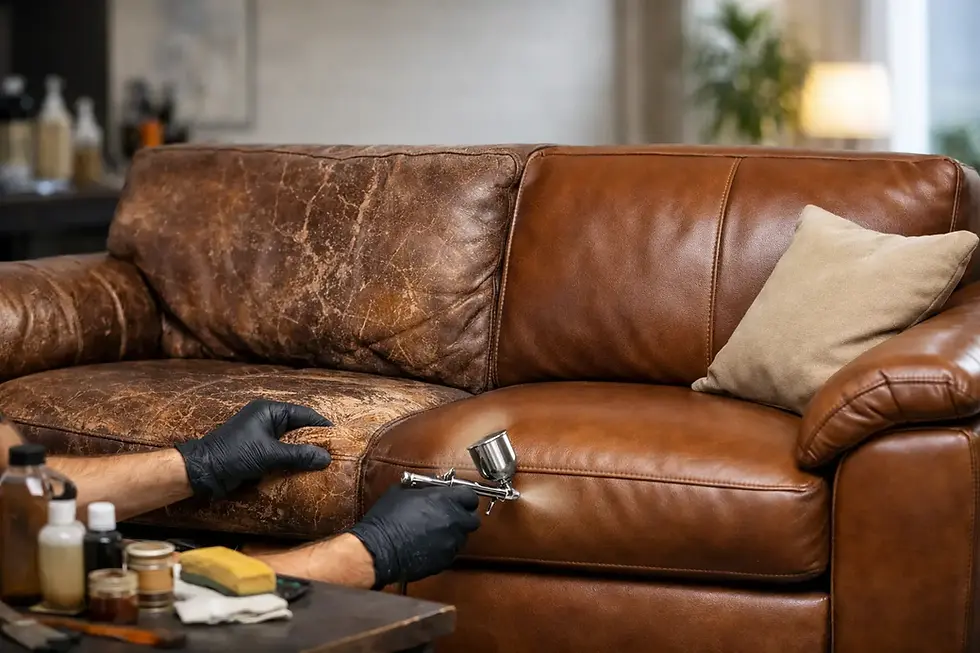
A good restoration service is focused on preserving what is still working while carefully improving what is visible. That may involve a thorough clean to lift built-up grime, preparing worn areas, repairing surface damage, matching the original shade and rebuilding a protective finish. The aim is not to make leather look plastic or over-painted. It is to bring back an even, natural-looking colour and finish that suits the rest of the piece.
Colour restoration is particularly valuable for sofas with faded seat areas or worn arms. Rather than replacing entire panels of leather, a specialist can blend colour into the affected sections and seal the work for improved durability. Exact results depend on the original finish and the extent of wear, but professionally matched colour can dramatically reduce the contrast between damaged and undamaged areas.
Targeted repairs are often the best answer for localised problems. A scrape from a buckle, a pet claw mark or a small split in the surface does not necessarily mean the whole sofa needs treatment. Careful preparation and repair can reduce the visibility of the damage before colour and finish are restored. Where the leather is heavily cracked, peeling or structurally torn, a specialist will advise honestly on what can be improved and whether restoration remains worthwhile.
Why on-site restoration makes sense
A large leather sofa is difficult to move, awkward to transport and easy to damage further in transit. On-site leather restoration removes that hassle. The work is completed at your home, so there is no need to arrange collection, wait for furniture to return or leave a room empty for weeks.
This is especially useful for busy households across Dublin and the surrounding counties. You can show the technician the affected area in its normal lighting, explain what caused the mark and see the furniture in place once the work is complete. For many repairs and refurbishment jobs, this is a faster and more convenient option than replacement.
Ashbourne Leather Care provides this specialist mobile service for homeowners in Dublin, Meath, Kildare and Louth. The process begins simply: send clear photographs of the furniture and the damage, along with your location details, to receive a quotation. Good photos should show the full sofa, a close-up of the problem area and, where possible, the original colour in a less-worn section such as the back or side.
Repair, recolour or replace: choosing the sensible option
The best choice is rarely about age alone. A ten-year-old leather sofa with solid frames, comfortable cushions and localised colour loss may be an excellent candidate for refurbishment. A newer sofa with widespread peeling or weak, low-quality covering may be less straightforward. The condition of the underlying furniture matters as much as the appearance of the leather.
Restoration is often the cost-effective route when damage is concentrated in visible areas and the furniture remains comfortable and well made. It also avoids the challenge of finding a replacement that fits your room, matches your existing furniture and feels as good as the sofa you have already broken in.
There are limits. Deep tears, extensive cracking, severe peeling or damage affecting every surface may require more substantial work, and no reputable specialist should promise a perfect result where the material itself has failed. That said, even in difficult cases, professional treatment can improve presentation, slow further deterioration and help you make an informed decision about the next step.
How to protect restored leather afterwards
Once your furniture has been restored, small habits make a real difference. Keep leather away from strong direct sunlight where possible, as UV exposure is a major cause of fading and dryness. Wipe up spills promptly with a clean, soft cloth, but avoid soaking the area or rubbing aggressively.
Be cautious with household cleaners, antibacterial wipes and sprays. Products designed for kitchens, bathrooms or general surfaces can remove protective coatings and leave permanent marks on leather. Avoid improvised treatments such as hairspray, acetone, bleach or strong solvents, even when a social media tip claims they work.
Regular gentle cleaning is useful, but it should suit the leather and its finish. If you are unsure what product is safe, ask before applying anything. It is far easier to treat a fresh mark that has not been scrubbed, bleached or coated with an unsuitable product.
A clearer route back to a better-looking sofa
Visible damage can make an otherwise lovely room feel neglected, but it does not have to mean starting again. A professional leather assessment gives you a realistic view of what can be repaired, recoloured or refreshed, with the work carried out where your furniture belongs - at home.
If your leather sofa has lost its colour, picked up a stubborn stain or suffered an everyday accident, take a few clear photographs before trying another household fix. A straightforward quotation can be the first step towards bringing your leather back to life.


Comments