


Recliner Colour Restoration for Worn Leather
- ashbourneleathercare

- Aug 8
- 5 min read
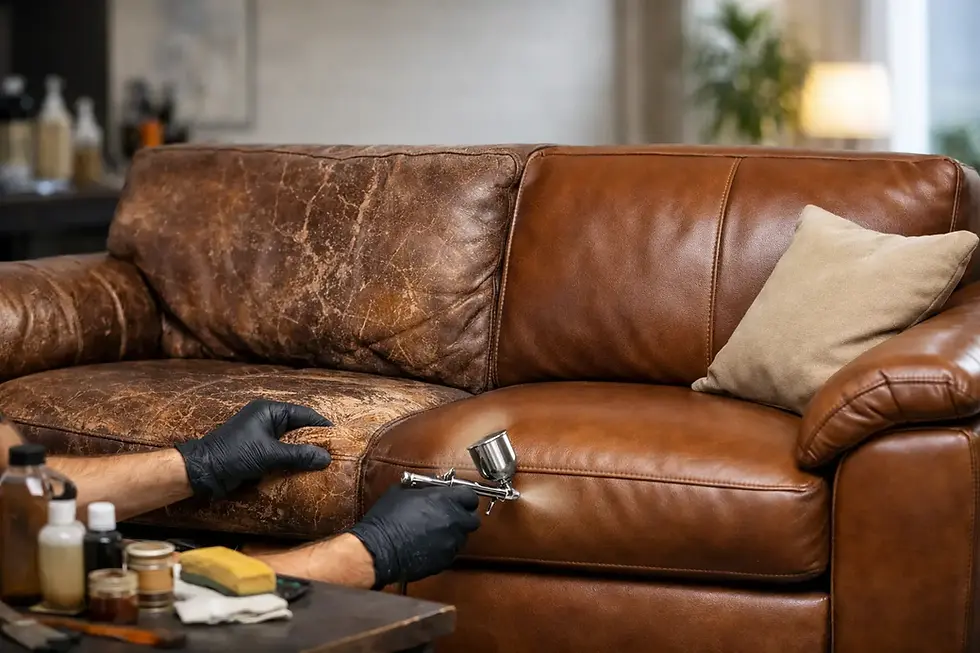
Recliner Colour Restoration for Worn Leather. A recliner is often the most used seat in the house. It is where people settle down after work, watch television, read, or simply put their feet up. That daily use shows over time, particularly on the headrest, armrests, seat cushion and footrest. Recliner colour restoration can bring a faded, patchy or scuffed leather chair back to a smart, even finish without the cost and disruption of replacing it.
For many homeowners, the chair itself is still comfortable, supportive and mechanically sound. The issue is its appearance: the original colour has worn away, sunlight has lightened one side, or a favourite dark leather recliner now looks dull and tired. Professional restoration focuses on correcting that visible wear while retaining the character and feel of the leather.
What causes a leather recliner to lose colour?
Recliner Colour Restoration for Worn Leather. Natural leather is durable, but it is not immune to everyday life. Body oils, heat and friction gradually break down the protective finish on frequently touched areas. The headrest may become darker from contact with hair products and skin oils, while the front edge of the seat and footrest can lose colour through repeated rubbing.
Sunlight is another common cause. A recliner positioned near a window may fade unevenly, leaving the exposed arm or back noticeably lighter than the rest of the chair. Cleaning with unsuitable products can also create problems. Household sprays, strong detergents, alcohol-based wipes and some leather creams may strip or soften the finish, leaving colour looking cloudy, sticky or worn.
Accidents can cause more sudden damage. Ink, nail polish, glue, bleach splashes and harsh cleaning attempts can remove or alter the original pigment. Scuffs from shoes, pet claws or metal fastenings may expose a lighter layer beneath the surface. These marks can make a well-made recliner look beyond saving when the damage is often localised and repairable.
When recliner colour restoration is the right answer
Colour restoration is particularly effective where the leather is structurally sound but its surface has become faded, scratched or uneven. A specialist can assess whether the finish needs a small, targeted repair or whether the chair would benefit from recolouring across larger areas for a consistent result.
A full recolour is not always necessary. If one armrest has a few scuffs or the footrest has lost colour at its front edge, carefully matched local repairs can blend the affected area back into the surrounding leather. This keeps the work proportionate to the damage and preserves as much of the original finish as possible.
Where colour loss is widespread, restoring a larger panel or the complete outer surface may offer the better result. This is often the case with older recliners that have faded over several years, or chairs with heavy wear to the seat, arms and headrest. The aim is not to make leather look like plastic or hide its natural grain. It is to restore a clean, balanced colour and an appropriate finish that suits the furniture.
There are limits, and an honest assessment matters. Leather that is badly cracked, peeling, brittle or damaged by prolonged moisture may need repair work before recolouring can begin. If the chair is imitation leather rather than genuine leather, the treatment approach can be different. A close look at photographs and the damaged area helps establish what can realistically be achieved.
How professional recliner colour restoration works
Good results depend on preparation as much as colour matching. Applying colour over grease, silicone polish, ingrained dirt or loose finish will not produce a lasting repair. The leather must first be assessed and properly cleaned so the condition of the surface is clear.
The affected areas are then prepared with care. Depending on the damage, this may involve removing loose finish, smoothing scuffs, repairing minor surface damage and treating marks that could affect adhesion. On a recliner, the work also has to respect the chair's moving sections. The seat, footrest, side panels and reclining joints need to operate freely after restoration.
The colour is mixed to match the existing leather as closely as possible. This is not simply a matter of choosing ‘brown’, ‘black’ or ‘cream’. Leather shades often contain subtle warm, cool, red or grey undertones, and natural light can reveal a mismatch that artificial lighting hides. A skilled colour match considers the surrounding furniture and the condition of the leather that has not faded.
Colour is applied in controlled layers rather than one heavy coat. This helps retain the grain pattern and flexibility of the leather. Once the tone is even, a suitable protective finish is applied. Depending on the original appearance, this may be matte, satin or slightly more polished. The finish protects the restored colour and helps the repaired area sit naturally with the rest of the recliner.
Why on-site restoration makes sense for recliners
Recliners are awkward pieces of furniture to move. Manual and electric models can be heavy, while powered recliners have motors, cables and control buttons that make transport more complicated. Removing one from a room, arranging collection and waiting for it to return can be more hassle than the repair itself.
On-site leather restoration avoids that disruption. The recliner can be assessed and treated in your home, with its colour viewed in the room where it belongs. This is useful when matching a chair to a leather sofa, wooden flooring or the light in a particular living space. It also means you do not have to struggle with moving furniture through hallways, doorways or stairs.
For homeowners in Dublin, Meath, Kildare and Louth, Ashbourne Leather Care provides a practical route to restoring worn leather furniture without sending it away. The process begins with clear photographs of the recliner and damaged areas, along with your location, so the likely work and quotation can be discussed before a visit is arranged.
What to do before booking a restoration
Photographs make the first assessment much easier. Take one image of the full recliner, then close-up photographs of the worn or damaged areas. Include pictures in natural daylight if possible, particularly where fading or colour mismatch is the concern. A photo from a slight distance is also useful, as it shows how visible the problem is in the context of the chair.
Avoid applying more creams, dyes or cleaning products before seeking advice. It is understandable to want to improve a scuff quickly, but supermarket touch-up products can leave a darker patch, a shiny spot or a finish that is difficult to remove. Bleach marks and ink stains should also be left alone where possible. The less the leather has been altered, the easier it is to assess and treat correctly.
If your recliner is electric, mention this at the quotation stage. It does not usually prevent restoration, but it helps the technician plan around the chair’s mechanisms and access points. Let them know whether the damage is recent, whether any cleaning products have been used, and if the leather has previously been repaired.
Keeping the restored colour looking its best
After restoration, gentle care will extend the life of the finish. Dust the recliner regularly with a soft, dry cloth and deal with spills promptly by blotting rather than rubbing. Keep the chair away from direct, prolonged sunlight where practical, or use blinds and curtains during the brightest part of the day.
Use only products suitable for your type of leather, and do not over-condition it. Too much product can leave residue that attracts dirt and affects the finish. Take particular care with the headrest and arms, where body oils build up most quickly. A little routine attention is far easier than allowing dirt and wear to become established.
A worn recliner does not need to become the chair everyone avoids looking at. With the right assessment, careful colour matching and professional application, it can return to being a comfortable, attractive part of your home. Send clear photographs of the damage and your location to find out what a tailored restoration could achieve for your chair.


Comments