


Can Cleaning Products Damage a Leather Sofa? What Next

Updated: Aug 12
Can Cleaning Products Damage a Leather Sofa? What Next. A quick spray intended to freshen the sitting room can leave a leather sofa looking worse within minutes. If you are searching, “can cleaning products damage a leather sofa? What to do next? The short answer is yes - particularly if the product has been left to soak in, scrubbed hard or used on a finished, coloured leather surface.
The good news is that many marks, dull patches and colour changes can be improved. What matters most is what you do now. Stop adding products, assess the effect carefully and avoid turning a small cleaning accident into a larger restoration job.
Can cleaning products damage a leather sofa?
Most modern leather sofas are not bare leather. They usually have a protective finish and a coloured top coat that give the surface its even appearance, feel and level of sheen. Strong household cleaners can interfere with that finish, remove colour or leave residue behind.
The risk is not limited to obvious chemicals such as bleach. Multi-purpose sprays, kitchen degreasers, disinfectants, antibacterial wipes, glass cleaner, washing-up liquid, standard household cleaners and cream cleaners can all cause problems. Even a product marketed as gentle may be unsuitable if it contains alcohol, solvents, oils or an abrasive ingredient.
Damage can show up immediately as a light patch, dark tide mark, sticky feel or change in shine. In other cases, the sofa may look fine at first, then become dry, dull or increasingly faded after the treated area has dried. The outcome depends on the leather type, the cleaner used, how long it sat on the surface and whether the area was rubbed repeatedly.
Signs that the cleaner has affected the finish
A stain is not always a stain. Sometimes the cleaning product has altered the leather’s protective coating or lifted its colour. This is why applying more cleaner to “even it out” is often the wrong move.
Look for a patch that is lighter than the surrounding leather, especially on black, brown, navy or coloured sofas. A pale or pinkish area can indicate colour loss. A shiny ring may mean residue has dried on the surface, while a dull patch can point to a weakened or stripped finish.
If the leather feels tacky, rough, unusually dry or different from the rest of the cushion, leave it alone. Texture changes can occur when cleaners affect the top coating. Scrubbing with a sponge, microfibre cloth or brush may make that difference more visible.
Some damage is more serious. Bleach, oven cleaner, toilet cleaner, nail polish remover and solvent-based products can remove colour quickly and may alter the finish permanently. That does not automatically mean the sofa needs replacing, but it does mean a careful professional assessment is the sensible next step.
What to do next after using the wrong cleaner
Can Cleaning Products Damage a Leather Sofa? What Next. First, stop using the product straight away. Do not add another cleaner to counteract it, and do not try home remedies such as vinegar, bicarbonate of soda, baby wipes, oils or hairspray. Mixing substances can create a larger stain, spread the affected area or make later restoration more difficult.
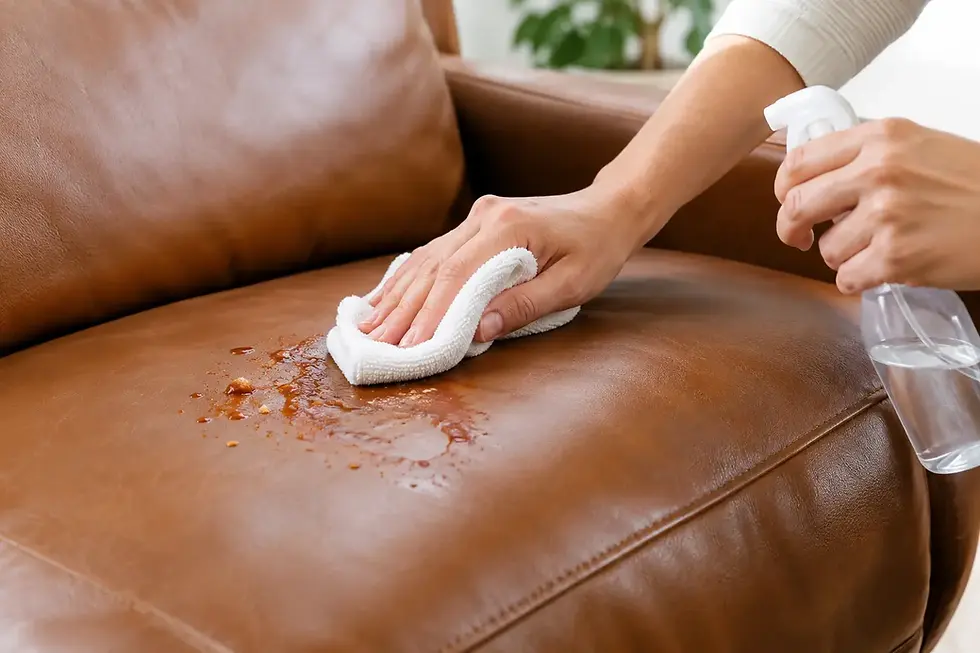
If there is still wet product sitting on the surface, gently blot it with a clean, dry white cloth. Use a lifting motion rather than rubbing from side to side. White cloths are best because coloured towels can transfer dye onto damp leather.
Where a small amount of mild cleaner has just been used, lightly wipe the area once with a separate cloth that is only slightly dampened with clean water, then blot dry. Do not saturate the leather, soak seams or repeatedly wipe the same patch. If the product was strong, unknown, bleach-based or solvent-based, avoid further wetting and seek specialist advice instead.
Let the sofa dry naturally at room temperature. Keep it away from radiators, fan heaters, hairdryers and direct sunlight. Fast heat can dry leather unevenly and make a weakened finish look worse.
Finally, take clear photos in natural daylight. Photograph the full sofa as well as close-ups of the affected area. If possible, keep the cleaning product bottle or take a photo of its ingredients. Knowing what has been used helps a leather restoration specialist judge whether the issue is residue, staining, colour loss or finish damage.
Do not condition or polish it straight away
It is understandable to reach for leather conditioner when the sofa looks dry or flat. However, conditioner is not a repair for chemical damage. It cannot replace colour that has been removed, and it will not rebuild a damaged protective finish.
In some cases, conditioner or polish can temporarily darken a patch and make the area appear better. Once it dries, the underlying damage remains. Products containing waxes, oils or silicones can also complicate recolouring work because they affect how repair coatings bond to the surface.
The same applies to coloured leather balms and touch-up kits. They can be useful for very minor wear when chosen correctly, but they are rarely a good answer to a chemical mark. A mismatched colour, excessive shine or hard-edged patch can be more difficult to correct than the original problem.
When professional leather restoration is worthwhile
Professional restoration is particularly worthwhile when the sofa is otherwise in good condition, the damage is localised or the furniture is a quality piece that would be expensive to replace. A specialist can clean away suitable residue, prepare the damaged area, restore lost colour and apply a finish designed to match the surrounding leather.
The goal is not simply to cover the mark. A proper repair considers colour, texture and sheen so that the restored section sits naturally within the rest of the sofa. This is especially important on seat cushions, arms and headrests, where light catches the leather and makes uneven repairs easier to notice.
It depends on the damage. A fresh surface mark may need targeted cleaning and conditioning, while bleach or solvent damage may require colour restoration and refinishing. Deep cracking, peeling or widespread deterioration can call for more extensive refurbishment. An honest assessment should explain what result is realistic before work begins.
For homeowners in Dublin, Meath, Kildare and Louth, Ashbourne Leather Care provides mobile, on-site leather restoration for issues including accidental chemical marks, colour loss, scuffs and worn finishes. Sending photos of the sofa, the damaged area and the product involved is the quickest way to receive a clear quotation and practical advice.
How to avoid cleaning damage in future
The safest routine is simple: dust the sofa regularly with a soft, dry cloth and deal with spills promptly by blotting rather than rubbing. For ordinary cleaning, use a leather-specific product suited to finished upholstery and follow the instructions carefully. Always test it first on an inconspicuous area, such as the back or underside of a cushion.
Keep household sprays away from the sofa when cleaning nearby tables, windows or flooring. Overspray is a common cause of pale speckles and dull patches, particularly on arms and headrests. If children or pets are in the home, store bleach, nail polish remover and strong cleaning chemicals well away from leather furniture.
A leather sofa is made to be lived on, and accidents happen. The best next step is not panic or aggressive cleaning. Protect the area, let it dry, keep a record of the product used and get the right advice before attempting a fix that could make the damage harder to restore.


Comments