


Leather Cleaning Versus Conditioning Explained

Leather Cleaning Versus Conditioning Explained. A leather sofa can look tired for more than one reason. Everyday body oils, dust and spills can leave the surface dull or sticky, while dryness can make it feel less supple and more prone to cracking. Understanding leather cleaning versus conditioning helps you give your furniture the right care rather than applying the wrong product and hoping for the best.
Cleaning and conditioning serve different purposes. One removes what should not be on the leather; the other helps maintain what the leather needs. Neither is a cure for every problem, particularly where colour has worn away, a stain has set in or the finish has been damaged.
What leather cleaning actually does
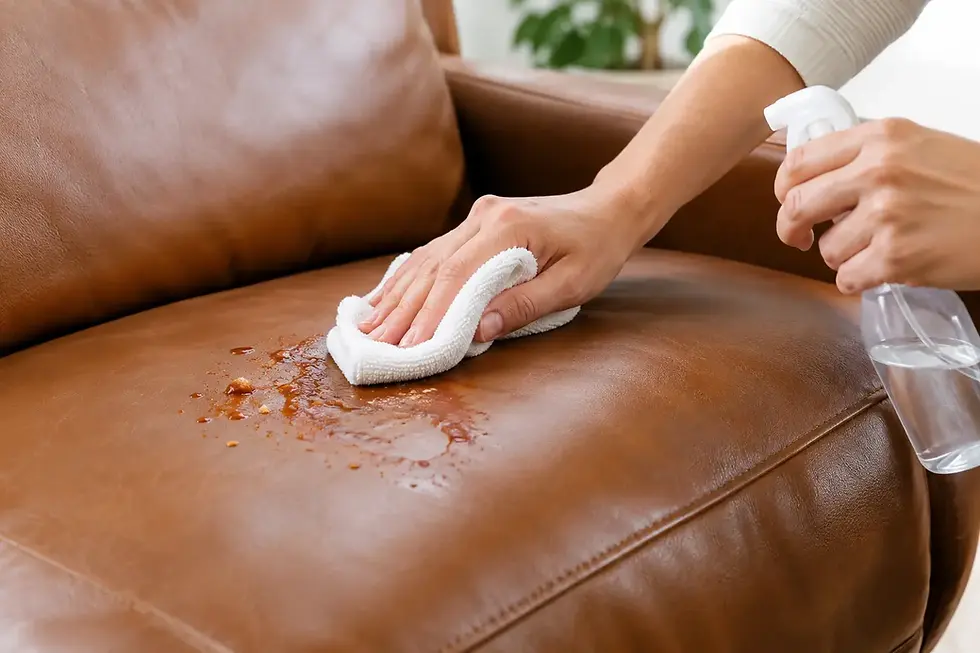
Leather Cleaning Versus Conditioning Explained. Leather cleaning removes the build-up that gradually collects on upholstery. This can include household dust, skin oils, food residue, pet marks and the residue left behind by unsuitable cleaning products. On a pale sofa, this often shows first on headrests, armrests and seat edges. On darker leather, the problem may appear as a patchy shine or a surface that feels tacky rather than smooth.
A proper clean improves the appearance of the existing finish. It can lift surface grime, reduce dullness and prepare the leather for further care. It does not, however, put colour back where it has faded or repair a scratch that has cut through the protective coating.
The key is to use a cleaner made specifically for finished upholstery leather and to work gently. Leather is not fabric. Saturating it with water, scrubbing it with a rough cloth or using strong household sprays can damage the finish, leave tide marks or drive a spill further into the material.
For light, routine cleaning, use a soft cloth and follow the product directions carefully. Always test an inconspicuous area first, especially if the leather is older, very pale, heavily worn or has an unusual finish.
What leather conditioning does
Conditioning is about maintaining suppleness and reducing the dry, neglected feel that can develop over time. A suitable leather conditioner is applied after cleaning, once the surface is fully dry. It can help the leather feel smoother and may improve its appearance by restoring a more even, cared-for finish.
Conditioner is most useful on leather that is clean but beginning to feel dry or look flat. It is a maintenance step, not a repair treatment. If a sofa has deep cracking, peeling, flaking or obvious colour loss, conditioner alone will not restore it. In some cases, applying too much can leave a greasy surface that attracts more dirt and makes future restoration more difficult.
That is why the order matters: clean first, condition second. Conditioning over dirt can trap oils and residue against the surface, making the sofa look temporarily shinier without dealing with the cause of the problem.
Leather cleaning versus conditioning: which does your sofa need?
The easiest way to decide is to look at the symptom rather than reaching for the nearest bottle. If the leather looks dirty, feels sticky, has darkened around frequently used areas or has a general build-up, cleaning is the first job. If it is already clean but feels dry, stiff or lacks its usual softness, conditioning may be appropriate.
Many sofas need both as part of sensible maintenance. Cleaning removes the contamination that wears down the finish, then conditioning helps maintain the leather’s feel. But there are clear limits to what home care can achieve.
A faded seat cushion, for example, is usually a colour-restoration issue rather than a cleaning issue. A scuff that has exposed a lighter layer beneath the colour needs targeted repair. Ink, bleach, nail polish and glue require a careful assessment, because the wrong attempted removal can spread the damage or strip the colour from the surrounding area.
When cleaning will not solve the problem
It is common to mistake worn leather for dirty leather. A sofa may look greyish, patchy or uneven because the original colour and protective finish have worn away through daily use. Repeated cleaning will not correct that. In fact, over-cleaning can make the surface look worse by removing more of an already weakened finish.
Watch for these signs that your furniture needs more than routine cleaning:
Colour loss on cushions, armrests or headrests
Scuffs, scratches or scrape marks that remain after gentle cleaning
Cracks, peeling or flaking in the coloured surface
Stains from ink, bleach, glue, nail polish or other household accidents
A finish that has become uneven, sticky, rough or unusually shiny
These issues call for specialist restoration rather than more conditioner. The repair may involve colour matching, repairing the damaged area, refinishing the surface and restoring a more consistent appearance. The right approach depends on the leather type, the extent of the damage and whether previous products have been used.
Common mistakes that can shorten a sofa’s life
Good intentions can cause lasting problems with leather furniture. Baby wipes, washing-up liquid, multi-purpose sprays and abrasive cleaning pads are not designed for leather finishes. They may remove surface dirt at first, but they can also leave residue, dry out the coating or create uneven shiny patches.
Oils and heavy creams are another frequent mistake. Leather furniture is usually protected with a coloured finish, so it does not behave like an untreated leather handbag or pair of boots. Products made for other leather goods can darken upholstery, leave it slippery or interfere with professional repair work later.
Be cautious with online cleaning advice too. A method that works on one type of leather can be unsuitable for another. If the sofa has a strong stain, a damaged finish or visible colour loss, avoid experimenting across a large area. Take clear photographs in natural light and seek advice before applying anything else.
A practical care routine for leather furniture
For most households, a gentle wipe with a clean, dry microfibre cloth every week or two helps prevent dust settling into the surface texture. Deal with fresh spills promptly by blotting rather than rubbing. Keep the sofa away from prolonged direct sunlight where possible, as UV exposure is a common cause of fading and uneven colour.
A more thorough clean can be carried out periodically using a suitable upholstery leather cleaner. How often depends on how the furniture is used. A family sofa with children, pets and daily use will need more attention than an occasional chair in a quiet room. Condition only when the leather is clean and genuinely needs it, and always use a small amount rather than soaking the surface.
Furniture placement matters as well. Radiators, stoves and other intense heat sources can dry leather out, while sunlight can bleach it over time. Rotating removable cushions can also help wear develop more evenly, particularly on sofas with one favourite seat.
When to call a leather restoration specialist
Professional help makes sense when the problem affects the look, value or usable life of the furniture. It is particularly worthwhile for quality sofas that are structurally sound but cosmetically worn. Replacing a good leather suite because of faded cushions, scuffs or accidental marks is often unnecessary when the damage can be repaired on site.
A specialist can identify whether the issue is dirt, dryness, finish damage, colour loss or a combination of these. That diagnosis matters. A careful clean may be part of the work, but it may need to be followed by targeted stain treatment, repairs and colour restoration to achieve a result that genuinely improves the furniture.
At Ashbourne Leather Care, photographs and location details can be used to assess visible damage and provide a quotation before work is arranged. Mobile restoration means your sofa can be treated in your home, without the hassle of transporting bulky furniture.
Your leather furniture does not have to look perfect to be worth saving. Start with the right care for the condition in front of you, and when routine cleaning and conditioning are no longer enough, a professional restoration can bring back the colour, finish and pride you felt when it first arrived.


Comments