


Can Leather Stains Disappear? What to Expect

Can Leather Stains Disappear? What to Expect. A dark ink line on a cream sofa, a pale patch from a cleaning product, or a splash of nail polish can make an otherwise beautiful piece of furniture feel beyond saving. But can leather stains disappear? In many cases, the visible mark can be greatly reduced or removed. Where the leather’s colour or protective finish has been damaged, a specialist repair can restore the area so well that the stain is no longer noticeable in normal use.
The result depends less on how alarming the mark looks on day one and more on what caused it, how long it has been there, and what type of leather you have. Leather is not one single material. Its finish, colour, age and condition all affect the right treatment.
Can leather stains disappear completely?
Can Leather Stains Disappear? What to Expect. A fresh surface stain has the best chance of disappearing with careful, appropriate cleaning. Many common marks sit on the protective topcoat rather than soaking deeply into the leather itself. Food residue, drink spills, some dirt transfer and light dye transfer from clothing may be lifted without changing the leather’s colour or finish.
Other marks are not really stains in the usual sense. Bleach, harsh household cleaners, acetone, perfume, hand sanitiser and some adhesives can strip colour or break down the finish. Once that has happened, cleaning alone will not put the original colour back. The practical solution is professional colour restoration and refinishing, matched to the surrounding leather.
That distinction matters. Repeatedly scrubbing a colour-loss patch in the hope that it will fade can make a small problem larger. A proper assessment identifies whether the mark needs cleaning, targeted repair, recolouring, or a combination of all three.
What determines whether a stain can be removed?
The first factor is the source of the mark. Ink, nail polish, glue, bleach, grease and dye transfer all behave differently. Ink may penetrate quickly, while a sticky glue mark may sit on the surface but pull at the finish if it is picked or scraped. A pale bleach mark can look like residue, yet it is usually permanent colour loss rather than something that can be wiped away.
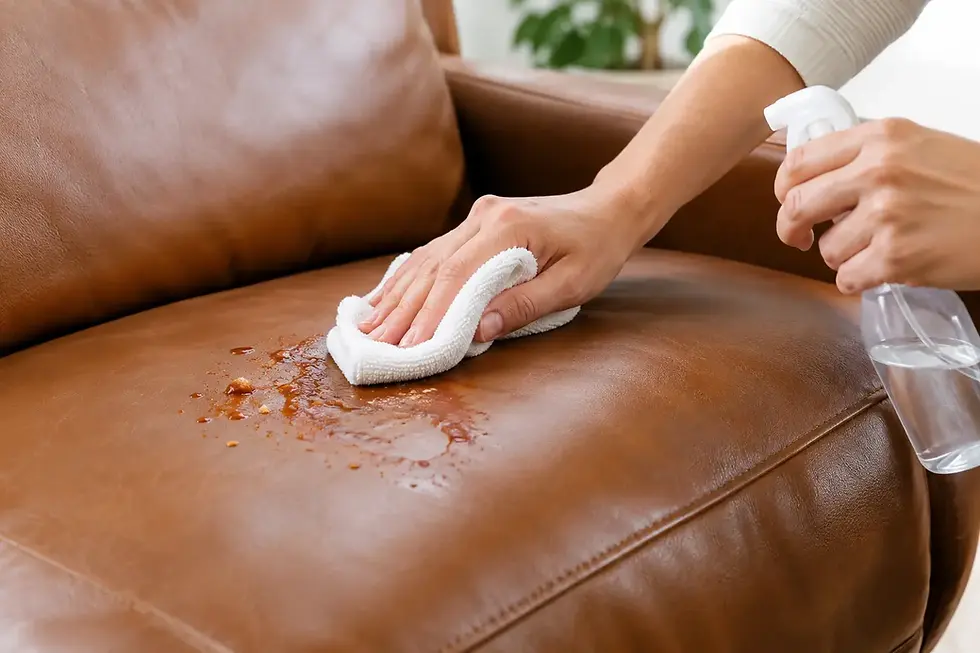
Timing also makes a difference. The longer a spill remains on leather, the greater the chance that it will migrate through the topcoat. This is especially true of darker liquids, oils and strong dyes. Fresh marks should be gently blotted with a clean, dry white cloth. Do not rub, as rubbing spreads the spill and drives it further into the surface.
Finally, consider the leather itself. Most modern leather sofas have a protective pigmented finish, which allows for controlled cleaning and professional recolouring. Older furniture may also have worn areas where the protective coating has thinned, making stains more likely to penetrate.
The stain may be hiding damage underneath
A mark can sometimes look worse after an attempted clean because the dirt has come away but the faded colour beneath it is now visible. This is common on sofa arms, headrests and seat cushions, where body oils, sunlight and daily use have already weakened the finish.
In these cases, the goal is not simply to remove a stain. It is to rebuild the surface appearance - cleaning the area, repairing any damage to the finish, restoring the correct colour and applying a suitable protective coating. Done carefully, the repair blends into the surrounding upholstery rather than leaving an obvious patch.
Common leather marks and the realistic outcome
Ink marks are among the most common household accidents. Fresh ink can sometimes be reduced significantly, but ballpoint ink and permanent marker often penetrate into the finish. Professional treatment may involve controlled removal followed by localised colour work if a shadow remains. Trying alcohol, hairspray or strong solvent at home is risky and can leave a larger faded ring.
Dye transfer from jeans, cushions or clothing can often be cleaned when caught early. On pale sofas, however, dark dye may bond with the topcoat. A specialist can assess whether it can be safely lifted or whether a light recolouring process will give the cleaner result.
Nail polish is difficult because many removers contain acetone. The polish itself may be removed, but the remover can strip the leather’s finish and colour. The good news is that localised repair and colour matching can usually address the resulting patch.
Bleach and cleaning chemical marks require a different approach. These products commonly remove colour rather than leave a removable deposit. The stain will not disappear through cleaning, but professional recolouring can restore a consistent finish. The same is often true of perfume and hand sanitiser marks, particularly where repeated use has created pale or sticky areas.
Grease and oil stains can be more variable. A small, recent mark may improve, while an older stain that has penetrated deeply may need careful treatment and, occasionally, colour adjustment. It is better to avoid home remedies such as talcum powder, washing-up liquid or baking soda unless you know the leather type and the product is specifically suitable for it.
What to do as soon as you notice a mark
Act calmly and avoid experimenting. First, take a clear photograph in natural light. This helps you track any change and gives a leather repair specialist a useful starting point for an assessment.
Blot liquid spills gently with a dry, absorbent white cloth. Remove loose material carefully without scraping, and keep pets, children and cushions away from the area while it dries. If you already own a leather cleaner supplied for your particular furniture, use it only according to its instructions and only after testing an inconspicuous area.
Do not use baby wipes, bleach, disinfectant spray, antibacterial wipes, nail polish remover, furniture polish, washing-up liquid or household stain removers. Products that seem harmless can leave a shiny patch, remove colour, harden the finish or create a tide mark around the original stain.
When professional restoration is the better option
If the mark is clearly visible, has changed the leather’s colour, feels rough or sticky, or has survived gentle cleaning, it is time for a professional opinion. This is particularly worthwhile for a good-quality sofa, a matching suite or furniture that would be expensive and disruptive to replace.
Professional leather restoration is designed to deal with both the cause and the appearance of the damage. The process may include specialist cleaning, removing or stabilising the affected material, repairing scuffs or surface loss, colour matching and refinishing the repaired area. A skilled technician works to preserve the natural look and feel of the upholstery, rather than simply covering the mark with an unsuitable paint.
There are limits. Deeply absorbed stains on untreated leather, extensive chemical damage and areas with severe cracking may not return to a factory-new condition. Even then, restoration can often make the damage far less noticeable and extend the useful life of the furniture. The honest answer is not always perfection, but it can still be a dramatic improvement.
A practical way to get the right answer for your sofa
Photographs are usually the quickest way to establish what has happened and what can realistically be achieved. Take one wider photo showing the furniture and a close-up of the affected area. Include a note about the cause of the mark, when it happened and any products already used.
Ashbourne Leather Care provides mobile, on-site leather furniture restoration across Dublin, Meath, Kildare and Louth. A photo-based quotation makes it easier to understand the likely repair before arranging a visit, with no need to transport a damaged sofa away from your home.
A stain does not have to decide the future of your leather furniture. Leave the area alone, get it assessed early, and give the repair the best possible chance of bringing your leather back to its original beauty.


Comments