


Homeowner Guide to Leather Refurbishment
- ashbourneleathercare

- Jul 10
- 6 min read
That faded armrest, the scuff on the front edge of the cushion, the ink mark nobody will admit to - leather rarely wears out all at once. It usually changes bit by bit until a sofa that once looked rich and polished starts to look tired. This homeowner guide to leather refurbishment is here to help you understand what can be restored, what needs professional repair, and when refurbishment makes far more sense than replacement.
Leather furniture is built to last, but daily life leaves a mark. Family use, sunlight, body oils, pets, spills and household accidents all affect the finish over time. The good news is that many of the problems homeowners assume are permanent can often be improved dramatically with the right approach.
What leather refurbishment actually means
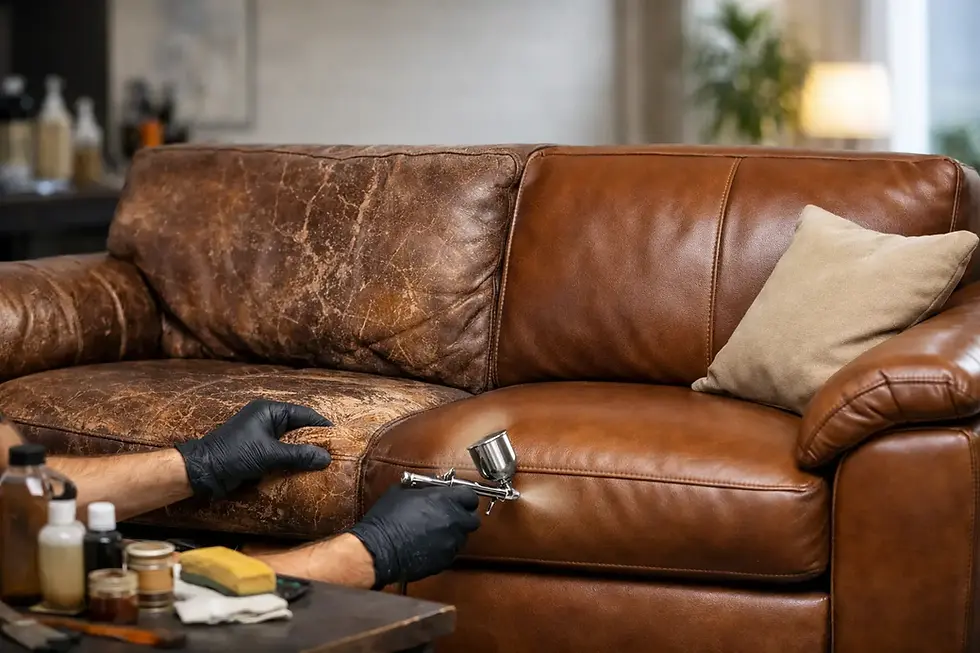
Leather refurbishment is more than giving a sofa a quick clean. In practical terms, it can include deep cleaning, colour restoration, surface repair, reconditioning and finishing work to improve the look and feel of worn leather. The goal is to restore the furniture’s appearance without replacing the entire piece.
That matters because many leather sofas are structurally sound even when the surface looks poor. If the frame, cushions and overall shape are still in good condition, refurbishment can bring back colour, reduce visible wear and deal with specific damage at a fraction of the cost of buying new.
It is also worth saying that not every job is the same. A faded seat cushion needs a different treatment from a bleach spot or a glue stain. Good refurbishment is not one-size-fits-all. It depends on the type of leather, the condition of the finish and the cause of the damage.
Signs your furniture may need leather refurbishment
Some issues are obvious, such as peeling colour, visible scratches or stains. Others creep in gradually. If your sofa looks dull in the spots where people sit most, feels dry to the touch, or has uneven colouring between cushions and arms, that is often a sign the protective finish has worn down.
Scuffs, scrapes and minor surface damage are also common, especially on high-use furniture. In many homes, the first problem appears on the armrests, seat fronts and headrest areas. These are the places that take the most friction and contact.
Accidental damage is another major reason homeowners look at refurbishment. Ink marks, nail polish, bleach splashes and glue can all spoil the appearance of leather furniture quickly. In some cases, trying to remove them with shop-bought products makes the damage worse. The stain may spread, the colour may lift, or the finish may become patchy and rough.
A homeowner guide to leather refurbishment options
When people hear the word restoration, they sometimes imagine a full strip-back of the whole sofa. In reality, refurbishment can be very targeted. A professional may only need to treat one damaged panel, blend colour into a worn section, or repair a localised mark so it no longer stands out.
Cleaning is often the first step, but cleaning alone will not fix colour loss, cracking or chemical stains. Where the finish has faded or worn away, colour restoration may be needed to rebuild an even appearance. Where there are scuffs or light scratches, repair work can smooth the area before the colour is matched and sealed.
For more specific accidents, such as ink, bleach, nail polish or glue, the treatment depends on how deep the damage goes. A surface mark may respond well to specialist removal and refinishing. A chemical spill that has altered the dye may need recolouring. This is why photo-based quotations are so useful - they help identify the likely repair route before a visit is arranged.
When DIY works and when it usually does not
There is a place for basic home care. Gentle routine cleaning, keeping leather away from harsh direct sunlight where possible, and dealing with spills quickly can all help preserve the finish. If the issue is light surface dirt, a safe leather cleaner used properly may be enough to freshen the furniture.
But refurbishment is where DIY often goes wrong. Many supermarket or online products promise to restore leather in minutes. Some leave a sticky residue, some alter the sheen, and some create dark patches that are harder to correct afterwards. The biggest risk is not that a DIY attempt fails - it is that it adds another layer of damage.
This is especially true with coloured leather. Matching tone, finish and texture takes skill. If one panel is redone badly, it can stand out more than the original wear. The same applies to accidental stains. Rubbing aggressively, using solvents or experimenting with random cleaning tips can set the damage further into the surface.
Why professional refurbishment is often the smarter choice
The main advantage of professional leather refurbishment is control. A specialist can assess the leather type, identify whether the problem sits in the finish or deeper in the material, and choose the right treatment for that specific issue. That avoids guesswork and usually produces a much better visual result.
There is also the convenience factor. For many homeowners, the idea of moving a large leather sofa out of the house for repair sounds like a project in itself. On-site refurbishment removes that obstacle. The work is carried out at your home, which means less disruption and no need to organise transport for bulky furniture.
For households in Dublin, Meath, Kildare and Louth, a mobile service is particularly practical because it turns what could feel like a major replacement decision into a straightforward repair process. Ashbourne Leather Care works this way, using photos and location details to provide quotations before arranging on-site restoration.
What affects the result
Homeowners are often pleasantly surprised by how much can be improved, but expectations should still be realistic. The age of the furniture, the extent of wear and the type of damage all affect the final result. A faded sofa with worn colour can often be transformed. Deep cuts, severe cracking or long-term neglect may still improve significantly, but they may not disappear completely.
Leather type matters too. Some finishes are more straightforward to restore than others. The condition of surrounding panels also plays a part. If one cushion is badly worn and the rest of the sofa is only lightly faded, colour matching needs to be handled carefully so the repaired area blends naturally.
This is where experience shows. A good refurbishment should not leave one section looking obviously newer, shinier or flatter than the rest. The aim is consistency - bringing the damaged area back into line with the furniture as a whole.
How to decide between refurbishment and replacement
If your leather furniture is sagging badly, structurally broken or no longer comfortable, replacement may be the better choice. But if the main problem is cosmetic wear, staining or colour loss, refurbishment is often the more sensible route.
The cost difference can be substantial, especially if the original piece was high quality. Replacing a good leather sofa because of faded arms or a visible stain is rarely the best value option. Refurbishment allows you to keep the furniture you already know suits your room, while improving the appearance enough to make it feel right again.
It also makes sense from a practical point of view. Many homeowners do not want the hassle of shopping for new furniture, waiting for delivery and disposing of the old piece, particularly when the existing sofa is still comfortable and well made.
Getting a quote without the guesswork
The easiest first step is to take clear photos in good light. Include the full piece of furniture as well as close-up images of the damaged areas. If possible, mention what caused the problem - whether it is general wear, sunlight fading, ink, bleach, glue, nail polish or another issue.
That information helps a specialist judge the likely treatment needed and provide a more accurate quotation. It also saves time because the condition can be assessed before a visit. For homeowners, it keeps the process simple and avoids the uncertainty of not knowing whether the damage is repairable.
Leather furniture does not have to look ruined to need attention, and it certainly does not have to be replaced the moment wear appears. Often, the best time to act is before minor damage becomes heavy deterioration. A sofa that looks tired today may only need the right expert treatment to look smart and cared for again. If your leather has lost its colour, finish or confidence, getting it assessed could be the easiest way to bring it back to life.


Comments