


How to Fix Leather Cracking on a Leather Sofa

How to Fix Leather Cracking on a Leather Sofa. A cracked leather sofa can make an otherwise well-kept room feel tired very quickly. Before you try to fix leather cracking with a household conditioner or a quick cover-up product, it helps to identify what has actually failed. In many cases, the leather itself is still sound, but its protective finish and colour coating have worn away. That distinction determines whether the damage can be restored neatly or whether the panel needs more substantial repair.
For homeowners, the good news is that cracking does not automatically mean replacing the sofa. Professional leather restoration can often repair the affected area, rebuild the finish and restore the colour without taking the furniture out of your home.
Why leather sofas crack
Leather is natural material, but the surface you see and sit on is usually protected by layers of colour and finish. Over years of use, body oils, heat, sunlight, dry indoor air and friction can wear those layers down. The most common areas are seat cushions, armrests, headrests and the front edge of the sofa.
Once the protective coating becomes dry or thin, fine lines may appear. These can develop into visible cracks as the leather flexes when someone sits down. Dark leather may start to show lighter lines; lighter sofas can look dull, grey or patchy around the worn areas.
Not all cracking has the same cause. A quality leather sofa with surface wear is often a strong candidate for refurbishment. By contrast, heavily damaged bonded leather, where a thin leather fibre layer is applied over a fabric backing, may peel or split across wider areas. It can still sometimes be improved, but it requires an honest assessment of how extensive the damage is and how long a repair is likely to last.
Can you fix leather cracking yourself?
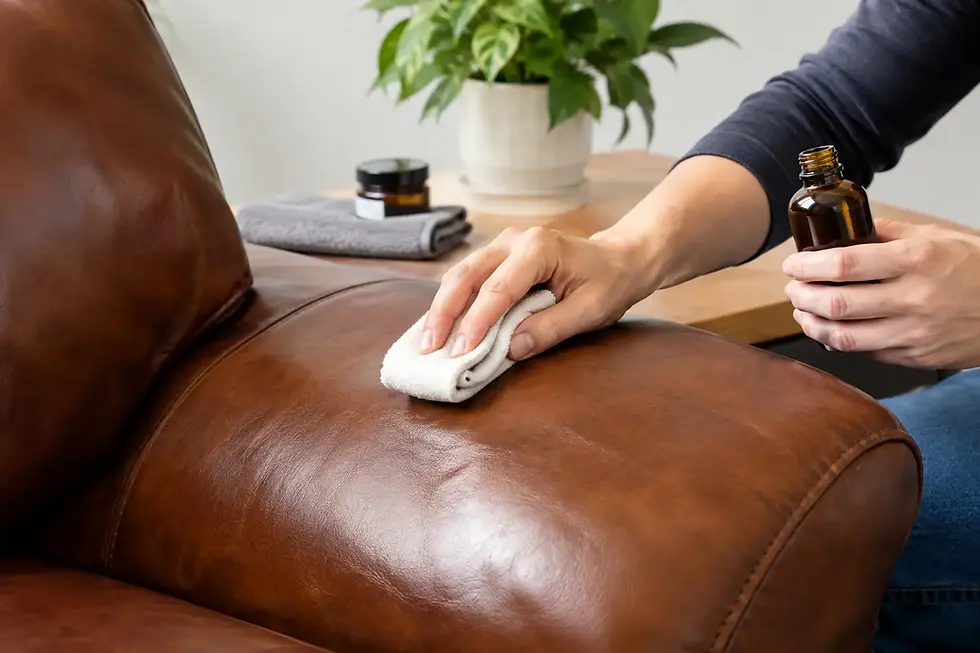
Very light surface dryness can sometimes be managed at home, provided the sofa is genuine finished leather and there is no flaking, peeling or exposed backing material. Start by gently cleaning the area with a suitable leather cleaner and a soft cloth. Dirt and grease left on the surface can speed up wear and make any future repair harder.
After cleaning, use a leather protection product designed for furniture, following the product instructions carefully. This may improve the feel of dry leather and help protect an intact finish from further wear. It will not, however, fill cracks, replace missing colour or rebuild a worn protective coating.
Avoid soaking the leather, using washing-up liquid, baby wipes, household polish, cooking oils or heavy oils sold as miracle cures. These products can leave residue, alter the sheen, soften the finish unevenly or make recolouring difficult. A sofa may look better for a day or two, then become sticky, blotchy or more prone to further damage.
If the cracking is visible from across the room, catches on clothing, feels rough, or has started to lose colour, a DIY conditioner is unlikely to give the result you want. This is the point where a targeted restoration is usually the more cost-effective option.
How professionals fix leather cracking
A specialist repair is not simply a matter of painting over damaged leather. The area needs to be prepared properly so that the new finish bonds well and flexes naturally with normal use.
Cleaning and preparation
The damaged section is first cleaned to remove body oils, dirt, silicone residues and old care products. The surface is then carefully prepared to remove loose finish and create a stable base. This step matters because colour applied over unstable, flaking material will not hold up well.
For deeper cracks a flexible repair compound may be used to level the surface. It is applied in fine layers rather than one thick coat, then smoothed to reduce the appearance of the damaged lines. The aim is not to make the leather look artificial or overly coated, but to create an even surface that remains comfortable and flexible.
Colour matching and restoration
Once the repair area is sound, the colour is matched to the existing sofa. This is especially important where a sofa has faded unevenly, as a standard off-the-shelf shade can leave a noticeable patch. A specialist can blend colour into the surrounding leather rather than treating the crack in isolation.
Colour restoration can revive worn seat cushions, faded arms and scuffed edges as well as the cracked section itself. In some cases, treating a wider panel produces a more natural result than repairing one small spot. It depends on the location of the damage, the degree of fading and the original finish of the leather.
A protective topcoat is then applied to help guard the restored surface against everyday use. The finish needs to suit the sofa, whether that is matt, satin or a subtle sheen. Getting this wrong can be as noticeable as a poor colour match.
When cracking needs specialist attention
How to Fix Leather Cracking on a Leather Sofa. A few fine lines may be manageable with careful cleaning and protection, but some signs should not be ignored. Arrange an assessment if you notice peeling material, missing colour, rough or worn patches.
It is also worth seeking help if the sofa is a valued piece of furniture, particularly a large corner sofa, recliner or matching suite. Replacing one item can be expensive and may leave you trying to match the colour and style of furniture you already own. A professional repair can extend the life of a good sofa while keeping it in the room where it belongs.
For accidental damage, speed can make a difference. Ink, nail polish, glue, bleach marks and strong cleaning products can damage both colour and finish. Do not scrub the area or apply several different cleaners in the hope that one will work. Take clear photographs in daylight, including a wider image of the furniture and close-ups of the damaged area, then request advice before attempting a repair.
Preventing fresh cracks after restoration
Leather furniture benefits from regular, gentle care. Dust it with a soft cloth and clean it using products intended for leather upholstery rather than general household cleaners. How often depends on use, but busy family sofas usually need more attention than an occasional chair in a quieter room.
Keep leather away from direct sunlight where possible. Strong sunlight can fade colour and dry the finish, especially beside large windows or conservatory doors. Try not to place sofas directly against a radiator either, as repeated heat can contribute to dryness and surface stress.
Use cushions and throws thoughtfully. They can protect favourite seats, but avoid rough-backed covers that rub against the leather or trap heat and moisture. If one seat is used every day, rotating cushions where the design allows can spread wear more evenly.
Most importantly, deal with small wear before it becomes deep cracking. A faded armrest or a slightly rough seat edge is easier to restore than a large area of peeling or split material. Early attention usually means a more discreet repair and less disruption.
A practical way to restore your sofa
The easiest first step is to take a few clear photographs of the cracking, along with your location and a brief description of the sofa's age and condition. This allows a leather specialist to judge whether the issue is surface wear, a repairable split or a wider material failure, and to provide a realistic quotation.
Ashbourne Leather Care provides mobile leather furniture restoration across Dublin, Meath, Kildare and Louth, carrying out work on-site so you do not have to arrange collection or go without your furniture for weeks. A careful repair can bring back colour, smoothness and confidence in a sofa you already love - and the best time to start is while the damage is still contained.


Comments