


How to Repair Scuffed Leather Furniture

A scuff on a leather sofa has a way of catching your eye every time you walk into the room. If you are wondering how to repair scuffed leather furniture, the right approach depends on one thing first - whether the damage is only on the surface or has gone deeper into the colour and finish.
That distinction matters because not every scuff needs a full repair, and not every home remedy is safe. Some marks can be improved with careful cleaning and conditioning. Others need colour restoration and refinishing to blend the damaged area back into the surrounding leather. Get it wrong, and a small scuff can turn into a shiny patch, a stripped finish, or a dark stain that is far harder to put right.
How to repair scuffed leather furniture without making it worse
The first step is to slow down. A lot of leather damage becomes more obvious after people rub too hard, use baby wipes, apply random creams, or try household cleaners that were never meant for finished upholstery leather.
Start by looking closely at the scuffed area in natural light. If the leather surface is intact and you can mostly see a light mark or transfer on top of the finish, you may be dealing with a minor surface scuff. If the area looks lighter than the surrounding leather, feels rough, or seems to have lost colour, the protective finish has likely been disturbed. If the leather itself looks scratched, frayed, or cut, that moves beyond a simple scuff and into repair work that usually needs specialist attention.
Before doing anything else, wipe the area gently with a soft dry cloth. Then use a leather cleaner designed for furniture, not shoes, car seats, or general household use. Apply a small amount to a cloth rather than directly onto the sofa, and test it on a hidden area first. The goal is simply to remove surface dirt and see the true extent of the damage.
Sometimes a mark that looks like a scuff is partly built-up grime or transferred material. Once the area is clean and dry, you will have a better sense of what is actually left to repair.
What you can safely try at home
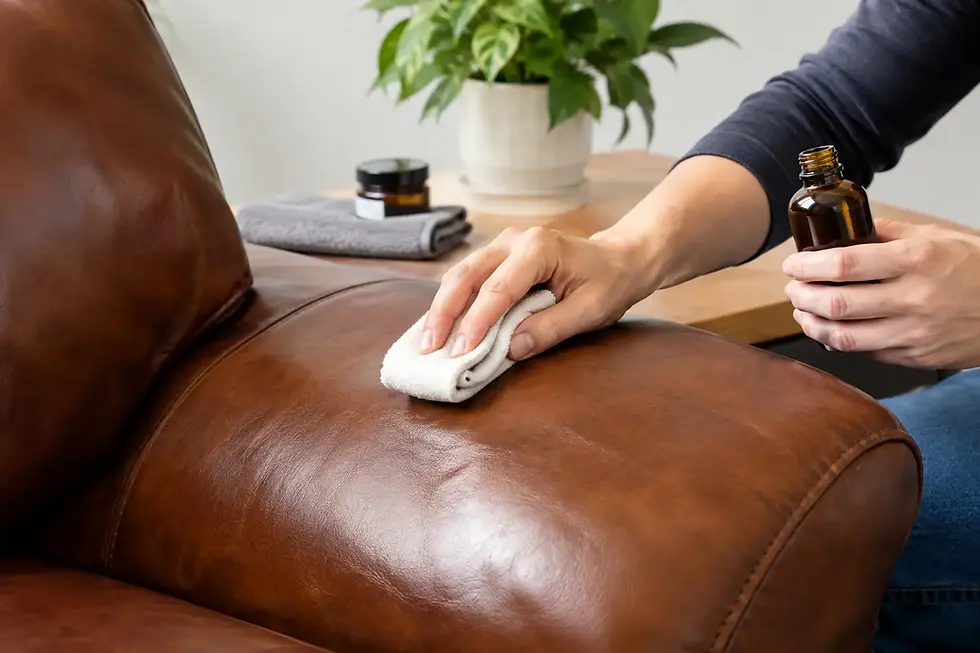
If the scuff is minor and the colour coat still looks largely intact, a leather conditioner or protection cream can sometimes reduce the appearance of the mark. This does not repair missing colour, but it may improve the look of a dry or lightly grazed surface.
Use only a small amount and buff gently with a clean microfibre cloth. If the scuff softens and blends in, stop there. More product is not better. Over-applying conditioner can leave the area darker or glossier than the rest of the furniture, which creates a different problem.
For slightly more noticeable surface wear, some people use leather repair kits. These can help in the right hands, but they are not all equal. The main issue is colour matching. Beige, tan, grey, and brown leather all vary far more than people expect, and a repair that is even slightly off can stand out badly. Texture and sheen matter too. A repaired patch that is the right colour but too matt or too shiny will still be visible.
If you do use a kit, choose one intended for finished leather furniture and avoid anything that sounds too aggressive. Follow the instructions carefully, test on an unseen section, and work in very light layers. The aim is to build up the finish gradually rather than cover the damage in one go.
When a scuff needs professional repair
There is a point where home treatment stops being sensible. If the scuff has removed colour, exposed a lighter underlayer, or left the area rough to the touch, you are no longer just cleaning or nourishing the leather. You are restoring pigment and finish.
This is where professional leather repair makes the difference between a patch-up and a proper result. A specialist will usually clean the area thoroughly, prepare the damaged finish, carry out any filling if needed, match the colour, and apply the new finish so it blends with the rest of the piece. Done well, the repair looks natural and the surface regains a consistent feel and appearance.
This matters most on prominent areas such as seat cushions, arms, front panels, and headrests, where the light catches every mark. It also matters on more expensive furniture, where a poor DIY repair can reduce both appearance and lifespan.
Scuffs are also not always isolated damage. On older sofas, a visible scuff may sit alongside fading, wear on contact points, or general loss of finish. In those cases, repairing the scuff alone may leave you with one improved spot on a tired-looking sofa. A broader refurbishment or colour restoration can be the better long-term choice.
Common mistakes that damage leather further
The biggest mistake is treating leather like fabric. Scrubbing, soaking, or using stain removers can strip the finish and spread the problem. Even products that seem harmless can be unsuitable.
Avoid baby wipes, hairspray, vinegar mixes, washing-up liquid, furniture polish, and magic erasers. These are common quick fixes people reach for when they panic, but they can dry out the leather, alter the sheen, or remove colour from the topcoat.
Be careful with heat as well. Hairdryers and radiators will not repair a scuff. They can dry the leather further and make cracking more likely, especially on older upholstery.
Another issue is overworking the area. If a gentle clean and light conditioning do not improve the mark, repeated rubbing usually makes it worse. Leather finishes are durable, but they are not indestructible.
How to tell if your furniture is worth repairing
In most homes, the answer is simple. If the sofa is structurally sound, comfortable, and suits the room, repairing a scuff is usually far better value than replacing the whole piece.
Leather furniture often wears in specific places long before the rest of it is ready to be replaced. A scuffed armrest or front panel does not mean the entire sofa is finished. Professional restoration can deal with localised damage and extend the life of furniture that still has years left in it.
This is especially true for quality leather suites, dining chairs, recliners, and family sofas that have taken everyday knocks. Replacing like-for-like furniture can be expensive. Repair is often the more practical option, particularly when the damage is cosmetic rather than structural.
For households in Dublin, Meath, Kildare, and Louth, an on-site service is also a major advantage. There is no need to remove large furniture from the home just to sort out a visible scuff. At Ashbourne Leather Care, that convenience is part of the service - clear quotations from photos, then targeted restoration carried out at your premises.
How to prevent future scuffs on leather sofas and chairs
Once a scuff has been repaired, a little routine care goes a long way. Keep leather clean with products made specifically for upholstered leather, and avoid letting dirt build up on high-contact areas. Tiny particles act like abrasives over time, especially on arms and seat edges.
Try to keep sharp buckles, metal trims, pet claws, and rough clothing away from delicate contact points. If a sofa sits in strong sunlight, fading can weaken the visual consistency of the finish and make later scuffs more obvious, so it helps to manage direct exposure where possible.
A proper leather protection product can also help maintain the finish, but it should be the right one for the leather type and used correctly. If you are unsure, it is better to ask than experiment.
The real answer to how to repair scuffed leather furniture
If the mark is light and superficial, careful cleaning and a small amount of suitable leather conditioner may be enough to improve it. If the scuff has broken the colour or finish, the proper repair involves restoration work, not guesswork.
That is often the turning point for homeowners. A quick home fix can help with very minor marks, but visible scuffs on leather furniture tend to need a specialist hand if you want the colour, sheen, and texture to look right again.
Leather does not have to be perfect to look beautiful, but damage should not keep dragging the whole room down. The best repair is the one that restores confidence in the furniture you already own.



Comments